
Featured Dosing Tracker
PepPal Pro
Save your calculations and follow your peptide cycle by day, week, or month.
- Peptide calendar
- Cycle tracking
- Saved calculations
Peptide Tools
Reconstitution + Units
Enter your retatrutide vial size, BAC water volume, and target dose to see the concentration, the draw in milliliters, and the matching U-100 syringe units. This is an educational research-planning tool, not medical advice.
Quick summary
Retatrutide presets
Use the presets first; the manual steps below are for different vial sizes, water volumes, or doses.
3 mL max presets
10 mg + 1 mL = 10 mg/mL, so 10 units = 1 mg.
Optional: use when your setup does not match a preset
Step 1
Choose syringe size.
Step 2
How many mg of peptides are in your vial?
Step 3
Dose amount per injection. 1 mg = 1000 mcg.
Step 4
Bacteriostatic water used to reconstitute your vial.
Featured Dosing Tracker
Save your calculations and follow your peptide cycle by day, week, or month.
This calculator does one job well. You enter your vial size in milligrams, the amount of bacteriostatic (BAC) water you added, and the target dose you are planning. It returns the concentration, the volume to draw in milliliters, and the matching units on a U-100 insulin syringe.
Retatrutide is an investigational once-weekly peptide that works on three hormone receptors at once: GLP-1, GIP, and glucagon. The calculator does not depend on what retatrutide does in the body. It is pure arithmetic that converts milligrams and milliliters into a number you can read on a syringe.
This page and calculator are educational research-planning tools. They do not recommend a dose, diagnose, or treat anything. Retatrutide is not FDA-approved. Talk to a qualified clinician before using any peptide.
The easiest path is to use the retatrutide preset dropdowns first. Pick the vial setup that matches your research vial, then pick the common dose you want to calculate. The custom steps are only there when your vial size, BAC water volume, or target dose does not match a preset.
Use the common vial setup dropdown first. It includes 4, 7, 10, 12, 20, 24, 36, 50, and 60 mg retatrutide setups with BAC water capped at 3 mL.
Use the common dose dropdown next. The calculator fills the dose field for you without choosing or recommending a dose.
If your retatrutide vial, BAC water amount, or target dose is different, use the manual fields below the preset divider. Enter the vial mg, BAC water mL, and dose yourself.
The calculator shows concentration in mg/mL, draw volume in mL, and matching U-100 syringe units for the retatrutide setup you entered.
Use Save calculation to email yourself the draw, vial, water, dose, and supplier links so you can reference the setup later.
Reconstitution means turning the dry powder in the vial into a liquid you can measure. You do this by adding BAC water. The math behind it is short, and the calculator handles it for you, but it helps to see how it works.
Concentration is the vial size divided by the BAC water you added. A 10 mg vial mixed with 2 mL of BAC water gives 5 mg per mL. The same 10 mg vial mixed with 1 mL gives 10 mg per mL.
Divide your target dose by the concentration. At 5 mg/mL, a 2 mg dose is 0.40 mL. At 10 mg/mL, that same 2 mg dose is only 0.20 mL.
A U-100 insulin syringe has 100 units per 1 mL, so 1 unit equals 0.01 mL. Multiply your draw volume in milliliters by 100 to get units. A 0.40 mL draw is 40 units. A 0.20 mL draw is 20 units.
Adding more BAC water does not change the total milligrams in the vial. It only spreads the same dose across more liquid, so you draw more units for the same dose. More water makes small doses easier to measure; less water makes the draw more concentrated.
The preset dropdown above uses the common retatrutide vial setups below. The last column is the units for a 1 mg dose. Multiply it by your target dose in milligrams to get your units.
Concentration and units per 1 mg by vial size and BAC water
Vial size
4 mg
BAC water
Concentration
Units per 1 mg
Vial size
7 mg
BAC water
Concentration
Units per 1 mg
Vial size
10 mg
BAC water
Concentration
Units per 1 mg
Vial size
12 mg
BAC water
Concentration
Units per 1 mg
Vial size
20 mg
BAC water
Concentration
Units per 1 mg
Vial size
24 mg
BAC water
Concentration
Units per 1 mg
Vial size
36 mg
BAC water
Concentration
Units per 1 mg
Vial size
50 mg
BAC water
Concentration
Units per 1 mg
Vial size
60 mg
BAC water
Concentration
Units per 1 mg
The 4, 7, 10, 12, 20, and 24 mg presets use the easy 10-units-per-mg setup. The 36, 50, and 60 mg presets are more concentrated, so each 1 mg draw uses fewer units.
Use this as a simple shopping checklist for reconstitution. It does not replace dose math, sterile handling, or clinician guidance. Confirm vial size and concentration on the product page before ordering.
PEPPAL applies to eligible supplier checkout links when supported by the supplier.
Why choose Peptide Partners?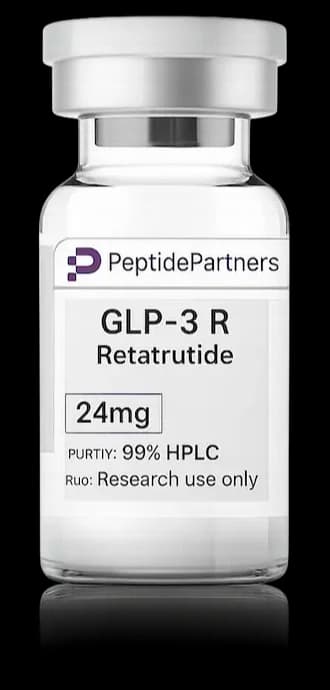
Disclosure: supply links may earn PepPal a commission at no cost to you.
Check the product details instead of relying on the card alone.
Vial size
Confirm the milligram amount on the label before entering it above.
Syringe type
U-100 syringes read in units, where 100 units equals 1 mL.
BAC water
Your BAC water volume sets the concentration; the calculator does the rest.
For full vial math across other peptides, use the main reconstitution calculator at /calculator instead of this checklist.
Many people search for a retatrutide dosage calculator hoping it will tell them what dose to take. This tool does not do that, and on purpose. It converts a dose you enter into units. It does not pick the dose for you.
For context only, the Phase 2 obesity trial published in the New England Journal of Medicine in 2023 studied once-weekly retatrutide at 1 mg, 4 mg, 8 mg, and 12 mg, with gradual escalation over the first weeks to improve tolerability. The highest 12 mg dose produced about 24.2% average body-weight reduction at 48 weeks, compared with 2.1% for placebo. This is reported trial data, not a dosing recommendation.
Search terms like "for weight loss," "female," or "bodybuilding" do not change the math. The calculator output is identical regardless of who is using it or why. Any decision about an actual dose belongs with a qualified clinician. See the semaglutide vs tirzepatide vs retatrutide comparison for how the three compare.
Retatrutide has a half-life of about 6 days, according to the NEJM Phase 2 trial. Half-life is the time it takes for roughly half of the drug to clear from the body. A 6-day half-life is long, which is why trials use one injection per week.
Because the drug clears slowly, levels build up over the first several weeks. Most pharmacology summaries describe steady state at about 4 to 5 weeks at a given dose, with full washout taking roughly 30 days (about five half-lives) after the last dose.
In plain terms: if you inject 5 mg, about 2.5 mg is still present roughly 6 days later. That slow decline is the reason a once-weekly schedule keeps levels fairly steady between injections. This calculator handles the per-injection math; it does not model week-over-week buildup.
In trials, the most common side effects were gastrointestinal: nausea, vomiting, and diarrhea. These were usually mild to moderate and most common during dose escalation, which is the same pattern seen across the GLP-1 drug class.
Phase 3 data reported a skin-sensitivity side effect called dysesthesia, described as tingling or tenderness to touch, in about 20.9% of participants at the highest dose. Longer-term safety is still being studied because the molecule is not yet approved.
A calculator cannot tell you whether retatrutide is appropriate for your situation. For a fuller list of reported effects, see retatrutide side effects, and discuss any peptide with a clinician.
No. As of August 2026, retatrutide is not FDA-approved and is not available by prescription. It is an investigational medication from Eli Lilly, still in its Phase 3 TRIUMPH trial program.
Eli Lilly reported its first Phase 3 readout (TRIUMPH-4) in December 2025, showing about 28.7% weight loss at 68 weeks, and a larger pivotal trial (TRIUMPH-1) in May 2026 showing about 28.3% weight loss at 80 weeks in 2,339 participants. A New Drug Application had not been filed at the time of writing.
Because it is not approved, retatrutide sold online is research-use-only material, and quality is not guaranteed. For background on how the FDA has treated unapproved GLP-1 products, see the February 2026 FDA research-use-only update.
The reconstitution math is the same for all three peptides. You divide the vial size by your BAC water volume to get a concentration, then convert your dose to units. Only the typical vial sizes and doses differ.
What sets retatrutide apart is the receptor target, not the math. Semaglutide acts on GLP-1 alone, tirzepatide adds GIP, and retatrutide adds glucagon on top of both. That third receptor is the reason it is called a triple agonist. For the full comparison, see semaglutide vs tirzepatide vs retatrutide.
Reconstitution math is identical; targets differ
Compound
Semaglutide
Receptor targets
Reconstitution approach
Compound
Tirzepatide
Receptor targets
Reconstitution approach
Compound
Retatrutide
Receptor targets
Reconstitution approach
Use this calculator for retatrutide and the main /calculator for other peptides.
That is your choice, and it only changes how many units you draw. With 1 mL of BAC water a 5 mg vial is 5 mg/mL, so 1 mg is 20 units. With 2 mL it is 2.5 mg/mL, so 1 mg is 40 units. More water makes small doses easier to measure. Enter your own numbers in the calculator to see the exact result.
Divide your target dose by the concentration to get milliliters, then multiply by 100. A U-100 syringe has 100 units per 1 mL, so 1 unit is 0.01 mL. For example, a 2 mg dose at 5 mg/mL is 0.40 mL, which is 40 units.
No. The total milligrams in the vial stay the same. More BAC water just spreads that amount across more liquid, so you draw more units for the same dose. It does not make a dose stronger or weaker.
The Phase 2 obesity trial studied once-weekly retatrutide at 1 mg, 4 mg, 8 mg, and 12 mg, with gradual escalation early on. This is reported trial information, not a dosing recommendation. Any dose decision should be made with a clinician.
About 6 days, based on the NEJM Phase 2 trial. That long half-life is why dosing in trials is once weekly. Levels reach steady state in about 4 to 5 weeks and wash out roughly 30 days after the last dose.
No. As of August 2026 it is investigational and in Phase 3 trials, with no FDA approval and no prescription availability. Material sold online is research-use-only.
No. It is an educational research-planning tool that converts a vial size, BAC water volume, and target dose into milliliters and units. It does not recommend a dose or replace a clinician.
Yes. Enter your vial size in milligrams, such as 5, 10, 12, 24, or 30 mg, along with your BAC water volume and target dose. The math works the same for every size.
No. The reconstitution and units math is identical regardless of who is using it. Trials did not set separate doses by sex, and any personalized decision belongs with a clinician.
Preferred supplier
Peptide PartnersNeed peptides? Start with a verified supplier.
PepPal's recommended source with current discount access and established testing standards.
See how retatrutide stacks up against semaglutide and tirzepatide on targets, evidence, and trade-offs.
Read the comparison