Tier
Required
Why it may be needed
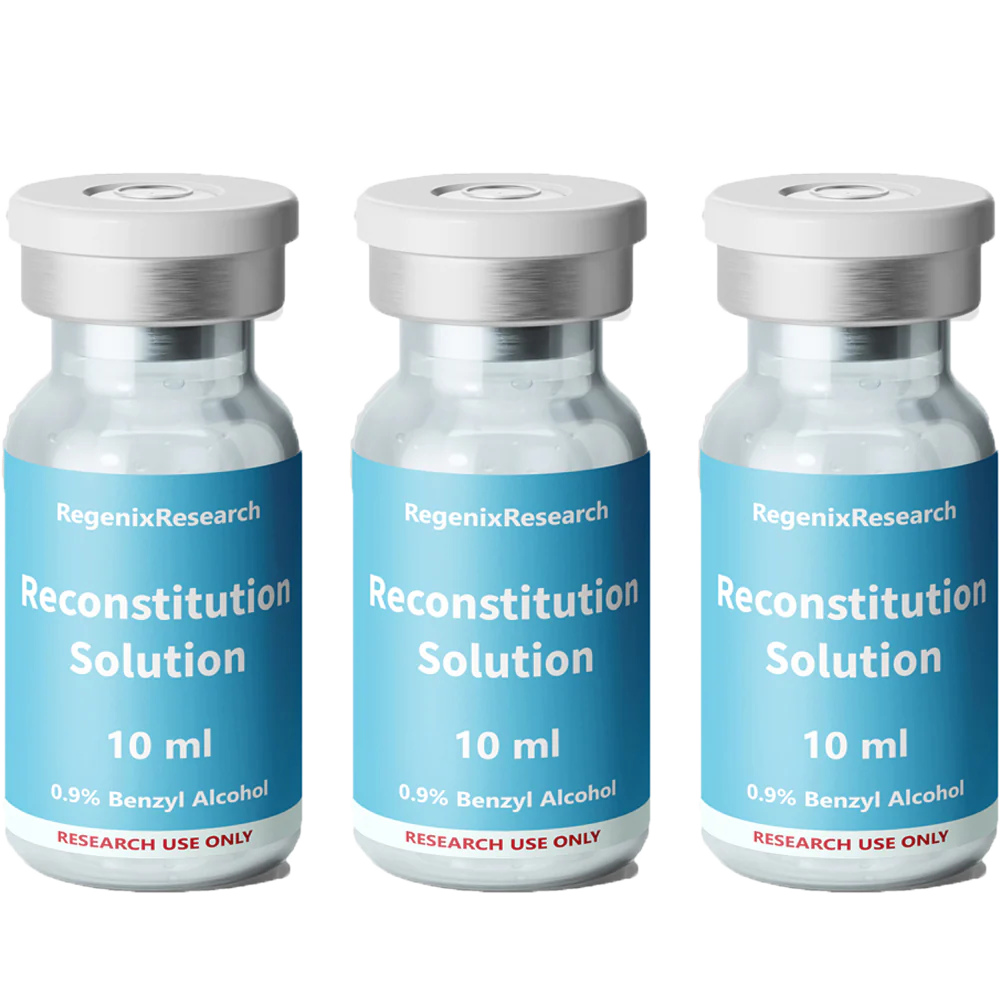
Needed when a freeze-dried (lyophilized) product must be mixed. Use bacteriostatic water or another sterile reconstitution solution only when it is named in the product instructions or by a qualified professional.
Supplies Guide
Research-use education
A practical guide to the supplies you may need to reconstitute and inject peptides, keep your setup clean, store products, travel, and dispose of used needles. Always check the product instructions before choosing a diluent, syringe, needle, or storage method.
Quick summary
A basic setup may include a sterile mixing fluid, new syringes and needles, alcohol prep pads, hand-cleaning supplies, a clean work area, and a sharps container. You only need mixing supplies when the product must be reconstituted. Storage and travel gear depend on the product instructions.
Do not assume they do. What comes with an order varies by product, pharmacy, store, and product type. Check the listing or package before you order. You may need to buy needles, syringes, or reconstitution fluid separately.
This page explains common supplies and clean handling. It does not recommend a peptide, dose, injection schedule, route, or unapproved human use. Follow the product label and guidance from a qualified clinical or laboratory professional.
Affiliate disclosure: PepPal may earn a commission when you buy through some links on this page. As an Amazon Associate, PepPal earns from qualifying purchases at no extra cost to you. These relationships do not change our safety guidance.
This table groups supplies as Required, Recommended, or Optional. A Required item only applies when that step is part of your setup. For example, you do not need reconstitution supplies for a product that arrives ready to use.
Peptide injection and reconstitution supply checklist
Tier
Why it may be needed
Tier
Why it may be needed
Tier
Why it may be needed
Tier
Why it may be needed
Tier
Why it may be needed
Tier
Why it may be needed
Tier
Why it may be needed
Tier
Why it may be needed
Supply
Tier
Why it may be needed
Tier
Why it may be needed
Tier
Why it may be needed
Tier
Why it may be needed
Tier
Why it may be needed
Tier
Why it may be needed
Tier
Why it may be needed
Tier
Why it may be needed
Tier
Why it may be needed
The product label, pharmacy directions, clinical guidance, or lab protocol may change which supplies are required for your setup.
There is no single starter kit that fits every peptide. Check the product instructions first, then gather only the mixing, injection, cleaning, storage, and disposal supplies you need. Review a prebuilt kit the same way instead of assuming it includes the right items.
Build your list around the product, how it is supplied, and the instructions that come with it.
Reconstitution fluid
Follow the instructions. Confirm the exact sterile diluent and whether it should contain a preservative.
Syringe and needle
Match how the product is used. Confirm the syringe volume, needle gauge, needle length, and whether you need a separate transfer syringe.
Storage gear
Check the label. Only buy cooling equipment when the product has a specific temperature requirement.
Amazon affiliate disclosure: As an Amazon Associate, PepPal earns from qualifying purchases at no extra cost to you.
No single mixing fluid is right for every peptide or injectable product. Use the diluent named on the label or in the pharmacy, clinical, or lab instructions. Bacteriostatic water, sterile water, and 0.9% sodium chloride are different products. Do not treat them as interchangeable.
Common sterile diluents and what their labels mean
Fluid
Bacteriostatic Water for Injection
Label facts
What to confirm before use
Fluid
Sterile Water for Injection
Label facts
What to confirm before use
Fluid
0.9% Sodium Chloride Injection
Label facts
What to confirm before use
The container label matters. The diluent alone cannot tell you how long a mixed product can be stored or used.
A sealed sterile diluent or syringe does not make the whole setup sterile. Your hands, work area, vial stopper, packaging, and other supplies can still introduce germs.
Do not use tap water, homemade solutions, or any fluid that is not labeled as a suitable sterile injectable diluent. If you are unsure what to use, check the instructions or ask the pharmacist, clinician, manufacturer, or lab lead. Do not guess.
Disclosure: supply links may earn PepPal a commission at no cost to you.
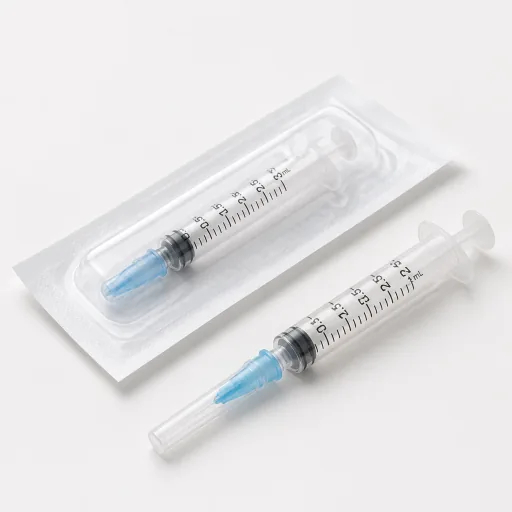
There is no universal needle or syringe size for peptides. The right choice depends on the product, how it is used, the amount of liquid, and the instructions. Gauge means needle thickness. Length is how far the needle extends. Barrel size is how much liquid the syringe holds.
Syringe and needle terms at a glance
Term
Syringe barrel
What it means
What to match
Term
U-100 scale
What it means
What to match
Term
Needle gauge
What it means
What to match
Term
Needle length
What it means
What to match
Term
Transfer or mixing needle
What it means
What to match
A syringe scale shows volume, but it does not choose a peptide dose. Use the PepPal calculator for concentration and unit math only after you know the required values.
There is no one syringe size for every peptide. Choose a barrel that can clearly measure the amount of liquid in the instructions. A U-100 syringe is one common small-volume option: 100 units equal 1 mL. Those markings do not tell you what dose to use.
There is no universal needle gauge for peptides. Many under-the-skin delivery systems use thin needles, but the right gauge and length depend on the product, device, and technique. Follow the instructions for your specific setup.
There is no universal mixing-needle size either. Use sterile transfer equipment that can move the needed liquid without damaging the vial stopper or going against the instructions. A wider needle may move liquid faster, but that does not make it right for every vial.
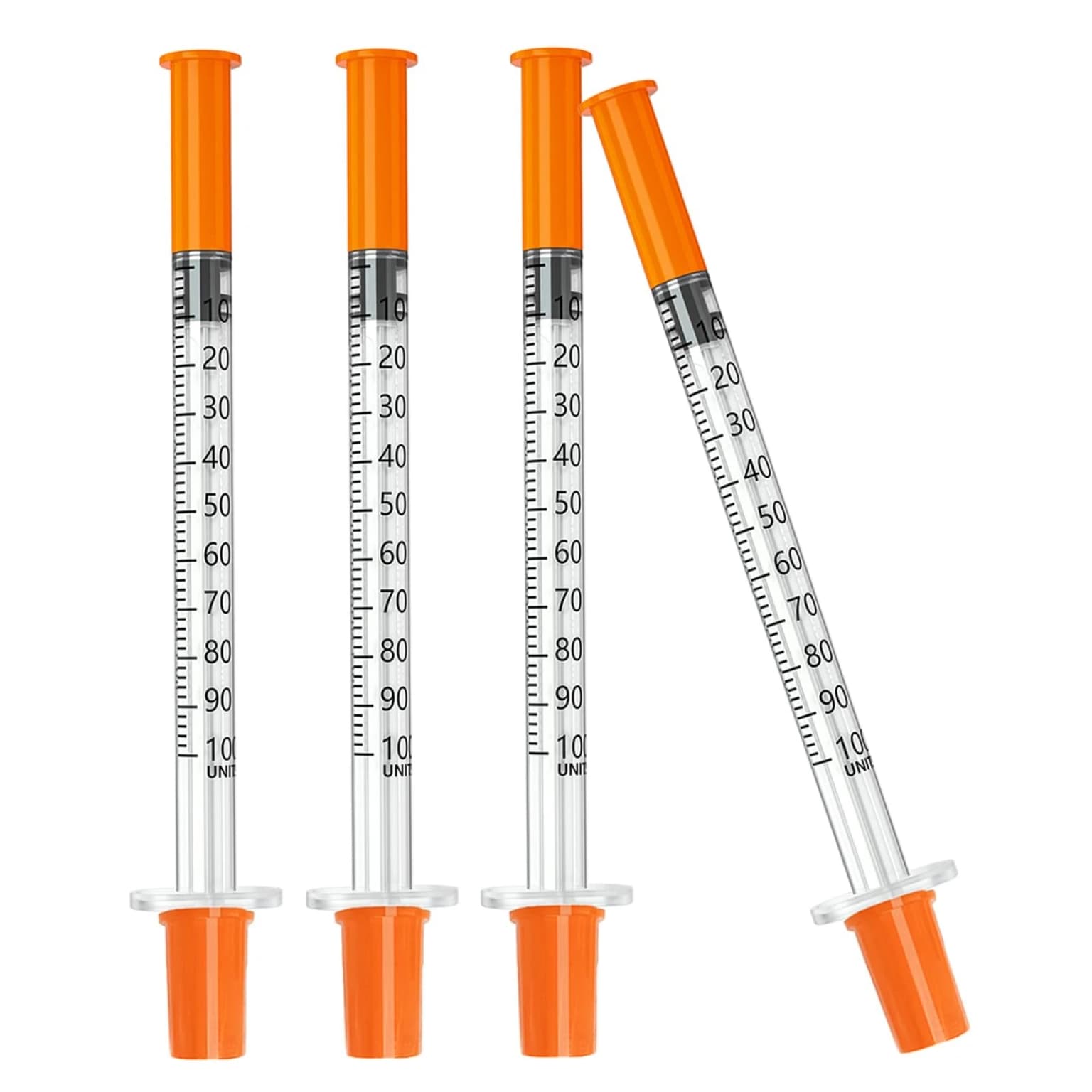
Disclosure: supply links may earn PepPal a commission at no cost to you.
Clean handling depends on the whole setup, not one product. CDC guidance calls for clean hands, a clean prep area, careful technique, a disinfected vial stopper, and new sterile needles and syringes.
Use soap and water when available or an appropriate hand sanitizer when needed.
Prepare supplies in a clean space away from sinks, food, used sharps, and other sources of germs.
Do not use a needle or syringe if its sterile package is open, wet, or damaged.
Clean the vial's rubber stopper with the right antiseptic and let it dry before inserting a needle.
Use a new sterile needle and syringe for each injection and each vial access that requires fresh equipment. Do not reuse a used syringe with a new needle.
Place used needles and other sharps into the disposal container immediately after use.
Nitrile gloves can add a barrier during some tasks. They do not make the setup sterile or replace clean hands and careful technique.
Disclosure: supply links may earn PepPal a commission at no cost to you.
There is no single storage rule for every peptide or injectable product. Storage can change after mixing and may depend on the formula, container, pharmacy, manufacturer, or lab instructions.
Storage and travel planning
Task
Temperature
Practical rule
Task
Freezing
Practical rule
Task
Light
Practical rule
Task
Labeling
Practical rule
Task
Home storage
Practical rule
Task
Travel cooling
Practical rule
Task
Travel rules
Practical rule
The date you opened the diluent does not tell you how long a mixed product can be used. Check the product label, pharmacy directions, validated lab procedure, or another qualified source for storage and use-by guidance.
Disclosure: supply links may earn PepPal a commission at no cost to you.
FDA recommends putting used needles and other sharps into a sharps container right after use. An FDA-cleared container is preferred when available because it is designed to resist punctures and leaks.
Put the used needle or other sharp into the container as soon as you are done with it.
Do not overfill the container. Close it according to the container instructions when it reaches the marked fill line.
FDA says not to place loose needles or sharps in household trash or recycling and not to flush them down a toilet.
Drop-off, collection, mail-back, and household disposal rules vary by location. Check current state and local guidance before getting rid of a full container.


Disclosure: supply links may earn PepPal a commission at no cost to you.
Do not base your order on a generic four-, eight-, or twelve-week cycle. Count the actual mixing and injection steps in the approved or research plan, then buy supplies for those steps.
Simple supply-planning formulas
Supply
Injection syringes and needles
Planning math
Important note
Supply
Transfer or mixing syringes
Planning math
Important note
Supply
Alcohol prep pads
Planning math
Important note
Supply
Reconstitution fluid
Planning math
Important note
Supply
Sharps-container capacity
Planning math
Important note
This is supply math only. It does not choose a peptide dose, schedule, concentration, route, or cycle length.
A bigger supply list is not always better. Confirm what you need, keep single-use items sealed until use, and skip gear that does not match the product instructions.
The exact list depends on the product and how it is supplied. A syringe-based setup may need new sterile injection supplies, alcohol prep pads, a clean work area, and a sharps container. A freeze-dried vial may also need a compatible sterile diluent and transfer syringe. Follow the product or clinical instructions instead of a one-size-fits-all list.
Sometimes, but not always. It depends on the product, pharmacy, store, and product type. Check the package or listing before ordering so you know whether needles, syringes, or mixing supplies are included.
There is no universal syringe size for peptides. Match the barrel volume and markings to the amount you need to measure and to the product or clinical instructions. A U-100 syringe has 100 units per 1 mL, but those markings do not choose the dose.
There is no single needle gauge for peptides. Gauge and length depend on how the product is used, the device, the amount of liquid, and the instructions. Use the size listed for the product or procedure instead of choosing from a generic peptide chart.
There is no universal mixing-needle size. Use sterile transfer equipment that fits the vial stopper, liquid volume, and instructions. A wider needle can move liquid faster, but it is not right for every vial.
Use the sterile diluent named on the product label or in the pharmacy, clinical, or lab instructions. Bacteriostatic water, sterile water, and 0.9% sodium chloride are different products. Do not swap one for another unless the instructions allow it.
Only when the product label, pharmacy directions, clinical instructions, or lab protocol names that diluent. Sterile water and saline are not automatic substitutes for bacteriostatic water. Check the preservative and single-dose or multiple-dose labeling, and do not guess when the instructions are unclear.
Do not choose by percentage alone. Use an alcohol prep pad labeled for the task and follow the product or clinical instructions. If those instructions name 70% isopropyl alcohol, use that concentration. Use a fresh pad each time and let the cleaned surface dry before access.
No. CDC guidance calls for a new sterile needle and syringe for each use. Never enter a vial with equipment that has already been used.
Put used needles and other sharps into a sharps container right after use. FDA recommends an FDA-cleared container when available. Never place loose sharps in household trash or recycling. Follow local rules when the container is full.
Count the mixing and injection steps in the plan. Use one new sterile set for each planned injection, count transfer supplies for each mixing step, and calculate fluid from the required amount per vial. This only helps with supply planning. It does not set a dose or schedule.
Preferred supplier
Peptide PartnersNeed peptides? Start with a verified supplier.
PepPal's recommended source with current discount access and established testing standards.
Use the PepPal calculator to turn a known vial amount and liquid volume into concentration, mL, and U-100 syringe units. It handles the math but does not choose a dose.
Open the calculator