How to Read a Peptide COA: The Complete Verification Guide
By Garret Grant·Founder & Lead Researcher·Last reviewed August 5, 2026·
How to read a peptide COA is one of the most important skills in research peptide sourcing. A purity number alone is not enough. This guide breaks down exactly what to check, how to verify claims, and how to spot fake or misleading documentation before you commit to a supplier.
Most buyers lose confidence because they are shown metrics without context: one purity number, one mass screenshot, and no explanation of whether the data is recent, batch specific, or independently verifiable. The goal of this page is to turn that uncertainty into a repeatable review process you can use every time you compare vendors.
For a practical compound example, compare your paperwork to the cited evidence in the Tirzepatide research protocol.
Editorial independence: This page is platform-agnostic and not a vendor sales page. The goal is to help you evaluate any COA objectively.
Research Use Only Notice: This content is for educational and research-context information. It is not medical advice and does not endorse human use.
We treat COA review as a risk-reduction process, not a one-time checkbox.
We prioritize verifiable evidence over marketing claims.
We separate chemistry data quality from handling and dosing quality, because both affect outcomes.
Use this as a practical checkout checklist: start with a reviewed supplier, add baseline blood testing, then gather the common supplies you need before ordering.
Disclosure: supply links may earn PepPal a commission at no cost to you.
Companion Supplies & Routine Support
What Is a Peptide Certificate of Analysis (COA)?
A Certificate of Analysis is a lab-generated report that tells you whether a sample appears to match a peptide claim. For research-use-only products outside standard FDA approval pathways, a COA is often the main quality document available to buyers.
In practical terms, the COA is the bridge between a label claim and measurable analytical evidence. If that bridge is weak, the rest of the workflow is weak: sourcing decisions, concentration planning, and batch-to-batch consistency all become harder to manage.
At a minimum, a COA should answer three questions:
Identity: Is this actually the peptide listed on the label?
Purity: How much of the peptide-related material is the target compound?
Content: How much actual peptide mass is present relative to total vial material?
For RUO buyers, the burden of verification sits with the buyer, not the regulator. That is why lot-level traceability and method transparency matter more than polished branding. A clean website does not validate a batch. A traceable COA with reproducible details does.
Source quality is a safety variable — see our side effects guide for why COA verification matters for safety.
Pharmaceutical supply chains have formal release controls, audits, and quality systems. Grey market and research-only channels can vary dramatically. This is exactly where a rigorous COA reading process gives you an edge.
If any identification field is missing, pause immediately. Most false confidence issues start here: buyers review purity first and only later realize the report never matched their lot in the first place.
HPLC Purity (Core Metric)
HPLC separates peptide-related compounds and estimates how dominant the target peak is. This is a useful metric, but it does not cover every risk class. HPLC alone does not automatically confirm endotoxin status, heavy metals, or complete formulation composition.
A common shorthand formula is target peak area divided by total peptide-related peak area. This is useful for comparing peptide signal quality, but it should not be interpreted as total product quality in isolation.
Strong reports include enough context to interpret the graph: retention time behavior, baseline shape, and whether impurity peaks are clustered or broad. Without the chart, the value is not independently auditable.
Purity Range
Interpretation
95% to 97%
Minimum acceptable baseline
98% to 99%
Strong research-grade range
99%+
Premium range when data is verifiable
Annotated peptide COA example with verification callouts.
Mass Spectrometry (Identity)
Mass spectrometry helps confirm molecular identity. If the observed mass does not align with the expected peptide, the sample identity is questionable regardless of purity percentage.
Identity confirmation is where many weak COAs fail. A supplier can publish a strong-looking purity number while still missing identity clarity. Mass spec data is the safeguard against that scenario.
HPLC chromatogram primer: target peak versus impurity peaks.
Net Peptide Content
Net content and purity are different metrics. Purity covers peptide-related impurity proportion, while net content reflects total usable peptide relative to the full vial mass that may include water, salts, and counterions.
This distinction is a frequent source of calculation error. If users assume 100% net peptide content from a high-purity percentage, concentration planning can drift and syringe-unit targets can be off.
Additional Tests (When Available)
Endotoxin, heavy metal, residual solvent, and sterility testing are not always included in grey market COAs. Their presence generally indicates stronger operations and more rigorous quality programs.
These additional assays do not guarantee perfect quality, but they indicate broader quality scope than purity-only reporting. When two suppliers look similar on price, this often becomes a meaningful tie-breaker.
In-House vs Third-Party COAs: Why It Matters
In-house COAs can be informative but carry built-in conflict risk because the vendor controls testing and publication. Third-party COAs reduce that conflict and are generally more defensible for independent verification.
In-house: acceptable only when batch specific and backed by full supporting data.
Third-party: strongest when report IDs can be verified publicly.
The practical standard: in-house data can still be useful, but it should be treated as a starting point. Third-party traceable data should carry more weight when deciding whether to reorder or scale your research workflow.
Method Details That Separate Real COAs From Marketing PDFs
Method transparency is where strong documentation separates from shallow documentation. A COA that only says "99% purity" without method context gives you almost no audit trail. A robust COA includes enough detail that a technically capable lab could reproduce the framework.
You do not need to be a chemist to screen method quality. You only need to know which fields should exist and how to react when they are missing.
Method field
Why it matters
Red flag if missing
HPLC column and dimensions
Defines separation environment and affects peak behavior.
Hard to compare results across batches.
Mobile phase composition and gradient
Controls how compounds elute and separate.
Purity percentage may be non-reproducible.
Detection wavelength
Changes which signals are visible and emphasized.
Peak interpretation can be misleading.
Injection amount/run conditions
Influences sensitivity and observed impurity profile.
Batch-to-batch comparisons lose reliability.
Mass spec mode and observed mass
Confirms molecular identity, not just cleanliness.
Wrong-compound risk increases.
If a vendor says these details are proprietary, that is a policy choice, not a technical necessity. You are not asking for synthesis IP. You are asking for enough reporting context to verify that the published quality claim has substance.
This method-level view is also why single-number ranking is dangerous. A batch can display high purity while method transparency is weak. In that case, confidence should stay moderate until independent verification is available.
Red Flags: How to Spot Fake or Misleading Peptide COAs
Generic COAs Reused Across Batches
A single PDF reused for multiple lots is a major warning sign. True QA documentation should be specific to each tested batch.
Generic files are especially common when demand spikes. Ask for the exact lot report before ordering and compare it against the document you receive after purchase. Mismatches should be treated as a stop signal.
Missing Chromatograms
Purity percentages without chromatograms are not independently interpretable.
If a vendor refuses to share chromatograms, you have no way to evaluate peak integrity, impurity clustering, or baseline behavior. That limits confidence even if the percentage looks strong.
No Matching Batch or Lot Number
If your vial lot does not match the COA, the document may not describe your product.
This is one of the highest-severity failures because it invalidates every downstream claim. Always match the lot first, then review purity and identity.
Purity Claims Without Method Details
Missing method context (column, solvent system, detection settings) makes replication and confidence weaker.
Lack of method detail does not automatically prove fraud, but it does prevent independent technical review. In practice, this should lower your confidence tier.
Suspiciously Perfect Values
Real lab data varies. Identical ultra-perfect values across many lots can indicate fabrication.
Chemistry data usually shifts over time because raw material, process conditions, and storage all introduce minor variation. Perfect repetition across many reports deserves additional scrutiny.
Anonymous or Edited-Looking Documents
Missing lab identity, inconsistent fonts, or low-res screenshots reduce confidence. Ask for original files and direct verification references.
Even when a file looks polished, verify whether the report metadata and lab contact pathway are real. Clean design is not the same as analytical credibility.
Good versus bad COA patterns for faster quality screening.
How to Verify a Peptide COA: Step-by-Step
1. Check the basics
Product name and lot number on the COA must match your vial label exactly.
2. Confirm the testing lab
Look for a named lab. Known third-party labs are stronger than anonymous or vendor-only reporting.
3. Verify the analysis date
Recent date ranges are better. Old dates can indicate recycled documentation.
4. Review HPLC evidence
Confirm at least 95% purity and verify the chromatogram is present, readable, and consistent with the reported value.
5. Review mass spectrometry
Observed mass should align with the peptide's expected molecular weight. If it does not, identity is questionable.
6. Check for additional tests
Endotoxin, heavy metals, residual solvents, and sterility tests indicate stronger quality controls.
7. Cross-reference third-party claims
Verify Janoshik task IDs and Finnrick grade claims directly with the source platforms.
8. Validate practical handling outcomes
After reconstitution, unusual cloudiness or particles can signal quality issues and should trigger extra caution.
Request corrected lot-specific COA before any use.
No chromatogram provided
Downgrade trust and request raw supporting data.
Mass mismatch to expected peptide
Treat as identity failure and avoid reorder.
Third-party claim cannot be verified
Move supplier to high-risk tier until evidence is validated.
Suspicious handling signals after reconstitution
Pause usage, review lot history, and consider independent testing.
Step-by-step peptide COA verification decision tree.
Purity vs Net Peptide Content: Why Both Matter for Dosing
A "10 mg peptide, 99% purity" claim does not always mean 10 mg of usable peptide mass. Purity and net content are different values and both affect practical dosing logic.
Example: 10 mg vial x 75% net peptide content = 7.5 mg effective peptide material.
Another practical example: two vendors can both report 99% HPLC purity, but if one lot has much lower net peptide content because of salts and moisture differences, your expected dose-per-unit math changes. This is why purity should not be treated as a complete dosing input by itself.
High purity helps, but it does not describe total active mass in the vial.
Net content affects how much effective peptide you are actually working with.
Stable workflow means verifying both metrics before concentration planning.
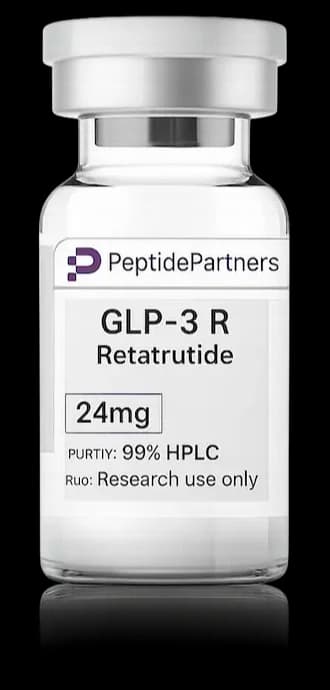
For a product-level example of this framework, read the Peptide Partners retatrutide review. It checks a live listing, public batch records, and Finnrick history together.
Treat this tier model as dynamic. Suppliers can move up or down based on new lots, documentation behavior, and response to verification requests. Re-score periodically instead of relying on one old snapshot.
Real COA Review Examples: How to Apply the Framework
Most verification mistakes happen when buyers rely on one positive signal and ignore conflicting signals. The examples below show how that looks in practical reviews.
Example A: High purity percentage, weak traceability
A supplier publishes a COA with 99.2% purity and a clean single-page summary. The document looks professional, but there is no visible lot number and no chromatogram image. Lab identity is abbreviated with no public verification path.
Assessment: Despite strong percentage, this remains low-confidence because core traceability fields are missing. This sits in Tier 3 unless the vendor can provide batch-specific evidence and raw support.
Example B: Moderate purity, strong documentation
A second supplier reports 96.8% purity with full chromatogram, lot match, method details, mass spec data, and direct third-party lookup. Additional testing coverage is limited, but the report is technically complete.
Assessment: Confidence can still be reasonable because the documentation is auditable and transparent. Purity is not premium, but traceability is strong enough for informed decision-making.
Example C: Strong report plus cross-platform verification
A third supplier provides lot-specific COA, readable chromatogram, mass spec match, and externally verifiable task IDs. The vendor can also show clear remediation policy if independent retesting fails.
Assessment: This aligns with Tier 1 behavior. It does not eliminate all risk, but it provides the strongest evidence package among typical RUO channels.
The key lesson: evaluate COAs as multi-signal evidence, not as a single-number contest. A slightly lower purity value with complete traceability can be more defensible than a near-perfect value with weak provenance.
Questions to Ask Suppliers Before You Order
If you send one short verification message before checkout, use this list. Strong suppliers can answer directly. Evasive responses are often as informative as the answers.
Can you provide the exact COA tied to the lot I will receive?
Forces batch-level specificity instead of a recycled marketing PDF.
Which lab performed the testing, and can I verify the report directly?
Separates anonymous documents from independently traceable reports.
Do you provide full chromatograms, not just summary percentages?
Charts are required to assess peak shape, impurity pattern, and plausibility.
What HPLC method conditions were used (column, mobile phases, detection wavelength)?
Method transparency makes the result auditable and reproducible.
Is mass spectrometry included, and does observed mass match expected mass?
Purity without identity confirmation can still hide wrong compounds.
Do you test for endotoxin, residual solvents, or heavy metals for this product line?
Shows whether quality scope goes beyond a single purity metric.
What is your remediation policy if my batch fails independent verification?
Serious suppliers publish replacement or credit workflows for failures.
How frequently do you retest products and rotate documentation with new batches?
Indicates whether quality checks are ongoing or frozen in time.
Keep written replies for your own batch history. Over time, these records help you spot which vendors are consistent and which ones shift standards when challenged.
Pre-Order COA Checklist You Can Reuse Every Time
Before checkout, run through this checklist. It is designed to be fast enough for routine use while still catching the most common failure modes.
Checklist item
Why it matters
Lot number on COA matches lot number on purchased vial
Without a lot match, the COA may not apply to your material.
COA includes readable chromatogram and method context
Summary purity alone is not enough for technical validation.
Mass spec identity data is included and plausible
Identity failures invalidate purity claims.
Report has named laboratory and traceable metadata
Anonymous reports are difficult to verify independently.
Testing date is recent and aligned with current inventory cycle
Old reports can be reused on unrelated product runs.
Any third-party claim is verifiable on public lookup pages
Direct verification reduces dependence on vendor statements.
You understand net peptide content implications for dose math
Dose planning errors often come from purity/content confusion.
You have reconstitution plan, calculator output, and supplies ready
Even a good COA does not prevent handling mistakes.
After ordering, repeat the same checks against the material you actually receive. Documentation can change between pre-sale support and delivered package inserts.
Once verification is complete, move to execution with thecalculatorandreconstitution protocolso chemistry verification and handling precision stay connected in one workflow.
PepPal Dispatch
Join the mailing list for new PepPal blog releases.
Get notified when new sourcing explainers, COA breakdowns, and calculator-linked research guides go live. Same lightweight signup flow as PDP, with page-source tracking on each submission.
New blog guides
Supplier and COA coverage
Calculator-linked updates
Email signup
One field. PepPal blog updates, supplier research, and calculator workflows only.
Frequently Asked Questions About Peptide COAs
What is a peptide Certificate of Analysis?
A peptide COA is a laboratory report that documents identity, purity, and testing details for a specific batch. For research-use-only peptides, it is one of the most important quality documents because there is no FDA-style premarket approval process validating each vial.
How do I know if a peptide COA is real?
Start by matching lot numbers, checking for full chromatograms, and confirming a named laboratory. Then verify third-party task IDs directly with the lab when possible. Generic PDFs reused across multiple products or missing method data are major warning signs.
What HPLC purity percentage should I look for?
A practical baseline is at least 95% for research purposes, with 98% and above often considered stronger. However, purity alone is not enough. You still need identity confirmation, batch specificity, and method transparency to trust the number.
What is the difference between purity and net peptide content?
Purity describes how much of the peptide-related material is the target peptide. Net peptide content reflects how much actual peptide exists relative to total vial mass, including water and salts. High purity can still coexist with lower net peptide content.
What is mass spectrometry on a peptide COA?
Mass spectrometry confirms molecular identity by measuring mass-to-charge patterns. On a COA, it helps verify that the tested sample matches the intended peptide rather than a truncated sequence, degradation product, or mislabeled compound.
Should I trust in-house COAs from peptide vendors?
In-house COAs can still be useful, but they carry conflict-of-interest risk because the supplier controls the testing narrative. They are stronger when they include complete raw data and batch-level specificity, but third-party reports remain the gold standard.
How do I verify a Janoshik COA?
Visit Janoshik's verification page, enter the task number, and confirm that the returned report matches your document details. If task data cannot be verified or does not match product and lot details, treat the COA as unverified.
What does Finnrick Analytics vendor grading mean?
Finnrick grades summarize independent sample testing across vendors, often with letter-style rankings. Grades help compare consistency and performance trends, but they should be treated as snapshots that can change as new batches are sampled and tested.
Can I get a peptide independently tested?
Yes. Buyers can submit samples to independent analytical labs for identity and purity testing. This is one of the strongest safeguards in unregulated channels, though one passing sample does not guarantee every future batch from the same vendor.
What does batch-specific mean on a COA?
Batch-specific means the report applies to one exact lot and should match your vial label directly. If the COA lacks a matching lot number, it may represent a different production run and cannot reliably validate your specific product.
Preferred supplier
Peptide Partners
Need peptides? Start with a verified supplier.
PepPal's recommended source with current discount access and established testing standards.