
PreferredPreferred Supplier
Access Guide
Updated August 2026
Retatrutide is not FDA-approved and cannot legally be compounded. This guide covers the two real access paths in 2026 and shows verified Finnrick test data for Peptide Partners and Orbitrex Peptides.
Quick summary
Retatrutide is not FDA-approved and is not sold at retail pharmacies. As of August 2026, the FDA has not received a New Drug Application from Eli Lilly, and the agency has stated plainly that retatrutide cannot be used in compounding under federal law. That removes two access paths most people assume exist.
Two realistic paths remain. The first is enrolling in one of Eli Lilly's TRIUMPH Phase 3 trials, which offers pharmaceutical-grade retatrutide for free with medical oversight (with placebo risk). The second is buying from a research-use peptide supplier with verifiable third-party testing. PepPal's two named picks are Peptide Partners and Orbitrex Peptides, both of which carry Finnrick testing data buyers can review independently.
This page is educational and not medical advice. Retatrutide sold by research suppliers is labeled for research-use only and is not approved for human consumption. Always verify current supplier policies and batch documentation before ordering.
Use this as a research-use shopping checklist after you compare clinical-trial access against supplier access. It does not replace dose math, vial instructions, sterile handling guidance, or medical advice.
PEPPAL applies to eligible Peptide Partners checkout links when supported by the supplier.
Why choose Peptide Partners?
Disclosure: supply links may earn PepPal a commission at no cost to you.
Use the supplier page and COA documents as the source of truth.
Product match
Confirm the product is retatrutide and that the vial size matches your research plan.
Batch documentation
Match the COA or testing record to the exact product and lot where the supplier makes that available.
Current availability
Supplier inventory, vial size, discount eligibility, and shipping policies can change.
Injection supplies
Use fresh syringes, prep pads, and sharps disposal supplies for each handling session.
Blood work
Arrange baseline and follow-up labs before interpreting GLP-1 research outcomes.
For reconstitution math, syringe units, and protocol-level instructions, use the retatrutide protocol instead of this shopping checklist.
Retatrutide (development code LY3437943) is an investigational triple-agonist peptide from Eli Lilly. It activates three hormone receptors at once: GLP-1, GIP, and glucagon. Researchers sometimes call it a triple-G molecule or shorthand it as GLP-3. Eli Lilly is also the company behind tirzepatide (Zepbound and Mounjaro).
The triple-receptor mechanism is the core reason retatrutide outperformed dual and single agonists in clinical trials. Semaglutide hits one receptor. Tirzepatide hits two. Retatrutide hits three. That difference shows up in the weight-loss numbers below.
No. As of May 18, 2026, retatrutide is not approved by the FDA. It is also not approved by the EMA, MHRA, TGA, or Health Canada. Eli Lilly has not yet submitted a New Drug Application. Phase 3 readouts have happened (TRIUMPH-4 on December 11, 2025, and TRANSCEND-T2D-1 on March 19, 2026), but more TRIUMPH trials still need to report before an NDA goes in.
Retatrutide regulatory timeline
Milestone
TRIUMPH-4 Phase 3 readout
Status as of August 2026
Realistic window
Milestone
TRANSCEND-T2D-1 Phase 3 readout
Status as of August 2026
Realistic window
Milestone
Remaining TRIUMPH readouts
Status as of August 2026
Realistic window
Milestone
FDA NDA submission
Status as of August 2026
Realistic window
Milestone
FDA review window
Status as of August 2026
Realistic window
Milestone
Earliest FDA approval
Status as of August 2026
Realistic window
Milestone
Realistic pharmacy availability
Status as of August 2026
Realistic window
Approval dates are estimates only. They depend on remaining Phase 3 readouts, NDA filing date, and review type. Lilly has not confirmed an NDA filing date.
TRIUMPH-4 reported 28.7% mean weight loss at the 12 mg dose over 68 weeks in adults with obesity and knee osteoarthritis. TRANSCEND-T2D-1 reported A1C reductions of 1.7% to 2.0% across doses and meaningful weight loss in type 2 diabetes. Both trials met their primary and key secondary endpoints.
A lot of competitor guides list compounding pharmacies as a third access path. That framing is out of date. The FDA stated directly on its own GLP-1 concerns page that retatrutide and cagrilintide cannot be used in compounding under federal law. The agency has also issued warning letters to companies selling compounded retatrutide.
Retatrutide fails all three eligibility paths for 503A and 503B compounding:
Semaglutide and tirzepatide had a narrow shortage-related window where compounding was temporarily permitted. That window never opened for retatrutide because there is no FDA-approved retatrutide product to be in shortage in the first place. Any pharmacy currently selling "compounded retatrutide" is operating outside the 503A and 503B framework. The FDA sent more than 50 warning letters to GLP-1 compounders in September 2025, and several letters named retatrutide specifically.
Pharmacies marketing compounded retatrutide are not operating under the FDA-overseen 503A or 503B framework that legitimate compounded semaglutide briefly used. Treat them as outside the legal pathway, not as a regulated alternative.
Eli Lilly is running the TRIUMPH Phase 3 program through 2026. Enrolling gets you pharmaceutical-grade retatrutide for free, with medical supervision and structured monitoring. The trade-off is placebo risk (typically about one in three participants), strict eligibility criteria, and a multi-month commitment.
Research-use suppliers sell retatrutide as a lyophilized powder labeled "for research-use only, not for human consumption." This is the route most non-trial buyers actually use. The quality range is wide, so this is where supplier verification matters the most. PepPal's two named picks are Peptide Partners and Orbitrex Peptides, both with public Finnrick testing data.
PepPal does not publish retatrutide dosing protocols on this page. If you are researching reconstitution math, syringe units, or schedule structure, review the Retatrutide research protocol on Peptide Dosing Protocols instead.
Both suppliers carry retatrutide and both have independent Finnrick testing history buyers can review. Peptide Partners is the testing-depth comparison because Finnrick's current rating is A (Great) across a larger sample volume. Orbitrex is another practical option, with a Finnrick B (Good) rating across a slightly smaller sample volume. Both are real options; the choice depends on testing depth and what feels right after reviewing supplier policies.
Retatrutide supplier comparison
Verification signal
Finnrick rating
Peptide Partners
Orbitrex Peptides
Verification signal
Samples tested by Finnrick
Peptide Partners
Orbitrex Peptides
Verification signal
Testing window
Peptide Partners
Orbitrex Peptides
Verification signal
Average Finnrick test score
Peptide Partners
Orbitrex Peptides
Verification signal
Lowest individual score
Peptide Partners
Orbitrex Peptides
Verification signal
PEPPAL discount code
Peptide Partners
Orbitrex Peptides
Verification signal
PepPal review page
Peptide Partners
Orbitrex Peptides
Finnrick test counts and grades are from supplier-specific Finnrick reports verified by PepPal. Last-test dates from Finnrick reports as of May 18, 2026. Verify supplier policies and current product availability on the supplier site before ordering.
You want the deepest current testing history. Finnrick has tested 21 samples and graded them A (Great), with no individual score below 6.
You want a verified backup with a slightly smaller (but still independent) testing footprint. Finnrick graded 14 samples B (Good), with no score below 5.
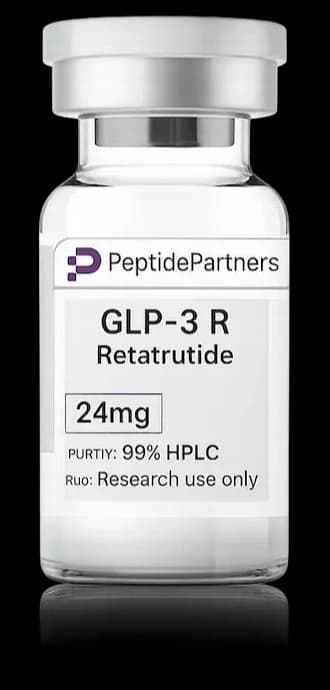
For a closer look at the current 24 mg listing, public batch records, and product-specific Finnrick history, read the Peptide Partners retatrutide review.
Both PepPal picks publish testing data, but verification is still on the buyer. Run this checklist on any retatrutide vial before you order, including from PepPal's named picks.
The certificate of analysis should list the exact product and lot you are ordering. Generic site-level COAs are weaker than batch-specific ones.
HPLC purity and mass spectrometry identity should come from a named third-party lab with a report date, report ID, and method noted.
Independent test counts matter. For retatrutide specifically: Peptide Partners has 21 Finnrick-tested samples (A grade), Orbitrex has 14 (B grade) as of August 2026.
Shipping windows, refund posture, payment options, and PEPPAL code eligibility all change. Re-check the supplier page each time you order.
Retatrutide research vials are labeled for research-use only. PepPal does not publish human-use protocols and this guide does not either.
The full COA walk-through lives on How to Read a Peptide COA. The grey-market supplier overview lives on Best Grey Market Peptide Supplier.
Retatrutide's reputation is built on two main readouts: Phase 2 in 2023 and TRIUMPH-4 Phase 3 in December 2025. Both are published, peer-reviewed, or reported through formal trial channels.
Phase 3 weight-loss benchmark
Medication
Retatrutide
Class
Mean weight loss
Trial duration
Medication
Tirzepatide (Zepbound)
Class
Mean weight loss
Trial duration
Medication
Semaglutide (Wegovy)
Class
Mean weight loss
Trial duration
Numbers from published trial results. Different trials, different patient populations, different durations. Treat as benchmark context, not direct head-to-head comparison.
Reported side effects from clinical trials fall into two buckets. The first is the standard GLP-1 family profile: nausea, vomiting, diarrhea, and constipation, mostly mild to moderate, mostly during dose escalation. The second is something specific to higher retatrutide doses: dysesthesia, which can present as tingling, skin sensitivity, or tenderness to the touch. The December 2025 TRIUMPH-4 readout flagged this signal at the 12 mg dose.
Most safety claims from clinical trials are based on pharmaceutical-grade retatrutide. Research-use vials add a separate variable: purity, identity, and contamination. That is why the supplier verification checklist above matters.
Real 2026 retatrutide pricing depends entirely on which path you take. Clinical trial enrollment is free. Compounded retatrutide is not a legitimate option under federal law and should not be price-shopped. Research-use suppliers price by vial size and per-mg cost. Branded pricing does not exist yet because the drug is not approved.
Retatrutide cost by access path (May 2026)
Path
TRIUMPH clinical trial
Typical out-of-pocket cost
What you get
Path
Compounded retatrutide
Typical out-of-pocket cost
What you get
Path
Research-use supplier
Typical out-of-pocket cost
What you get
Path
Branded retatrutide (future)
Typical out-of-pocket cost
What you get
Verify current per-vial pricing on the supplier site. Pricing changes frequently and per-mg cost varies between suppliers.
When branded retatrutide launches, it will likely follow the same launch-pricing pattern as Zepbound. That suggests roughly $1,000+ per month before any savings card or insurance offset. That is the realistic future cost baseline for FDA-approved retatrutide.
This page is current as of May 18, 2026. Several things will change soon and should be re-confirmed before you act on them.
No. As of May 18, 2026, retatrutide is not approved by the FDA, EMA, MHRA, TGA, or Health Canada. Eli Lilly has not yet submitted a New Drug Application. The earliest realistic approval window is late 2027 to 2028, with retail pharmacy availability likely in 2028.
There is no FDA-approved retail option. The two real access paths are TRIUMPH Phase 3 trial enrollment (free, pharmaceutical-grade, with placebo risk) and research-use peptide suppliers like Peptide Partners and Orbitrex Peptides. Compounded retatrutide is not a legal pathway under federal law.
Retatrutide fails all three criteria for 503A and 503B compounding: it has no USP/NF monograph, it is not a component of an FDA-approved drug, and it has never appeared on the FDA drug shortage list. The FDA has stated directly that retatrutide cannot be used in compounding under federal law and has sent warning letters to companies selling compounded retatrutide.
Retatrutide is a triple-receptor agonist (GLP-1, GIP, and glucagon). Tirzepatide is a dual agonist (GLP-1 and GIP). Semaglutide is single-receptor (GLP-1). TRIUMPH-4 Phase 3 reported 28.7% mean weight loss at 12 mg over 68 weeks. Tirzepatide typically reports 20% to 22%, and semaglutide reports 15% to 17%, in their respective approval trials.
Trial-grade retatrutide has shown the standard GLP-1-family side-effect profile (nausea, vomiting, diarrhea) plus a more retatrutide-specific signal called dysesthesia at higher doses. Long-term Phase 3 safety data is still being collected throughout 2026. Research-use vial quality is a separate variable from drug safety and depends on supplier verification.
Peptide Partners is the testing-depth comparison. Finnrick has tested 21 samples and graded them A (Great), with no score below 6 and the most recent test on 8 May 2026. Orbitrex Peptides is another practical option, with a Finnrick B grade across 14 samples and the most recent test on 28 April 2026.
PEPPAL is PepPal's discount code with eligible suppliers. Both Peptide Partners and Orbitrex Peptides support it at checkout when eligible. Code eligibility, product coverage, and savings amounts can change, so verify on the supplier site before ordering.
Search active retatrutide trials at ClinicalTrials.gov or Eli Lilly's trial finder. Typical eligibility includes a BMI of 30 or greater (or 27 with a weight-related condition), age 18 to 75, no history of medullary thyroid cancer or MEN2, and no current GLP-1 use. Expect a 68-to-72-week commitment.
Per-vial pricing varies by supplier, vial size, and current promotions. Verify the current price on the supplier page before ordering and apply PEPPAL at checkout where supported. PepPal does not maintain a live price list on this page.
Not on this page. PepPal points readers to the Retatrutide research protocol on Peptide Dosing Protocols for reconstitution math, syringe-unit context, and protocol structure. This guide is focused on access and supplier verification.
No. This page is educational and is not medical advice. Retatrutide is investigational and is sold by research-use suppliers as research-use-only material that is not approved for human consumption. Consult a qualified clinician for any individual decision.
Preferred supplier
Peptide PartnersNeed peptides? Start with a verified supplier.
PepPal's recommended source with current discount access and established testing standards.