Last updated: March 2026

Best Peptides for Fat Loss: 2026 Comparison Guide

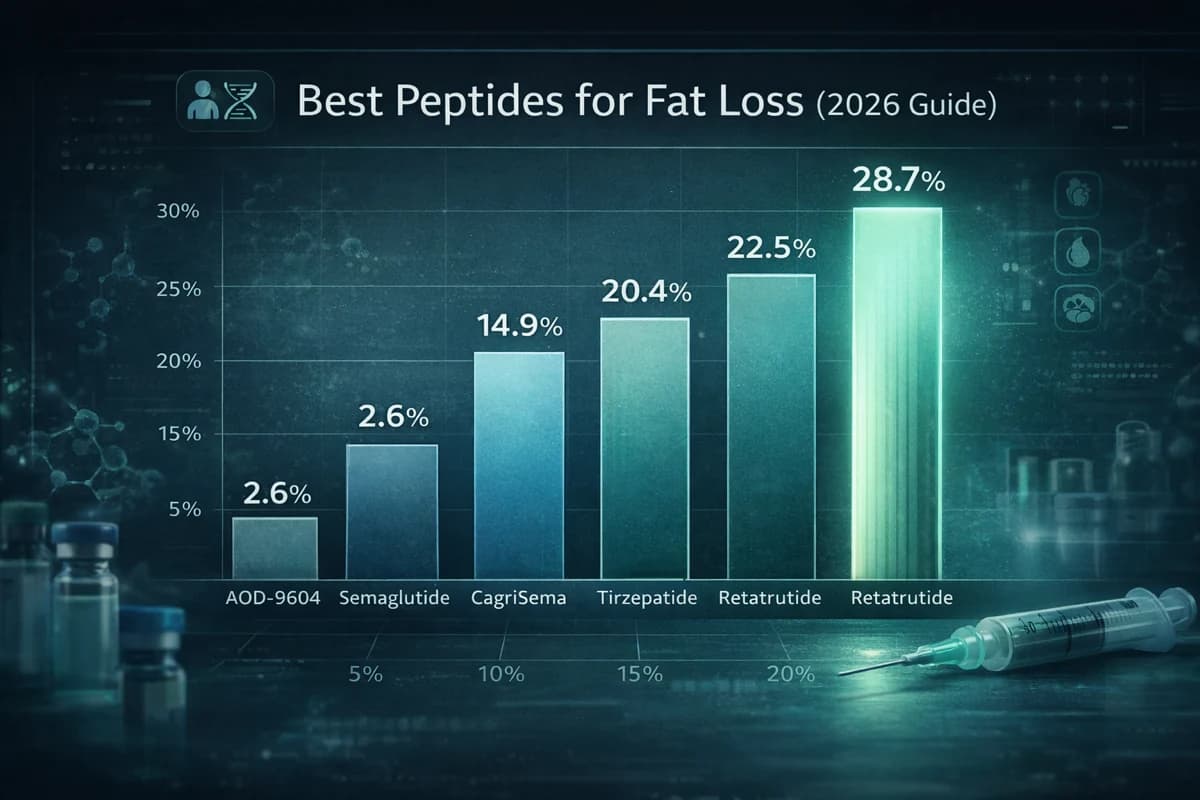
Retatrutide is the clear top performer for fat loss in 2026, with GLP-1 receptor agonists and their multi-receptor successors dominating the category. Semaglutide produces roughly 14.9% to 15.2% mean weight loss, tirzepatide delivers 16% to 22.5%, retatrutide achieved 24.2% to 28.7% in Phase 2/3 data, and CagriSema showed 20.4% in Phase 3. AOD-9604 and MOTS-c offer different, less-proven mechanisms. This guide compares all seven compounds on efficacy, safety, dosing, cost, and supplier availability.
Best peptides for fat loss 2026 comparison guide with clinical efficacy data
Quick answerTL;DREducational only

Fat-loss peptides have moved far beyond marketing hype. The STEP, SURMOUNT, TRIUMPH, and REDEFINE programs now provide specific, peer-reviewed weight-loss percentages that allow direct comparison. This guide evaluates seven peptides across clinical efficacy, side effects, sustainability concerns including muscle loss and rebound weight gain, reconstitution math, current pricing from COA-verified suppliers, and access pathways including clinical trial enrollment.

Whether evaluating research-grade options through PepPal's verified suppliers or considering clinical trial participation, every claim in this guide is anchored to published trial data or clearly labeled as community-derived. For compound-specific dosing and titration details, see the protocol library on peptidedosingprotocols.com.

Disclaimer: This article is for educational and informational purposes only. It is not medical advice. Regulatory status varies by compound. Semaglutide and tirzepatide are FDA-approved, while retatrutide and CagriSema remain investigational, and AOD-9604 plus MOTS-c are research-use compounds only. Consult a healthcare provider before considering any compound.
Guide Suppliers

Dual recommendation

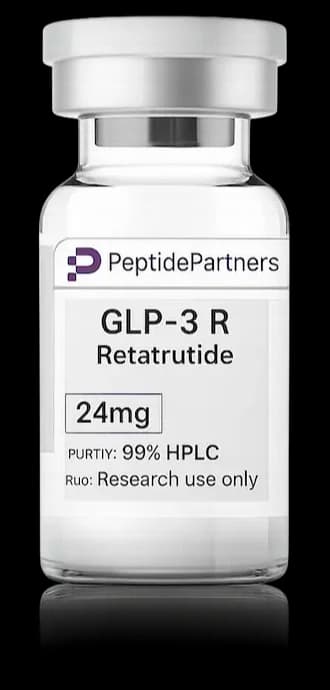
Peptide Partners carries a broad portfolio of fat-loss peptides with Finnrick Analytics quality verification, and Orbitrex Peptides is a COA-verified supplier carrying fat-loss peptides tested by Finnrick Analytics.

Orbitrex Peptides logo
Best for selection and multi-peptide carts

A strong fit when you want broader catalog coverage and plan to run multiple peptides, while keeping quality signals solid.

Use code PEPPAL at checkout when eligible. Availability and cart rules can vary by supplier.

Contents

  1. 1What are peptides for fat loss?
  2. 2Clinical trial results
  3. 3Top peptides ranked
  4. 4Stacking for enhanced fat loss
  5. 5Supplier comparison
  6. 6Red flags and green flags
  7. 7Reconstitution and dosing
  8. 8Pricing and access paths
  9. 9Side effects and sustainability
  10. 10Semaglutide vs tirzepatide vs retatrutide
  11. 11Frequently asked questions
  12. 12Next steps

What Are Peptides for Fat Loss?

Peptides for fat loss are short-chain amino-acid compounds that interact with appetite regulation, insulin signaling, and metabolic pathways to reduce body weight. Unlike stimulant-based weight-loss supplements, these peptides mimic or amplify naturally occurring hormones, primarily the incretins GLP-1 and GIP, that signal satiety, slow gastric emptying, and improve insulin sensitivity.

The result is reduced caloric intake and, in some cases, increased energy expenditure and fat oxidation. The fat-loss peptide landscape in 2026 is dominated by incretin-class compounds, with AOD-9604 and MOTS-c remaining substantially weaker evidence-tier options.

How they work

  • GLP-1 agonists: semaglutide suppresses appetite, slows gastric emptying, and reduces caloric intake.
  • Dual agonists: tirzepatide adds GIP signaling, which appears to enhance fat oxidation, improve metabolic flexibility, and may help with lean-mass preservation.
  • Triple agonists: retatrutide adds glucagon receptor activity, which may increase energy expenditure and hepatic fat oxidation.
  • Non-incretin alternatives: AOD-9604 targets lipolysis and MOTS-c targets AMPK-like metabolic signaling, but the evidence base is much weaker.

Key distinction

Not all fat-loss peptides belong in the same decision set. Semaglutide and tirzepatide are FDA-approved, retatrutide is in late-stage development, and CagriSema is supported by large trials but remains investigational. AOD-9604's pharmaceutical development was abandoned after failure in a larger trial, and MOTS-c has not demonstrated human fat-loss efficacy. Evidence quality should drive confidence more than mechanism hype.

Comparison infographic for semaglutide, tirzepatide, retatrutide, and related fat-loss peptide categories

Clinical Trial Results

The efficacy gap between older “fat-loss peptides” and modern incretin-based compounds is wide enough that they should not be discussed as if they are interchangeable. The table below follows the guide’s trial hierarchy and shows how quickly the outcome curve rises from semaglutide to tirzepatide to retatrutide.

PeptideTrialPhaseDurationPopulationMean WL≥15% WL≥20% WL≥25% WL
Semaglutide 2.4 mgSTEP 1Phase 368 weeks1,961 adults without diabetes14.9%~50%~33%N/A
Semaglutide 2.4 mgSTEP 5Phase 3104 weeks304 adults without diabetes15.2%N/AN/AN/A
Tirzepatide 15 mgSURMOUNT-1Phase 372 weeks2,539 adults without diabetes22.5%78%63%36%
Tirzepatide MTDSURMOUNT-4Phase 388 weeks670 adults without diabetes25.3% totalN/AN/AN/A
Retatrutide 12 mgJastreboff Phase 2Phase 248 weeks338 adults without diabetes24.2%83%N/AN/A
Retatrutide 12 mgTRIUMPH-4Phase 368 weeks445 adults with obesity + OA28.7%N/AN/A58.6%
CagriSema 2.4/2.4 mgREDEFINE 1Phase 368 weeks3,417 adults without diabetes20.4% ITT / 22.7% on-treatmentN/A60%40.4%
CagriSema 2.4/2.4 mgREDEFINE 2Phase 368 weeks1,206 adults with T2D13.7%N/AN/AN/A
AOD-9604 1 mgPhase 2Phase 212 weeks~300 obese adults (oral)2.8 kg (~2.6%)N/AN/AN/A
MOTS-cNo human trialsPreclinicalN/AAnimal models onlyN/AN/AN/AN/A

The incretin-based peptides operate in a different league than older compounds. Tirzepatide moved the benchmark meaningfully beyond semaglutide, and retatrutide then set a new ceiling by adding glucagon receptor activity, with TRIUMPH-4 reporting 28.7% mean weight loss at 68 weeks. CagriSema landed in a strong but not category-leading band.

AOD-9604 and MOTS-c sit in a different class of evidence. AOD-9604's development failed despite a modest early signal, while MOTS-c still lacks human fat-loss trials. For most readers, the clinically relevant comparison set is semaglutide, tirzepatide, retatrutide, and CagriSema.

  • Semaglutide references in the guide: STEP 1 and STEP 5.
  • Tirzepatide references in the guide: SURMOUNT-1 and SURMOUNT-4.
  • Retatrutide references in the guide: Jastreboff Phase 2 and TRIUMPH-4 Phase 3 reporting.
  • CagriSema references in the guide: REDEFINE 1 and REDEFINE 2.

Top Peptides for Weight Loss, Ranked by Clinical Efficacy

1. Retatrutide (LY3437943): Triple Agonist

Efficacy headline: 28.7% mean weight loss at 68 weeks in TRIUMPH-4 Phase 3 data reported in December 2025, the highest obesity-trial efficacy figure discussed in this guide.

Mechanism: Retatrutide activates GLP-1, GIP, and glucagon receptors simultaneously. GLP-1 suppresses appetite and slows gastric emptying, GIP enhances insulin sensitivity and may promote fat browning, and the glucagon component increases hepatic fat oxidation and energy expenditure.

Typical dose range: 2 mg to 12 mg once weekly, titrated over roughly 20 to 24 weeks. Phase 3 maintenance doses under study include 4 mg, 9 mg, and 12 mg.

Side effects: GI events remain the baseline class issue, but retatrutide also showed a dysesthesia signal in TRIUMPH-4 of about 20.9% at 12 mg. Discontinuation due to adverse events reached 12.2% at 9 mg and 18.2% at 12 mg.

Status: Not FDA-approved. Phase 3 TRIUMPH studies are ongoing, with projected NDA timing in late 2026 and a possible approval window in 2027 if results remain favorable.

Accessibility: Clinical trial enrollment remains the primary path. Research-grade availability is referenced through PepPal suppliers, but it remains outside pharmacy access.

Full protocol: Retatrutide Dosing Protocol

2. Tirzepatide (Zepbound / Mounjaro): Dual GLP-1/GIP Agonist

Efficacy headline: 22.5% mean weight loss at 72 weeks in SURMOUNT-1 and up to 25.3% total weight loss across 88 weeks in SURMOUNT-4.

Mechanism: Dual activation of GLP-1 and GIP receptors. GLP-1 agonism suppresses appetite and delays gastric emptying, while GIP activation appears to enhance fat oxidation, metabolic flexibility, and possibly lean-mass preservation.

Typical dose range: 2.5 mg to 15 mg weekly in 2.5 mg increments, typically escalated every 4 weeks over a 20-week titration period.

Side effects: GI tolerability is still the main limiting factor, but discontinuation due to adverse events in SURMOUNT stayed in the 4.3% to 7.1% range and no dysesthesia signal has emerged.

Status: FDA-approved for chronic weight management as Zepbound and for type 2 diabetes as Mounjaro. Manufacturer: Eli Lilly.

Accessibility: Available through telehealth and in-person prescribing channels, with variable insurance coverage. Research-grade availability is also referenced in the supplier market.

Full protocol: Tirzepatide Dosing Protocol

3. CagriSema (Cagrilintide + Semaglutide): Amylin + GLP-1

Efficacy headline: 20.4% mean weight loss in REDEFINE 1 under intent-to-treat analysis and 22.7% under on-treatment analysis, with weaker efficacy in the type 2 diabetes population of REDEFINE 2.

Mechanism: The cagrilintide plus semaglutide combination pairs amylin-pathway satiety signaling with GLP-1 agonism. The premise is additive appetite suppression through distinct brain pathways, and REDEFINE 1 showed it outperforming semaglutide alone.

Typical dose range: Fixed once-weekly combination with titration. Only 57.3% of REDEFINE 1 participants reached the highest dose, suggesting some efficacy headroom.

Side effects: GI events remain common, occurring in 79.6% of participants in REDEFINE 1, though most were mild to moderate and discontinuation remained around 6%.

Status: Not FDA-approved. REDEFINE data has reported, but regulatory submission timing has not been formally announced.

Accessibility: Not available by prescription. Current access is limited to trial participation or separate-component research sourcing.

Full protocol: CagriSema Stack Protocol

4. Semaglutide (Wegovy / Ozempic): GLP-1 Receptor Agonist

Efficacy headline: 14.9% at 68 weeks in STEP 1 and 15.2% sustained through 104 weeks in STEP 5. In STEP 1, 86% of participants achieved at least 5% weight loss.

Mechanism: Semaglutide acts primarily through GLP-1-mediated appetite suppression, slower gastric emptying, and glucose-dependent insulin support. The weight-loss effect comes mostly from reduced caloric intake rather than increased expenditure.

Typical dose range: 0.25 mg to 2.4 mg weekly with escalation typically spread across 16 to 20 weeks.

Side effects: Nausea (44% vs. 18% placebo in STEP 1), diarrhea (30%), vomiting (24%), constipation (24%), plus class-level warnings around pancreatitis, gallbladder events, and thyroid C-cell concerns.

Status: FDA-approved with the longest real-world track record among the major peptides in this guide. Manufacturer: Novo Nordisk.

Accessibility: Widely available by prescription with expanding but variable insurance coverage, and also widely sold in research-grade form.

Full protocol: Semaglutide Dosing Protocol

5. Cagrilintide + Tirzepatide Stack: Amylin + Dual GLP-1/GIP

Efficacy headline: No controlled human trial data exists for this combination. Any efficacy expectations are extrapolated from tirzepatide data and the CagriSema program.

Mechanism: The rationale is to combine tirzepatide's dual GLP-1/GIP agonism with separate amylin-mediated satiety signaling from cagrilintide, potentially targeting three pathways at once.

Typical dose range: Community-derived only. No evidence-backed combined dosing guidance exists in clinical literature.

Side effects: Additive GI burden should be assumed. Safety and efficacy remain unknown.

Status: No approved combination product and no clinical validation.

Accessibility: Research-community protocol only.

Full protocol: Cagrilintide + Tirzepatide Stack Protocol

6. AOD-9604: HGH Fragment

Efficacy headline: Modest efficacy only: 2.8 kg mean weight loss over 12 weeks in Phase 2, followed by a failed Phase 2B program that ended development.

Mechanism: AOD-9604 is a synthetic HGH fragment intended to stimulate lipolysis and inhibit lipogenesis without the diabetogenic or growth-promoting activity of full-length HGH.

Typical dose range: Community dosing often centers on 250 to 500 mcg daily, but there is no FDA-approved protocol.

Side effects: The safety profile was comparatively favorable in legacy studies, but efficacy is not competitive with modern incretin-class options.

Status: Not FDA-approved, no longer in active pharmaceutical development, and WADA-prohibited.

Accessibility: Research-grade only, with live availability varying by supplier.

Full protocol: AOD-9604 Dosing Protocol

7. MOTS-c: Mitochondrial-Derived Peptide

Efficacy headline: No human weight-loss efficacy trials exist. The cited evidence remains preclinical.

Mechanism: MOTS-c acts through AMPK-linked metabolic signaling and is frequently described as an exercise-mimetic or metabolic-support peptide that may enhance glucose uptake and fatty-acid oxidation.

Typical dose range: Community dosing typically centers on 5 to 10 mg daily, 5 times weekly, but there is no established human fat-loss protocol.

Side effects: The issue is not known toxicity so much as the absence of robust human efficacy data.

Status: Not FDA-approved. Clinical development has not meaningfully progressed for obesity use.

Accessibility: Research compound only with narrower supplier visibility than the major GLP-1 options.

Full protocol: MOTS-c Dosing Protocol

Stacking for Enhanced Fat Loss

CagriSema (Cagrilintide + Semaglutide): Clinically validated

This is the only multi-peptide fat-loss stack in this guide with Phase 3 validation. REDEFINE 1 reported 20.4% mean weight loss, outperforming semaglutide alone and cagrilintide alone through complementary amylin and GLP-1 signaling.

Full stack protocol

Cagrilintide + Tirzepatide: Community protocol

This is theoretically the most comprehensive incretin stack, built around GLP-1, GIP, and amylin signaling. No controlled trial has tested it. The rationale is plausible, but the safety and efficacy profile is unknown.

Full stack protocol

Cagrilintide + Retatrutide: Theoretical extension

This would theoretically combine GLP-1, GIP, glucagon, and amylin pathways. No published clinical data exists, and GI tolerability would likely be difficult.

Evidence disclaimer: no multi-peptide stack beyond CagriSema has been validated in controlled obesity trials, and additive GI effects should be expected.

Supplier Comparison & Availability

PepPal works with two COA-verified supplier partners for fat-loss peptides. Both have undergone Finnrick Analytics quality assessment.

SupplierFinnrick ratingSamples testedFat-loss peptides carriedFull profile
Peptide PartnersA-range Finnrick coverage with 59 tested samples across 7 products; Retatrutide is specifically A-rated and Tirzepatide is currently C-rated in the cited supplier review.59 tests across 7 productsConfirmed in current PepPal supplier data: semaglutide, tirzepatide, retatrutide, cagrilintide, MOTS-c. AOD-9604 availability is not confirmed in the repo.View profile
Orbitrex PeptidesA (Great) profile in current PepPal review coverage for key products including Retatrutide and Tirzepatide.13 samples across 3 productsConfirmed in current PepPal supplier data: semaglutide, tirzepatide, retatrutide. Cagrilintide, AOD-9604, and MOTS-c availability need live catalog confirmation.View profile

If one supplier clearly carries the exact compound you need and the other does not, that should dominate the decision. If both carry it, compare pricing, Finnrick context, and lot-level COA practices. Use code PEPPAL with either supplier.

For a broader directory and more supplier-vetting detail, see Best Grey-Market Peptide Supplier.

Red Flags and Green Flags

Green Flags

  • Finnrick Analytics testing badge and letter grade are clearly visible.
  • A batch-specific COA is provided and traceable to the exact lot.
  • Pricing remains consistent with the high manufacturing cost of GLP-1 class compounds.
  • The supplier has 3+ years of market presence and responds to verification questions.
  • Storage instructions, handling details, and expiration data are included.
  • The COA shows HPLC purity at 98% or higher and comes from a third party.

Red Flags

  • No third-party testing or no visible Finnrick profile.
  • Only in-house COAs or generic PDFs with no lot-level traceability.
  • Pricing is 40% to 50% below expected market ranges for high-demand GLP-1 compounds.
  • Sourcing details are vague and no batch number is shown.
  • Powder is discolored, clumped, or inconsistent across orders.
  • Support goes silent when you ask for verification details.
  • Product labeling lacks expiration dates or claims unsupported pharmaceutical status.

Counterfeiting risk is highest in the GLP-1 category because demand is strong and legitimate manufacturing is expensive. If you need a process for checking a supplier's documentation, review How to Read a Peptide COA.

Reconstitution & Dosing Essentials

Semaglutide

Vial sizeBAC waterConcentration0.5 mg dose1 mg dose2.4 mg dose
3 mg1.5 mL2 mg/mL0.25 mL (25 U)0.5 mL (50 U)1.2 mL (120 U)
5 mg2.5 mL2 mg/mL0.25 mL (25 U)0.5 mL (50 U)1.2 mL (120 U)
10 mg5 mL2 mg/mL0.25 mL (25 U)0.5 mL (50 U)1.2 mL (120 U)

Tirzepatide

Vial sizeBAC waterConcentration2.5 mg dose5 mg dose10 mg dose15 mg dose
5 mg1 mL5 mg/mL0.5 mL (50 U)1 mL (100 U)N/AN/A
10 mg2 mL5 mg/mL0.5 mL (50 U)1 mL (100 U)2 mL (200 U)N/A
15 mg3 mL5 mg/mL0.5 mL (50 U)1 mL (100 U)2 mL (200 U)3 mL (300 U)
30 mg3 mL10 mg/mL0.25 mL (25 U)0.5 mL (50 U)1 mL (100 U)1.5 mL (150 U)

AOD-9604

Vial sizeBAC waterConcentration250 mcg dose500 mcg dose
5 mg2.5 mL2 mg/mL (2,000 mcg/mL)0.125 mL (12.5 U)0.25 mL (25 U)
10 mg5 mL2 mg/mL (2,000 mcg/mL)0.125 mL (12.5 U)0.25 mL (25 U)

Standard reconstitution steps

  1. Gather a sterile U-100 insulin syringe, bacteriostatic water, alcohol swab, and peptide vial.
  2. Wipe the vial septum and let it dry fully.
  3. Draw the exact BAC water volume needed for your target concentration.
  4. Inject the water slowly down the vial wall rather than directly into the powder.
  5. Let the vial rest for 1 to 2 minutes.
  6. Gently roll the vial until fully dissolved.
  7. Label the vial with compound, date, concentration, and expiration window.

Syringe unit conversion: 1 mL equals 100 units on a U-100 insulin syringe.

Pricing & Access Paths

There are three pathways to access fat-loss peptides, each with different cost structures, oversight levels, and tradeoffs.

Path 1: Clinical trial enrollment

Trials offer free access to the compound, medical monitoring, and structured dosing, but recruitment is limited by geography, eligibility criteria, and protocol rigidity.

  1. Search the compound on ClinicalTrials.gov.
  2. Filter by recruiting status and location.
  3. Review inclusion, exclusion, and contact details.

Best fit for retatrutide and CagriSema if you want structured dosing and medical monitoring.

Path 2: Peptide Partners

Current PepPal supplier coverage shows semaglutide, tirzepatide, retatrutide, cagrilintide, and MOTS-c in the supplier ecosystem, with value positioning that tends to favor larger-format purchasing rather than low sticker pricing.

  • Finnrick context: 59 tested samples across 7 products
  • Discount code: PEPPAL
  • Pricing context from current PepPal review: many peptide products fall in the $82 to $335 range for standard quantities, with bulk tirzepatide running materially higher.

Exact live semaglutide, retatrutide, and cagrilintide price points still need manual confirmation against the current catalog.

View Peptide Partners profile

Path 3: Orbitrex Peptides

Orbitrex has narrower but more price-visible GLP-1 coverage in the current repo. Semaglutide, tirzepatide, and retatrutide are confirmed in the supplier review.

  • Finnrick context: 13 samples across 3 products
  • Discount code: PEPPAL
  • Tirzepatide public ranges in the current PepPal review: $49.99 to $59.99 for 10 mg, $79.99 to $89.99 for 15 mg, and $119.99 to $129.99 for 30 mg.
  • Retatrutide pricing is marked as promotion-dependent in the supplier review rather than pinned to a stable live number.
View Orbitrex profile

Risk-adjusted perspective

Research-grade sourcing is usually faster and cheaper than post-approval pharmacy access, but the tradeoff is that you absorb more quality-verification risk yourself. The cost premium at better-documented suppliers is paying for stronger third-party verification, not just branding.

For approved compounds, retail pharmacy pricing still sits in the roughly $900 to $1,300 per month range without insurance, which is materially higher than the research market but includes regulated supply and clinical oversight.

Side Effects & Sustainability

Across semaglutide, tirzepatide, retatrutide, and CagriSema, the main side-effect burden is gastrointestinal. Nausea, diarrhea, vomiting, constipation, and decreased appetite dominate the profile and are usually most noticeable during dose escalation.

Typical guide ranges are nausea 20% to 44%, diarrhea 18% to 30%, vomiting 8% to 24%, and constipation 12% to 24%. Retatrutide adds a notable new safety signal: dysesthesia. Semaglutide carries the better-known thyroid C-cell warning, and all GLP-1 class compounds retain pancreatitis and gallbladder-event warnings.

Sustainability is where expectations often become more important than headline efficacy. STEP 1 extension data and SURMOUNT-4 both support the same conclusion: weight regain is common after discontinuation. The guide cites roughly two-thirds regain after semaglutide cessation and about 14% regain in SURMOUNT-4 after tirzepatide discontinuation. These compounds function more like chronic weight-management tools than one-time reset buttons.

Muscle loss is also real. Semaglutide body-composition data suggested roughly 40% of lost weight was lean mass. That is why resistance training, adequate protein intake, and realistic rate-of-loss expectations matter as much as the compound choice itself.

  • No long-term dataset yet answers the full 2+ year question for retatrutide.
  • Tirzepatide cardiovascular-outcomes expansion is still evolving.
  • Glucagon-receptor agonism adds upside and uncertainty in retatrutide.
  • CagriSema’s multi-year amylin-pathway durability remains unproven.

Semaglutide vs. Tirzepatide vs. Retatrutide vs. CagriSema

FeatureSemaglutideTirzepatideRetatrutideCagriSema
MechanismGLP-1 agonistGLP-1 + GIP dual agonistGLP-1 + GIP + glucagon triple agonistGLP-1 + amylin dual agonist
Peak efficacy14.9% to 15.2%22.5% to 25.3%24.2% to 28.7%20.4% ITT / 22.7% on-treatment
≥20% weight loss~33% of participants63% of participantsNot yet fully reported in TRIUMPH-4 detail60% of participants
FDA statusApprovedApprovedPhase 3Phase 3
DeveloperNovo NordiskEli LillyEli LillyNovo Nordisk
Dosing2.4 mg weekly5/10/15 mg weekly4/9/12 mg weekly under study2.4 mg/2.4 mg weekly
Half-life~7 days~5 days~6 daysSema ~7d / Cagri ~7d
Key concernGI events + thyroid warningGI eventsGI events + dysesthesiaGI events, high overall incidence
Discontinuation rate~7%4% to 7%12% to 18% at higher doses~6%
Muscle-loss concern~40% lean-mass share in semaglutide analysesPossibly improved vs semaglutideUnknownLikely class-similar
Rebound risk~67% regain at one year offRegain shown in SURMOUNT-4UnknownUnknown
Research supplier accessYesYesYesSeparate components rather than a standard combined product

Key takeaways

  • Retatrutide currently leads on raw efficacy but is still investigational.
  • Tirzepatide is the strongest risk-adjusted choice for many people because it combines major efficacy with approval status.
  • Semaglutide remains the most established and often the easiest approved entry point.
  • CagriSema is meaningful but not category-leading based on currently reported Phase 3 results.

Bottom tier compounds

AOD-9604 and MOTS-c should not be framed as primary alternatives to modern incretin-class fat-loss peptides. AOD-9604 is legacy and low-efficacy, and MOTS-c still lacks human obesity-trial evidence.

Frequently Asked Questions

What is the most effective peptide for weight loss in 2026?

Based on Phase 3 clinical trial data discussed in this guide, retatrutide has produced the highest mean weight loss at 28.7% in TRIUMPH-4. It is not yet FDA-approved. Among approved compounds, tirzepatide currently delivers the strongest weight-loss outcomes.

Is tirzepatide better than semaglutide for fat loss?

In SURMOUNT-1, tirzepatide 15 mg produced 22.5% weight loss at 72 weeks versus semaglutide's 14.9% at 68 weeks in STEP 1. These are different obesity trials rather than a direct head-to-head obesity study, but tirzepatide's dual GLP-1/GIP mechanism appears to deliver superior weight loss.

Will I lose muscle on weight-loss peptides?

Some lean mass loss occurs with any rapid weight loss. Semaglutide body-composition analyses suggested about 40% of lost weight was lean mass. There is preliminary evidence tirzepatide may preserve more lean mass, but resistance training remains strongly recommended.

What happens when I stop taking the peptide?

Weight regain is expected. The guide cites STEP 1 extension data showing roughly two-thirds of lost weight returned within one year after stopping semaglutide, and SURMOUNT-4 showed regain after tirzepatide discontinuation.

How much do fat-loss peptides cost from research suppliers?

Pricing varies by compound and supplier. Research-grade semaglutide, tirzepatide, and retatrutide are available through PepPal suppliers, while pharmacy pricing for approved compounds generally remains in the roughly $900 to $1,300 per month range without insurance.

How do I reconstitute GLP-1 peptides?

Add bacteriostatic water to the lyophilized vial using the concentration tables in this guide, inject slowly down the vial wall, let the vial rest briefly, and gently roll to dissolve. Use the PepPal calculator for exact syringe-unit math.

Is retatrutide available yet?

Not by prescription. As of March 2026 in this guide, retatrutide remains in Phase 3 clinical trials and is available only through trials or research-grade suppliers, with a possible approval window in 2027 if late-stage results remain favorable.

What is CagriSema and how does it compare?

CagriSema combines cagrilintide and semaglutide. The guide cites REDEFINE 1 at 20.4% mean weight loss, placing it above semaglutide alone but below the strongest tirzepatide and retatrutide numbers.

Is AOD-9604 worth it for fat loss?

AOD-9604 has some safety data but weak efficacy compared with incretin-class peptides. Its larger efficacy program failed, so it should not be treated as a primary alternative to semaglutide, tirzepatide, retatrutide, or CagriSema.

What are the side effects of GLP-1 weight-loss peptides?

The main side effects are gastrointestinal: nausea, diarrhea, vomiting, and constipation, usually clustering during dose escalation and often improving by weeks 8 to 12. Retatrutide also has a distinct dysesthesia signal discussed in current trial reporting.

Which PepPal supplier should I use for fat-loss peptides?

Both Peptide Partners and Orbitrex Peptides are positioned as COA-verified supplier options within PepPal. Compare the exact compound you need, the current Finnrick context, pricing, and lot-level COA availability before ordering.

Can I combine fat-loss peptides with exercise and diet?

Yes. Lifestyle intervention was part of every major trial program referenced here. Resistance training is especially important for minimizing lean-mass loss during rapid weight reduction.

What is the difference between GLP-1, dual, and triple agonist peptides?

Semaglutide targets GLP-1 alone. Tirzepatide adds GIP. Retatrutide adds glucagon on top of GLP-1 and GIP, which may explain its stronger weight-loss performance. Each added pathway appears to increase efficacy, but it may also alter tolerability and risk.

What calculator should I use for reconstitution math?

Use the PepPal Peptide Reconstitution Calculator to convert vial size, BAC water volume, and target dose into syringe units.

Is this medical advice?

No. This article is for educational and informational purposes only. Regulatory status varies widely across these compounds, and treatment decisions should be discussed with a qualified healthcare provider.

Next Steps

If the goal is practical next action rather than more theory, compare suppliers, verify COAs, and run the reconstitution math before you decide anything about a specific compound.

Last updated: March 2026

Disclaimer: This article is for educational purposes only. It is not medical advice. Semaglutide and tirzepatide are FDA-approved; retatrutide and CagriSema remain investigational; AOD-9604 and MOTS-c are research compounds only.

Affiliate note: PepPal may earn referral fees from supplier links referenced in this guide. The requested affiliate-policy route is not present in this repo, so this note is left as plain disclosure text for now.