
Regulatory & Legal
FDA Targets Non-Approved GLP-1s in February 2026: What Changed and Who's Affected
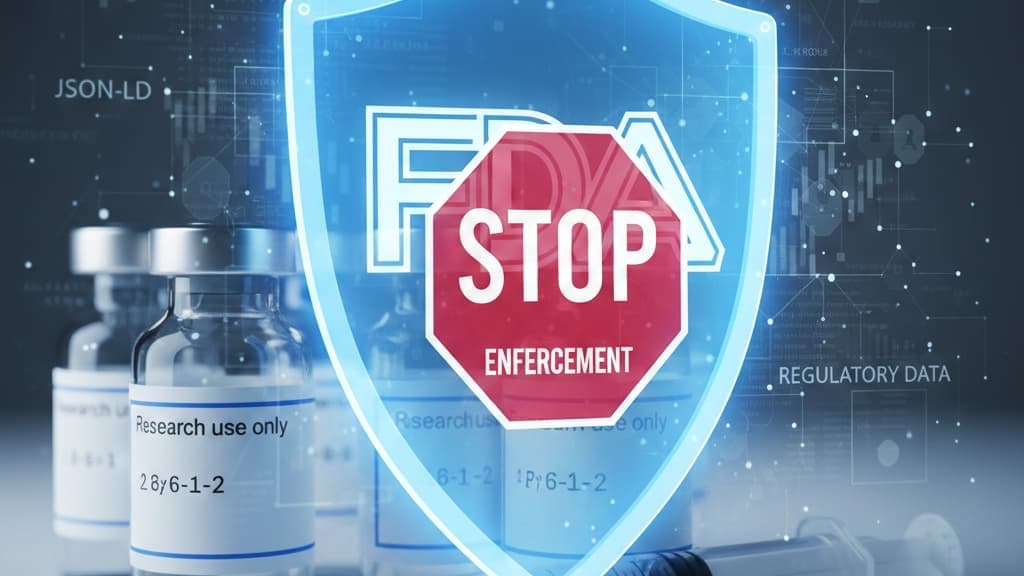
In early February 2026, the FDA described new enforcement steps around non-FDA-approved GLP-1 products and highlighted a growing pattern: products labeled "research use only" (or "not for human consumption") being sold online with dosing instructions.
For protocol-level context while reviewing GLP-1 claims, use the Semaglutide research protocol and compare sourcing claims against our supplier rankings.
Pep Pal does not sell peptides. For calculation/tracking only. Not medical advice.
Pep Pal is for calculation and tracking purposes only. This article is informational and does not provide medical advice. If you have questions about medications or adverse effects, talk to a licensed clinician.
Pep Pal does not sell peptides or medications. We publish educational content and tools to help people stay organized and informed.
What the FDA said in February 2026
In February 2026, the FDA published updated communications describing decisive steps aimed at restricting certain GLP-1 active ingredients used in non-approved compounded drugs and warning that enforcement actions may follow for violations.
At the same time, the FDA reiterated concerns about unapproved GLP-1 products sold online, including counterfeit risk and products that appear to be marketed for consumer use while carrying research-use labeling.
Primary sources: FDA press announcement (February 2026) and FDA consumer/provider safety page.
What the FDA is concerned about
The FDA's consumer-facing guidance emphasizes a few repeated themes:
- Counterfeit and unknown-quality products sold online
- Unapproved versions of GLP-1 drugs marketed as alternatives to FDA-approved medications
- A falsely labeled pattern: items labeled "research use only" or "not for human consumption," but sold with dosing/injection-style instructions
- Adverse event reporting concerns tied to non-approved and compounded products (where applicable)
If you are seeing these labels in the wild, the key signal is not the label itself. It is the mismatch between the label and the way the product is being marketed.
Why this escalated now (no speculation)
This topic intensified because:
- The FDA has been publishing more frequent updates and safety messaging about unapproved GLP-1 products sold online.
- The agency has clarified compounding policy as supply conditions evolve, which can affect enforcement posture and what claims sellers can legally make.
If you are reading this weeks or months later, check the FDA's most recent updates first. Regulatory context moves fast.
For a practical example of how those rules affect one prescription drug, see the PepPal guide to compounded tirzepatide access in 2026.
For claim-level context on the March 2026 viral narrative about "14 of 19 peptides," review our RFK/Category 2 fact check.
Supporting references: FDA GLP-1 compounding policy overview and FDA warning letter database.
What "research use only" does and does not mean
Research-use labeling is not a magic safety label and it is not a guarantee of quality, identity, purity, or safe handling.
Red flags to watch for:
- Research-only labeling paired with consumer dosing language
- Claims like "same as" or "generic for" an FDA-approved GLP-1 drug
- Missing or generic batch documentation and COAs (no batch identifiers, unclear testing method, or no lab details)
- Marketing that implies medical use while disclaiming it in fine print
If your goal is to make informed decisions, focus on documentation literacy and risk awareness, not hype.
How this connects to Pep Pal (without giving buying guidance)
Pep Pal is built for organization and calculation, not for telling anyone what to take.
If you are trying to reduce mistakes and stay consistent with your own recordkeeping:
- Use the peptide reconstitution calculator to keep your math saved and repeatable.
- Learn how to evaluate batch documentation and COAs so you can spot obvious inconsistencies.
- Review the supplies checklist to keep your preparation workflow organized.
Keep your news awareness and tool usage connected. When the regulatory environment changes, your risk tolerance and verification standards often change too. Keep your tool usage disciplined as rules shift.
FAQ
Is retatrutide FDA-approved?
As of August 2026, retatrutide has been discussed widely online, but "peptides" sold on the internet under that name may not be FDA-approved medications. Use primary FDA sources to verify the current status. For practical risk reduction, review how to evaluate batch documentation and COAs.
What did the FDA say about compounded GLP-1s in February 2026?
The FDA described new steps and enforcement posture related to non-FDA-approved GLP-1 products and concerns about certain active ingredients used in non-approved compounded drugs, along with consumer safety warnings about unapproved products sold online.
What are the risks of buying GLP-1 drugs online?
The FDA has warned about counterfeit risk, unknown quality, and unapproved products sold online, including products that appear "research labeled" but are marketed with consumer dosing instructions. Use batch-documentation checks on the suppliers page and keep dosage math consistent with the peptide reconstitution calculator.
How do I report a suspected adverse event?
Use the FDA's reporting pathways (commonly via MedWatch) and seek medical help immediately if symptoms are severe.
Preferred supplier
Peptide PartnersNeed peptides? Start with a verified supplier.
PepPal's recommended source with current discount access and established testing standards.
Related Research Protocols
Sources
- FDA press announcement (February 2026)
- FDA patient/provider safety page on unapproved GLP-1s
- FDA compounding policy clarification page
- FDA warning letter database
- FDA MedWatch adverse event reporting pathway
For side effect data on affected peptides, see the Peptide Side Effects Guide.
Related News
Research & Science
Retatrutide TRIUMPH-1 Results: Up to 30% Weight Loss in Phase 3
May 21, 2026
Regulatory & Legal
FDA Removes BPC-157, TB-500 and 10 More Peptides from Category 2 (April 2026)
April 23, 2026
Regulatory & Legal
RFK Jr. and the FDA 19 Peptides Claim: Fact Check (March 2026)
March 2, 2026
Regulatory & Legal
GLP-1 Supply and Compounding Shifts to Watch in 2026
February 18, 2026
Full article publishing soon