
Regulatory & Legal
FDA Removes BPC-157, TB-500 and 10 More Peptides from Category 2 (April 2026)
On April 15, 2026, the FDA published a notice announcing that 12 peptides, including BPC-157, TB-500, MOTs-C, GHK-Cu (injectable), Epitalon, Semax, KPV, and six others, would be removed from Category 2 of its 503A bulk drug substances list after seven calendar days[1]. The removal became effective April 22, 2026. The next day, April 16, the FDA followed with a Federal Register notice scheduling Pharmacy Compounding Advisory Committee (PCAC) meetings on July 23 and 24, 2026, to consider whether seven of those peptides should be added to the 503A bulks list itself[2][8].
This is the first substantive regulatory action on the compounded peptide question since HHS Secretary Robert F. Kennedy Jr. raised it publicly on the Joe Rogan Experience in February 2026[3]. It's also, critically, not what most of the headlines are saying it is.
Educational research reporting only. Not medical or legal advice.
The quick version
What changed on April 22, 2026:12 peptides are no longer designated by the FDA as raising "significant safety concerns"[1].
What did not change: None of these peptides are FDA-approved. None are yet legally authorized for compounding. And none of this has any direct bearing on grey-market research-grade vials that hobbyist researchers buy online. That market operates outside the 503A framework entirely.
What happens next: The PCAC meets July 23–24, 2026 to vote on whether seven of the 12 (BPC-157, KPV, TB-500, MOTs-C, DSIP, Semax, Epitalon) should be added to the 503A bulks list. Five more (GHK-Cu injectable, Cathelicidin LL-37, Dihexa Acetate, PEG-MGF, Melanotan II) will be reviewed at a separate PCAC meeting before the end of February 2027[2][4].
Even if PCAC recommends inclusion, formal FDA rulemaking is still required. That process historically takes over a year[4].
Use this as a practical checkout checklist: start with a reviewed supplier, add baseline blood testing, then gather the common supplies you need before ordering.
Vetted Supplier Shopping Cards
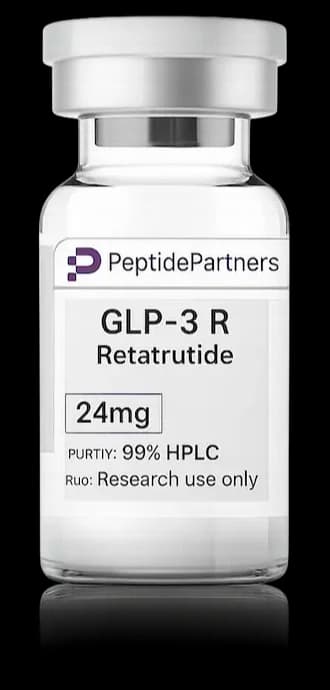
Peptide Partners
At-Home Blood Test
More Supplies
Disclosure: supply links may earn PepPal a commission at no cost to you.
Companion Supplies & Routine Support
What the FDA actually did
The 503A bulks list is an FDA framework that governs which bulk drug substances, raw active pharmaceutical ingredients, or APIs, state-licensed compounding pharmacies can legally use to compound medications. Substances on the list fall into one of three interim categories while the FDA evaluates them[5].
- Category 1: Under evaluation. The FDA does not plan to take enforcement action against pharmacies compounding with these while the review is ongoing.
- Category 2: Raises significant safety concerns. Effectively blocks compounding.
- Category 3: Nominated without adequate scientific support.
In September 2023, the FDA moved roughly 17 peptides into Category 2, which effectively shut down US compounding pharmacy production of these compounds overnight. BPC-157, TB-500, CJC-1295, Ipamorelin, and others disappeared from licensed clinical supply chains within weeks[6].
On April 15, 2026, the FDA's published notice confirmed that nominators had withdrawn their nominations for 12 peptides, which triggers removal from the category in seven calendar days. I pulled the FDA's updated 503A categories document directly to verify the list[1]. The full set:
Going to PCAC on July 23, 2026
- BPC-157 (acetate and free base)
- KPV (acetate and free base)
- TB-500 / Thymosin Beta-4 Fragment LKKTETQ (acetate and free base)
- MOTs-C (acetate and free base)
Going to PCAC on July 24, 2026
- Emideltide / DSIP (acetate and free base)
- Semax heptapeptide (acetate and free base)
- Epitalon (acetate and free base)
Going to PCAC before end of February 2027
- GHK-Cu (injectable routes)
- Cathelicidin LL-37
- Dihexa Acetate
- Mechano Growth Factor, Pegylated (PEG-MGF)
- Melanotan II
There's a separate, less-reported wrinkle on GHK-Cu: the non-injectable form was also removed from Category 1 (not Category 2) on the same date, because those nominations were also withdrawn[1]. GHK-Cu is the only compound in this action that appears on both sides of the 503A ledger, and the topical versus injectable distinction matters. The two forms are now on different regulatory tracks.
Why the nominations were withdrawn
Removing a substance from Category 2 "because the nominations were withdrawn" sounds bureaucratic, but it's the procedural lever that was used here. Under the FDA's interim policy, once a nomination is withdrawn, the agency must remove the substance from the category after seven days[5]. The FDA then has to decide whether to put it back through the bulks list review from scratch, which is exactly what's happening at PCAC on July 23–24.
Secretary Kennedy directed the FDA to review the Category 2 list after his February 27 remarks on Joe Rogan, and industry observers including Hyman, Phelps & McNamara and Polsinelli have described the April 15 action as a coordinated response driven by that political pressure[3][4][7][9]. The FDA's own docket notice confirms that the PCAC review is specifically tied to whether these peptides should be included on the 503A bulks list for use in compounding[8].
The part most coverage is getting wrong
Several outlets framed the April 15 action as a "reinstatement" of these peptides, or suggested that compounding pharmacies could now legally produce them again starting April 22. That's wrong, and the legal analyses I reviewed make this point explicitly.
From the Orrick analysis published April 16: removal from Category 2 does not, by itself, place these substances on the 503A bulks list or into Category 1 for which FDA is exercising enforcement discretion. The peptides remain in a regulatory gray area until the PCAC meets and the FDA takes final action[7].
Polsinelli's writeup reached the same conclusion: procedural removal should not be read as a go-ahead to compound these peptides. Under FDA's current policy, removal of a bulk drug substance from Category 2 does not, on its own, authorize use of that substance in compounding or bring it within FDA's interim enforcement discretion policy for substances in Category 1[4].
I reviewed the FDA's own notice language against both of these readings and they track[1]. The operative sentence is simply that the substance "will be removed from category 2." It does not say that compounding is now permitted. It says the safety-concern designation is lifted, pending PCAC review.
For compounding pharmacies, the practical read is: exercise caution until the FDA takes final action.
For the hobbyist research community, the practical read is: this changes almost nothing. Grey-market research-grade vials were never flowing through the 503A compounding pathway in the first place. They're sold as research use only products, outside the compounding framework entirely. The April 15 action doesn't clean up that market, regulate it, or make it riskier. It simply doesn't touch it.
Timeline
| Date | Event |
|---|---|
| September 2023 | FDA moves 17+ peptides to Category 2, effectively ending licensed compounding. |
| February 27, 2026 | HHS Secretary Kennedy publicly calls for reversal on Joe Rogan Experience. |
| April 15, 2026 | FDA publishes updated 503A categories document; notice of 12 peptides to be removed from Category 2 after seven days. Federal Register notice (FR Doc 2026-07361) filed same day. |
| April 16, 2026 | Federal Register notice published announcing July 23–24 PCAC meeting. |
| April 22, 2026 | Removal from Category 2 becomes effective. |
| June 30, 2026 | Deadline for requests to present orally at PCAC meeting. |
| July 9, 2026 | Deadline for written public comments to be provided to the PCAC. |
| July 22, 2026 | Deadline for written comments FDA will still consider. |
| July 23, 2026 | PCAC meeting Day 1: BPC-157, KPV, TB-500, MOTs-C. |
| July 24, 2026 | PCAC meeting Day 2: DSIP (Emideltide), Semax, Epitalon. |
| Before end of February 2027 | PCAC meeting for LL-37, Dihexa Acetate, PEG-MGF, Melanotan II, and GHK-Cu (injectable). |
What this means for the 12 peptides individually
Here's the per-compound breakdown of what changed on April 22 and what comes next. Where PepPal or PDP already has a protocol page for the peptide, I've linked it. the dosing, reconstitution, and trial data on those pages are unchanged by this regulatory action.
BPC-157: Removed from Category 2 on April 22. Going to PCAC July 23. See the BPC-157 protocol page on PDP for dosing and reconstitution. The Wolverine Stack (BPC-157 + TB-500) is covered in detail in the Wolverine Stack guide.
TB-500 (Thymosin Beta-4 fragment): Removed April 22. PCAC July 23. See the TB-500 protocol page. If you've seen claims tying TB-500 to cancer risk, I covered the actual evidence in a separate post.
MOTs-C: Removed April 22. PCAC July 23. The MOTs-C protocol page has current dosing and half-life data.
KPV: Removed April 22. PCAC July 23. See the KPV protocol page. KPV appears in the KLOW Stack.
Epitalon: Removed April 22. PCAC July 24. PDP protocol page is in progress.
Semax (heptapeptide): Removed April 22. PCAC July 24. See the Semax protocol page. Semax is part of the Russian Nootropic Stack alongside Selank.
DSIP (Emideltide): Removed April 22. PCAC July 24. PDP protocol page is in progress.
GHK-Cu (injectable routes): Removed from Category 2 April 22. PCAC before end of February 2027. Separately, the non-injectable form of GHK-Cu was removed from Category 1 on the same date. That's a withdrawal of a nomination for active evaluation, and it puts the topical form on its own PCAC track also before end of February 2027[1]. The GHK-Cu protocol page covers both routes.
Melanotan II: Removed April 22. PCAC before end of February 2027. See the Melanotan II protocol page.
Cathelicidin LL-37: Removed April 22. PCAC before end of February 2027. PDP protocol page is planned.
Dihexa Acetate: Removed April 22. PCAC before end of February 2027. No PDP protocol page at this time.
PEG-MGF (Pegylated Mechano Growth Factor) : Removed April 22. PCAC before end of February 2027. No PDP protocol page at this time.
What this means for suppliers
None of this action regulates or changes the grey-market research-grade peptide supply chain. Suppliers like Peptide Partners and Orbitrex sell research-grade vials labeled for research use only, a separate legal and commercial track from the 503A compounding pathway the FDA is evaluating.
If PCAC votes favorably in July 2026:Compounding pharmacies will have a formal pathway to produce BPC-157, TB-500, KPV, MOTs-C, DSIP, Semax, and Epitalon under physician prescription, after FDA rulemaking concludes. That's likely a 2027 event at the earliest given how bulks list rulemaking has moved historically[4]. Compounded peptides would flow through prescription, not direct-to-consumer sales.
For quality-conscious researchers:The more relevant question is still supplier testing quality, which is what the Finnrick grading system tracks. I've reviewed independent test data for Peptide Partners and Orbitrex across multiple peptides this quarter, and both have consistent third-party COA coverage on the compounds affected by this action. None of that changes on April 22. If you want to verify COA quality yourself, I wrote a full guide to reading peptide COAs.
For pricing: If compounded peptides become legally available through pharmacies in 2027, expect per-vial pricing to be substantially higher than current research-grade pricing. Compounded pharmacy products carry pharmacy margins, physician consult costs, and sterile preparation fees. The grey-market research channel has historically undercut compounded pricing by 5–10x on the same peptide, and that spread is unlikely to close.
How to submit a public comment
If you want to weigh in directly on the PCAC review, the FDA has established a public docket:
- Docket number: FDA-2026-N-2979[8]
- Comments received by July 9, 2026 will be provided directly to the Committee before the July 23–24 meeting.
- Comments received by July 22, 2026 will still be considered by FDA but may not reach the Committee members before the vote.
- Oral presentation requests at the meeting must be submitted by June 30, 2026.
- The meeting will be held at FDA's White Oak Campus in Silver Spring, MD, with a live webcast.
Comments can be submitted at regulations.gov. This is the most substantive public input opportunity on peptide compounding since the 2023 Category 2 designation, so if you have scientific, clinical, or operational data relevant to any of the seven peptides up for review, it's worth putting it on the record.
The bottom line
April 22, 2026 removed a regulatory label. It did not open a market, authorize compounding, or change the grey-market research supply chain.
The actual inflection point is the July 23–24 PCAC meeting. That's where BPC-157, TB-500, KPV, MOTs-C, DSIP, Semax, and Epitalon either get a formal recommendation toward 503A inclusion, which would eventually unlock compounded-pharmacy access under physician prescription, or they don't, and they return to the regulatory gray area indefinitely.
Five more peptides (GHK-Cu injectable, Melanotan II, LL-37, Dihexa, PEG-MGF) are in the same gray area but on a slower PCAC track that doesn't resolve until early 2027 at the earliest.
My editorial take, for what it's worth: this is the most favorable peptide regulatory news since 2023, but the framing in a lot of the headlines is ahead of the legal reality. I'll update this post as PCAC agendas and votes land. For the underlying science, dosing, and reconstitution math on each of the 12 compounds, the protocol pages linked throughout this piece are the reference. For the broader regulatory context, my earlier March 2 fact-check of the Joe Rogan comments is still the right background reading. It's no longer current on the April 15 action, but the underlying framework it walks through (503A, PCAC, bulks list, Category 1 vs. 2 vs. 3) is exactly what I've summarized above.
If you're planning to run a peptide that's affected by this action and want to make sure your reconstitution math is correct for whatever vial size you have, the free PepPal calculator handles that.
FAQ
Is BPC-157 now FDA-approved?
No. The April 15, 2026 action removed BPC-157 from Category 2 (significant safety concerns), effective April 22[1]. It did not approve BPC-157, did not add it to the 503A bulks list, and did not authorize compounding pharmacies to produce it. BPC-157 is going to the PCAC on July 23, 2026 for a vote on whether it should be added to the bulks list. Even if that vote is favorable, formal FDA rulemaking is required afterward, which historically takes over a year[4].
Can compounding pharmacies make BPC-157 right now?
No, not under a clear legal framework. The Orrick and Polsinelli legal analyses both concluded that removal from Category 2 does not place a substance into Category 1 (active evaluation with enforcement discretion) or onto the 503A bulks list[4][7]. It removes the significant safety concern label, but does not by itself authorize compounding. Pharmacies are expected to wait for PCAC action and subsequent FDA rulemaking.
Does this change anything about buying research-grade peptides online?
No. The 503A bulks list governs compounding pharmacy production, which is a separate legal track from research-grade peptide sales. Research-grade vials from suppliers like Peptide Partners and Orbitrex are labeled for research use only and sit outside the compounding framework the April 15 action relates to. If you were buying research-grade vials before April 22, nothing changed for you on April 22.
What peptides are affected?
Twelve peptides are removed from Category 2: BPC-157, TB-500, MOTs-C, KPV, Epitalon, Semax (heptapeptide), Emideltide (DSIP), GHK-Cu (injectable routes), Melanotan II, Cathelicidin LL-37, Dihexa Acetate, and PEG-MGF (Pegylated Mechano Growth Factor)[1]. Additionally, GHK-Cu in non-injectable routes was removed from Category 1 on the same date.
What happens at the July 2026 PCAC meeting?
The Pharmacy Compounding Advisory Committee will hear presentations from the nominators of seven peptides (BPC-157, KPV, TB-500, MOTs-C on July 23; DSIP, Semax, Epitalon on July 24) and vote on whether each should be recommended for inclusion on the 503A bulks list[2][8]. The vote is non-binding. The FDA then decides whether to move forward with rulemaking. Public comments received by July 9, 2026 will be provided to the Committee.
What about CJC-1295, Ipamorelin, AOD-9604, and Thymosin Alpha-1?
None of those four are in the April 15 action. They're the subject of a separate lawsuit filed by Evexias and Farmakeio in Texas under the Administrative Procedure Act[7]. Their regulatory status is on a different track and is not affected by the April 15 removal.
Will grey-market peptide prices go up or down because of this?
There's no direct mechanism for the April 15 action to change grey-market research-grade pricing, since that channel sits outside the 503A framework. If PCAC eventually recommends some of these peptides for the bulks list and compounded pharmacy products become available in 2027 or later, I'd expect compounded pricing to run 5–10x above current research-grade pricing, not the other way around. Compounded pharmacy products carry pharmacy, physician, and sterile prep costs that research-grade vials do not.
Does this affect Category 2 peptides the FDA did not include?
Yes, by omission. Cesium Chloride, Domperidone, Germanium Sesquioxide, Ibutamoren Mesylate, Kisspeptin-10, and Quinacrine (intrauterine) remain on Category 2[1]. The April 15 action was specific to 12 compounds; other Category 2 substances are not affected and remain subject to the significant safety concerns designation.
How do I submit a public comment?
Submit to docket FDA-2026-N-2979 at regulations.gov. Comments received by July 9, 2026 are provided to the Committee before the July 23 meeting. Comments received by July 22 will still be considered by FDA. Requests to present orally must be submitted by June 30, 2026[8].
Preferred supplier
Peptide PartnersNeed peptides? Start with a verified supplier.
PepPal's recommended source with current discount access and established testing standards.
Join the mailing list for new PepPal blog releases.
Get notified when new sourcing explainers, COA breakdowns, and calculator-linked research guides go live. Same lightweight signup flow as PDP, with page-source tracking on each submission.
Email signup
One field. PepPal blog updates, supplier research, and calculator workflows only.
Sources & Research
- 1.U.S. Food and Drug Administration."Bulk Drug Substances Nominated for Use in Compounding Under Section 503A." Updated April 15, 2026.
- 2.U.S. Food and Drug Administration."July 23-24, 2026: Meeting of the Pharmacy Compounding Advisory Committee." FDA Advisory Committee Calendar.
- 3.Joe Rogan Experience Episode #2461. Remarks by HHS Secretary Robert F. Kennedy Jr. on compounded peptides. Broadcast February 27, 2026.
- 4.Landmon, C.A. et al."Tiny Chains, Big Changes? What FDA's Latest Actions Mean for Peptide Compounding." National Law Review, Polsinelli analysis, April 22, 2026.
- 5.U.S. Food and Drug Administration."Interim Policy on Compounding Using Bulk Drug Substances Under Section 503A of the Federal Food, Drug, and Cosmetic Act." January 2025 version.
- 6.Regulatory Affairs Professionals Society (RAPS). "FDA considers adding a dozen peptides to its bulk drug compounding list." April 17, 2026.
- 7.Orrick, Herrington & Sutcliffe LLP."FDA Announces Removal of 12 Peptides from Category 2 and Schedules PCAC Meetings to Consider Adding Peptides to 503A Bulk Drug Substances List." April 2026.
- 8.Federal Register."Pharmacy Compounding Advisory Committee; Notice of Meeting; Establishment of a Public Docket; Request for Comments: Bulk Drug Substances Nominated for Inclusion on the Section 503A Bulk Drug Substances List." FR Doc. 2026-07361, filed April 15, 2026; published April 16, 2026.
- 9.Hyman, Phelps & McNamara, P.C."FDA's Pep(tide) Rally! What Compounders and Industry Need to Know." FDA Law Blog, April 2026.
This article is educational research reporting, not medical or legal advice. The peptides discussed are not FDA-approved for the uses reviewed by PCAC. If you are considering peptide therapy under physician supervision, consult a qualified healthcare provider licensed in your jurisdiction.
Some links on this site are affiliate links. When you click through and purchase, PepPal may earn a commission at no additional cost to you. Affiliate relationships do not influence editorial coverage or Finnrick rating references. See our About page for our methodology and source tier system.