
Dose
Placebo
Percent lost
2.2%
Pounds lost
About 5.5 lbs
News
Phase 3 topline
On May 21, 2026, Lilly reported Phase 3 TRIUMPH-1 topline data for retatrutide. Here is what the numbers say, what they leave out, and what they mean for access.
Quick summary
On May 21, 2026, Eli Lilly shared topline results from TRIUMPH-1. This was a Phase 3 trial of retatrutide in adults with obesity or overweight who did not have diabetes. Phase 3 is the last big testing step before a company asks regulators for approval.
Retatrutide is a once-weekly shot. It works on three body signals at once: GIP, GLP-1, and glucagon. Drugs like Wegovy and Zepbound hit one or two of these. Retatrutide is the first in its class to also act on glucagon, which is one reason people watch it so closely.
The trial enrolled 2,339 people and ran for 80 weeks, with a smaller group continuing to 104 weeks. Lilly says it met its main goals at every dose. The results are topline only, which means the full data has not been published in a medical journal yet.
This page is educational news coverage. It is not medical advice and not a recommendation to take any compound. Retatrutide is investigational and is not FDA-approved as of August 2026.
People started the trial at an average weight of about 248 lbs. Here is how much weight each dose took off at 80 weeks, compared to a placebo (a fake shot with no drug).
TRIUMPH-1 average weight loss at 80 weeks
Dose
Placebo
Percent lost
Pounds lost
Dose
Retatrutide 4 mg
Percent lost
Pounds lost
Dose
Retatrutide 9 mg
Percent lost
Pounds lost
Dose
Retatrutide 12 mg
Percent lost
Pounds lost
Source: Lilly TRIUMPH-1 topline release, May 21, 2026. Figures are averages.
A smaller group with higher starting weight kept going to 104 weeks, which is two years. In that group, the 12 mg dose reached 30.3% average weight loss, or about 85 lbs. Lilly's investigators noted that 30% weight loss has long been a level usually seen only with weight-loss surgery.
One number stands out for context. At 80 weeks, 65.3% of people on 12 mg dropped to a BMI under 30, which is the line that defines obesity. The 4 mg dose is also worth noting: it reached about 19% weight loss with just one dose-increase step, which may matter for people who do not tolerate higher doses.
The side effects looked similar to other GLP-1-class drugs. Most were stomach-related and showed up more often at higher doses. Lilly reported the following as the most common, listed for 12 mg versus placebo.
Two less common effects stood out. Dysesthesia, which is an odd skin sensation like tingling or burning, hit 12.5% on 12 mg versus 0.9% on placebo. Urinary tract infections were also a bit higher. Lilly said most of these were mild to moderate and many cleared up while people kept taking the drug.
Dropouts matter too. About 11.3% of people on 12 mg stopped because of side effects, compared to 4.9% on placebo. At the lower 4 mg dose, the dropout rate was actually close to placebo. That trade-off between bigger results and more side effects is the real story at the top dose.
Lilly already sells two big obesity drugs: Zepbound (tirzepatide), a weekly shot, and Foundayo (orforglipron), a daily pill. Retatrutide would sit at the high end of weight loss if it gets approved. These are different drugs and are not interchangeable.
Quick comparison
Drug
Zepbound (tirzepatide)
Targets
Form
Status (May 2026)
Drug
Foundayo (orforglipron)
Targets
Form
Status (May 2026)
Drug
Retatrutide
Targets
Form
Status (May 2026)
Comparison is for general context only and is not a treatment recommendation.
The headline gap is the third target. By also acting on glucagon, retatrutide may push weight loss higher than the two-target drugs. Lilly framed it as a way to match the drug to the person, with the 4 mg dose for milder needs and 12 mg for the largest weight loss.
If you research peptides, you have probably seen "retatrutide" sold by research-use suppliers. It is important to be clear: that is not the same thing as the Lilly drug studied in TRIUMPH-1.
Lilly's retatrutide is an investigational medicine. As of August 2026, it is legally available only to people enrolled in Lilly's clinical trials. There is no approved brand, no pharmacy version, and no FDA-cleared dose for the public. The TRIUMPH-1 numbers come from that controlled trial, with a known molecule, a known dose, and medical monitoring.
Research-use compounds sold under the same name are a separate market with no FDA approval and no guarantee of identity, purity, or dose. The trial results do not transfer to those products. If you read about research-use peptides, treat purity testing and documentation as the first question, not the last.
A strong trial result is about a specific, tested molecule given under medical care. It is not a green light for an untested vial sold for research use. Keep the two ideas separate.
If you are evaluating research-use retatrutide after reading the TRIUMPH-1 news, keep the Lilly trial product separate from supplier products. This checklist is for research-use sourcing logistics only, not medical use or dosing advice.
PEPPAL applies to eligible Orbitrex checkout links when supported by the supplier.
Why choose Peptide Partners?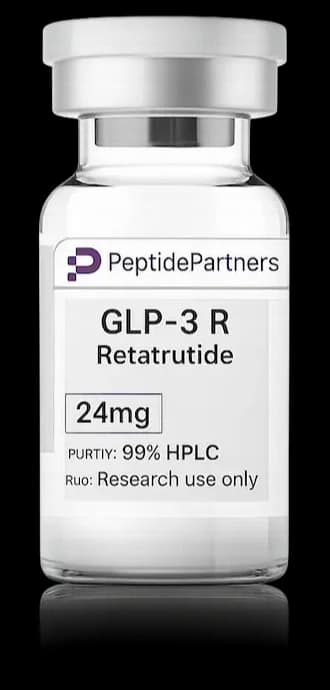
Disclosure: supply links may earn PepPal a commission at no cost to you.
Use the supplier page, COA records, and PepPal calculator as separate checks.
Product match
Confirm the listing is retatrutide and that the vial size matches the research plan you are documenting.
Batch documentation
Look for batch-specific COA or testing records instead of relying only on product-page claims.
Reconstitution math
Use the BAC water volume and vial size to calculate concentration before drawing any units.
Injection supplies
Use fresh syringes, alcohol prep pads, and sharps disposal supplies for each handling session.
For dose math, concentration, and syringe-unit conversions, use the PepPal calculator. This page is news coverage and does not provide medical instructions.
Topline Phase 3 data is a milestone, not an approval. The usual path is: finish the trials, submit the full data to the FDA, wait for review, then a possible launch. That process takes time and is never guaranteed.
Lilly said more Phase 3 data is coming later in 2026, including TRIUMPH-2 (people with type 2 diabetes) and TRIUMPH-3 (people with heart disease). Some TRIUMPH-1 details are set to be presented at the American Diabetes Association meeting in 2026. Watch those readouts for the fuller picture.
For now, the honest answer is that there is no public way to get the Lilly drug outside a trial. If you want the access angle, see our existing explainer linked below, but the regulatory reality has not changed with this announcement.
TRIUMPH-1 is one of the strongest obesity-drug results reported so far, with up to 30% average weight loss in a two-year subgroup. The side-effect and dropout numbers at the top dose are the trade-off to keep in view.
It is still investigational, still topline-only, and still trial-only as of August 2026. The result is a big deal for the field. It is not a reason to treat research-use "retatrutide" as a proven product.
At 80 weeks, the 12 mg dose produced about 28.3% average weight loss, or roughly 70 pounds, versus 2.2% on placebo. In a smaller two-year extension for people with higher starting weight, the 12 mg group averaged about 30.3%, or roughly 85 pounds.
No. As of August 2026, retatrutide is investigational and is legally available only to participants in Eli Lilly's clinical trials. There is no approved brand name and no public prescription version yet.
Zepbound (tirzepatide) targets two body signals, GIP and GLP-1. Retatrutide targets those two plus a third, glucagon, which is why it is called a triple agonist. They are different drugs and are not interchangeable.
There is no set date. Topline Phase 3 data is an early milestone, not an approval. Lilly plans to share more trial data later in 2026, after which it would need to complete its program and seek regulatory review.
Most were stomach-related, like nausea, diarrhea, constipation, and vomiting, and they were more common at higher doses. Lilly also reported tingling or burning skin sensations and a small rise in urinary tract infections. About 11.3% of people on the 12 mg dose stopped due to side effects.
No. The TRIUMPH-1 results are for Lilly's investigational, medically monitored drug. Research-use compounds sold under the same name are unapproved products with no guarantee of identity, purity, or dose, and the trial results do not transfer to them.
No. This is educational news coverage, not medical advice and not a treatment recommendation. Talk to a licensed clinician about any medical decision.
Preferred supplier
Peptide PartnersNeed peptides? Start with a verified supplier.
PepPal's recommended source with current discount access and established testing standards.