
Verified SupplierVerified Supplier
Lab monitoring
Educational research only
A research-use-only guide to the lab panels that matter before and during peptide therapy. Built from FDA prescribing labels, NEJM trial data, and monitoring guidance used in endocrine care — not generic wellness recommendations.
Quick summary
If you are running a peptide protocol — research-use or compounded — and you are not collecting blood work, you are guessing. Baseline labs give you a starting point. Repeat labs at 4 weeks, 8-12 weeks, and quarterly thereafter tell you whether the protocol is doing what you want and whether it is causing harm you cannot feel yet. This page maps the specific labs to the specific peptide class, with primary-source backing where it exists.
One quick clarification: 'peptide blood work' on Google can mean two different things. Some readers land here looking for B-type natriuretic peptide (BNP) — a cardiac marker doctors use in heart failure workups. If that is what you need, talk to your physician or see resources like Cleveland Clinic's BNP page. The rest of this guide is about lab monitoring when you are using therapeutic or research peptides like BPC-157, semaglutide, CJC-1295/Ipamorelin, or tirzepatide.
This page is educational and is not medical advice. Most peptides referenced — BPC-157, TB-500, CJC-1295, Ipamorelin, MOTS-C, GHK-Cu, Melanotan II — are not FDA-approved as of August 2026. Semaglutide, tirzepatide, and tesamorelin are FDA-approved drugs and the monitoring logic for them comes directly from prescribing labels and clinical trials. Always work with a qualified clinician.
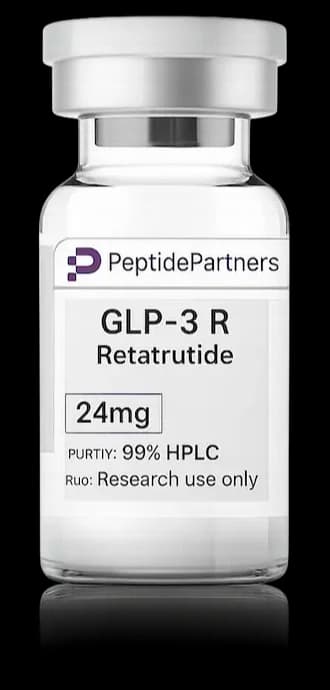
Use this as a research-use planning checklist for the lab work, peptide source, and sterile handling supplies referenced in this guide. Confirm every panel marker before ordering, and work with a licensed clinician for diagnosis, prescriptions, and medical decisions.
Discount code: PEPPAL applies to eligible supplier checkout links when supported by the supplier.
Why choose Peptide Partners?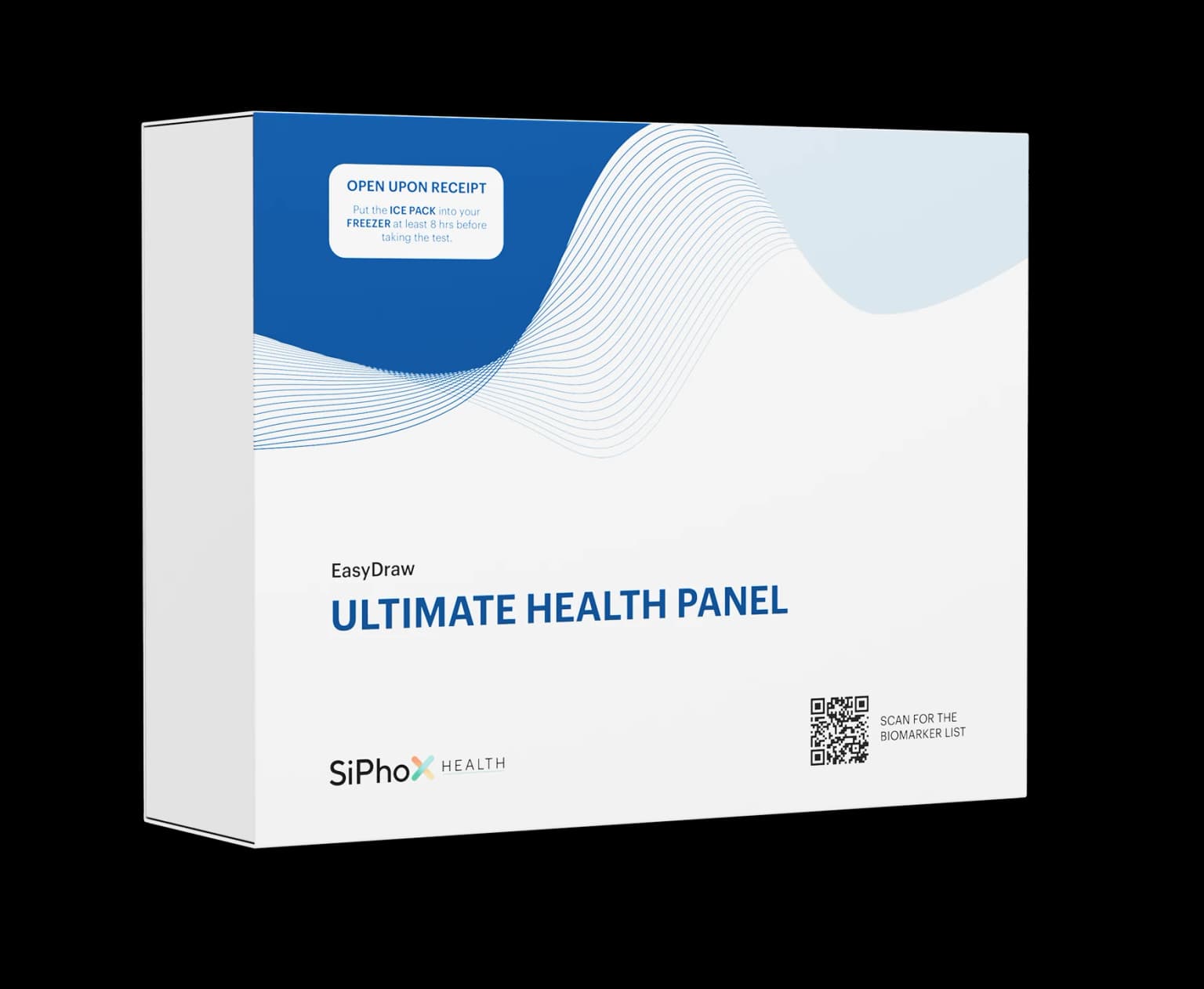
Disclosure: supply links may earn PepPal a commission at no cost to you.
Start with the labs, then match the supply list to the protocol you are actually running.
Baseline panel
Order the baseline markers before starting so future results can be compared against your own starting point.
Class-specific labs
Add IGF-1 for GH secretagogues, lipase and HbA1c for GLP-1s, and inflammatory markers for healing-peptide protocols.
Protocol supplies
Only buy injectable handling supplies if your protocol actually requires reconstitution and injection.
Verify the details on the provider or supplier page instead of relying on a summary card.
Marker coverage
Confirm the testing panel includes the specialty markers you need, especially IGF-1, lipase, thyroid markers, and hormones.
Batch testing
Match peptide COAs to the exact product and batch when the supplier makes batch-level testing available.
Clinical review
Use a qualified clinician to interpret abnormal labs, red flags, and prescription-drug monitoring decisions.
If you are arranging blood work only, you may not need peptide handling supplies. Do not use a shopping checklist as a substitute for clinical monitoring or sterile technique.
A baseline panel turns your future blood work into a comparison instead of a snapshot. Population reference ranges are wide because they have to fit millions of people. Your own values within those ranges are the real reference point.
Without a baseline, a fasting glucose of 98 mg/dL on month 3 means very little. With a baseline of 78 mg/dL, that same 98 is a 25-point rise that warrants attention — common with growth hormone secretagogues. Without a baseline, an IGF-1 of 240 ng/mL is fine. With a baseline of 140, that 240 may signal a meaningful response, or it may signal that you are pushing the dose too hard. The baseline is the difference.
This is the panel that covers the safety floor for any peptide protocol. Add protocol-specific markers from the next section based on what you are actually using.
Baseline panel for peptide users
Panel
Complete Metabolic Panel (CMP)
What it covers
Why it matters
Panel
Complete Blood Count (CBC) with differential
What it covers
Why it matters
Panel
Lipid panel
What it covers
Why it matters
Panel
HbA1c
What it covers
Why it matters
Panel
Fasting insulin (with HOMA-IR)
What it covers
Why it matters
Panel
Hormone panel
What it covers
Why it matters
Panel
IGF-1
What it covers
Why it matters
Panel
Inflammatory markers
What it covers
Why it matters
Reference ranges vary by laboratory; always interpret against the range printed on your specific report.
Different peptide classes shift different markers. The baseline panel above plus the class-specific additions below covers most research-use protocols.
These compounds push the pituitary to release more growth hormone, which then drives IGF-1 production in the liver. IGF-1 is the gold-standard efficacy marker because it smooths out the short GH spikes that are hard to catch on a single draw.
Tesamorelin is the only FDA-approved GHRH analog and the only one with trial-grade IGF-1 response data: in HIV-associated lipodystrophy patients, mean IGF-1 rose roughly 81% from baseline. CJC-1295 paired with a GHRP has shown IGF-1 elevations of 50-150% in research contexts, but those are not FDA-approved settings — the monitoring logic is extrapolated from approved-drug data.
This is the class with the most rigorous trial data because semaglutide (Ozempic, Wegovy) and tirzepatide (Mounjaro, Zepbound) are FDA-approved. The SUSTAIN program for semaglutide and the SURPASS program for tirzepatide reported HbA1c reductions of 1.5-1.8% and up to 2.6% respectively across 40-52 week trials. The FDA labels themselves spell out the monitoring expectations.
Human trial data on BPC-157 and TB-500 is limited. Most of the safety record is from animal studies plus community use; neither is FDA-approved. Lab monitoring here is mostly safety screening plus indirect efficacy markers (inflammation).
IGF-1 is the marker most peptide users get wrong because population reference ranges are flat and IGF-1 itself drops sharply with age. An IGF-1 of 250 ng/mL is mid-range for a 25-year-old and well above the 97th percentile for a 65-year-old.
The lab ranges below are approximate and adapted from Quest Diagnostics and LabCorp reference data. Always interpret against the range printed on your own report, but use this as a sanity check on the numbers your lab gives you.
Approximate age-adjusted IGF-1 ranges (ng/mL)
Age
18-25
Approximate range
Approximate median
Age
26-35
Approximate range
Approximate median
Age
36-45
Approximate range
Approximate median
Age
46-55
Approximate range
Approximate median
Age
56-65
Approximate range
Approximate median
Age
66-75
Approximate range
Approximate median
Age
76-85
Approximate range
Approximate median
Adapted from public Quest Diagnostics and LabCorp reference data. Lab-specific ranges vary.
Standard monitoring timeline for peptide protocols
Timepoint
Pre-protocol baseline (week 0)
Why
What to draw
Timepoint
Week 4 — early safety check
Why
What to draw
Timepoint
Week 8-12 — first reassessment
Why
What to draw
Timepoint
Every 12 weeks (ongoing)
Why
What to draw
Timepoint
4-6 weeks post-cycle
Why
What to draw
Always fast 8-12 hours before draws and standardize the time of day to keep results comparable.
Timing relative to the last peptide dose matters too. For GH secretagogues, draw at least 12 hours after the last dose (24 hours preferred). For weekly GLP-1s, draw mid-week or just before the next injection for trough readings. For short-acting peptides like BPC-157 or GHRP-2, the morning trough before the day's first dose is the standard.
Some lab findings are non-negotiable stop signals regardless of how good you feel. These thresholds come from clinical trial monitoring rules and FDA-label adverse-event language. If your draw shows any of them, stop the protocol and talk to a clinician.
Red-flag thresholds
Finding
ALT or AST above 5x upper limit
Action
Finding
ALT above 3x ULN with bilirubin above 2x ULN
Action
Finding
eGFR drop of more than 25% from baseline
Action
Finding
Fasting glucose above 200 mg/dL
Action
Finding
HbA1c above 8.0% (previously normal)
Action
Finding
IGF-1 above 1.5x age-adjusted upper limit
Action
Finding
Lipase above 3x ULN with epigastric pain
Action
Finding
Platelet count below 100,000/μL (previously normal)
Action
Finding
Hemoglobin drop of more than 2 g/dL from baseline
Action
Finding
Potassium above 5.5 or below 3.0 mmol/L
Action
If multiple red flags appear at the same time, treat as the more severe of the two — do not assume they are unrelated.
Peptide users have three real options for ordering blood work: ask a physician (gold standard, often the slowest), use a direct-to-consumer venipuncture service like Quest or LabCorp's self-pay portals, or use an at-home kit. Each makes sense in different situations.
At-home vs in-clinic testing trade-offs
Option
Physician-ordered venipuncture
Pros
Cons
Option
Direct-to-consumer venipuncture (Quest/LabCorp self-pay)
Pros
Cons
Option
At-home kit (finger-prick or upper-arm collection)
Pros
Cons
SiPhox Health is PepPal's current pick for the at-home category. SiPhox uses an EasyDraw upper-arm collection device (not a finger prick), processes samples at a CLIA-certified lab, returns results in 5-10 days with built-in interpretation, and offers panels across cardiovascular, metabolic, hormonal, thyroid, liver, kidney, inflammation, and nutritional categories. Their GLP-1 panel is purpose-built for users on semaglutide or tirzepatide, and the Ultimate 360 panel runs up to 60 biomarkers across all the categories this guide recommends.
Verify that the panel you pick actually includes IGF-1 (for GH secretagogue users), lipase (for GLP-1 users), and calcitonin (for long-term GLP-1 protocols). These are specialty markers and not every panel includes them. SiPhox's broader panels do — confirm on the panel detail page before checkout.
At-home blood testing with CLIA-certified lab processing, upper-arm EasyDraw collection, panels for cardiovascular, metabolic, hormonal, thyroid, liver, kidney, and inflammation markers, plus a dedicated GLP-1 panel.
See SiPhox panelsIf you want standard blood-draw accuracy and your local Quest or LabCorp self-pay portal carries the markers you need, that is also a defensible choice. The most important thing is consistency — run the same panel from the same provider over time so you are tracking trends, not lab-to-lab variation.
Most peptide blood work guides treat every peptide the same. They are not the same. Three of the compounds people use — semaglutide, tirzepatide, and tesamorelin — are FDA-approved with detailed prescribing labels and Phase 3 trial data behind every monitoring recommendation. The rest are research-use compounds. The monitoring logic transfers, but the evidence behind it is weaker.
Evidence tier by peptide
Peptide
Semaglutide
Status (as of August 2026)
Source of monitoring logic
Peptide
Tirzepatide
Status (as of August 2026)
Source of monitoring logic
Peptide
Tesamorelin
Status (as of August 2026)
Source of monitoring logic
Peptide
Retatrutide
Status (as of August 2026)
Source of monitoring logic
Peptide
CJC-1295, Ipamorelin
Status (as of August 2026)
Source of monitoring logic
Peptide
BPC-157, TB-500
Status (as of August 2026)
Source of monitoring logic
Peptide
MOTS-C, GHK-Cu, Melanotan II, Semax, Selank, KPV
Status (as of August 2026)
Source of monitoring logic
This page applies trial-grade monitoring logic to research-use compounds. The framework is useful, but the evidence base behind each individual marker is stronger for FDA-approved drugs than for grey-market peptides.
A comprehensive baseline panel covering CMP (liver, kidney, glucose, electrolytes), CBC, lipid panel, HbA1c, fasting insulin, a hormone panel (testosterone, estradiol, SHBG, TSH, free T3, free T4, morning cortisol), IGF-1, and inflammatory markers (hs-CRP, ESR). Add protocol-specific markers based on what you are using — see the panel-by-class section.
Baseline at week 0, a focused safety check at week 4, a full reassessment at week 8-12, then a full panel every 12 weeks for as long as you are on the protocol. Most peptide effects reach near-steady state by week 8, and HbA1c is meaningful by week 12.
No, not for routine monitoring. The point is to assess your physiology while on the protocol. Stay consistent on timing relative to your last dose — typically 12-24 hours after the last GH-secretagogue dose, or mid-week for weekly GLP-1s. Do not stop unless you are specifically measuring post-cessation recovery.
Yes. At-home kits from providers like SiPhox Health use upper-arm or finger-prick collection and process samples at CLIA-certified labs. Before ordering, confirm the panel includes the specialty markers you need — IGF-1 for GH secretagogues, lipase for GLP-1s, calcitonin for long-term GLP-1 protocols.
Target the upper third of your age-adjusted reference range — typically the 60th to 80th percentile for your age. Not the absolute upper limit. IGF-1 that stays above the normal age-adjusted range (above 1.5x the upper limit, or above 400 ng/mL at any age) is associated with theoretical cell-growth risk and warrants dose reduction or cessation. See the IGF-1 interpretation section above for age-adjusted ranges.
The FDA prescribing label for Wegovy and Ozempic flags acute pancreatitis as a known adverse event for the GLP-1 class. Lipase is more sensitive and specific than amylase for pancreatic inflammation. In the oral semaglutide trial, lipase rose a mean 30-34% from baseline at 7-14 mg doses. Lipase above 3x upper limit combined with epigastric pain is a stop-immediately situation.
Yes. Fast 8-12 hours, water only, and draw in the morning between 7 and 9 AM if possible. This standardizes glucose, lipids, insulin, testosterone, and cortisol. Black coffee is generally fine but may slightly affect cortisol. Note any hard exercise within 48 hours before the draw — it can elevate AST and creatine kinase.
Liver enzymes above 5x upper limit, ALT above 3x with bilirubin above 2x, eGFR drop of more than 25% from baseline, fasting glucose above 200 mg/dL, IGF-1 above 1.5x the age-adjusted upper limit, lipase above 3x upper limit with abdominal pain, or platelets below 100,000/μL when previously normal. Stop and seek clinical evaluation. The full table is in the red flags section.
No. This page is educational and is not medical advice. Most peptides referenced — BPC-157, TB-500, CJC-1295, Ipamorelin, MOTS-C, GHK-Cu, Melanotan II — are not FDA-approved as of August 2026. Always work with a qualified clinician before starting a peptide protocol, interpreting blood work, or adjusting doses.
Preferred supplier
Peptide PartnersNeed peptides? Start with a verified supplier.
PepPal's recommended source with current discount access and established testing standards.