
Verified SupplierVerified Supplier
GLP-1 research guide
Research-use only
A lot of researchers start looking at retatrutide after tirzepatide stops moving the scale. This guide walks through the half-life math behind washout timing, the starting dose most researchers use, what to expect during the first 6 to 8 weeks, and how to switch back if retatrutide is not the right fit.
Quick summary
Most researchers who switch from tirzepatide to retatrutide do it because tirzepatide stopped moving the scale, not because retatrutide is officially better. The common approach is simple: take the last tirzepatide dose, wait about 7 to 14 days, then start retatrutide low, usually around the 2 mg trial starting dose.
There is no head-to-head switching trial in humans. The numbers below are pulled from primary sources: the FDA labels for Mounjaro and Zepbound (both tirzepatide), the New England Journal of Medicine Phase 2 retatrutide paper, and the December 2025 TRIUMPH-4 Phase 3 readout. Those details come from trial dose ladders, not from a study that followed people switching from tirzepatide to retatrutide. That gap matters and is called out in the body.
Retatrutide is not FDA-approved as of August 2026. This page is educational and is not medical advice. For dose math and full protocol structure, use the retatrutide protocol on Peptide Dosing Protocols and the PepPal calculator.
Use this as a simple shopping checklist before the first post-washout retatrutide dose. It does not replace dose math, vial instructions, or sterile handling guidance.
Discount code: PEPPAL applies to eligible supplier checkout links when supported by the supplier.
Why choose Peptide Partners?
Disclosure: supply links may earn PepPal a commission at no cost to you.
Start with the retatrutide vial, then add the sterile prep and storage items needed to handle it cleanly.
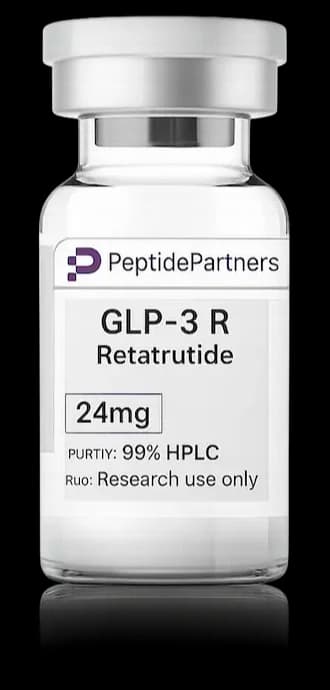
Retatrutide vial
Confirm the vial size and batch testing on the supplier page before planning the transition.
Tirzepatide vial
Make sure the last tirzepatide vial is planned ahead of time so supply issues do not force the timing.
Syringes, swabs, and sharps
Use fresh supplies each time and plan safe disposal before the first injection.
Check the product page instead of relying on the card alone.
Testing
Match the COA to the exact product and batch where the supplier makes that available.
Storage
Plan cold storage before reconstitution and label the vial with the mix date.
Timing
Have retatrutide on hand before the final tirzepatide dose so the washout window is intentional, not supply-driven.
For dose math, reconstitution volumes, and protocol-level instructions, use the full retatrutide protocol instead of this shopping checklist.
The most common reason is a tirzepatide plateau. Someone has been on tirzepatide for 6 to 12 months, dose has climbed to the upper end of what they tolerate, the scale has stopped moving for a month or more, and they want to know if retatrutide can break through.
The logic is pretty simple. Tirzepatide is a dual agonist: it activates GLP-1 and GIP receptors. Retatrutide is a triple agonist: it activates GLP-1, GIP, and glucagon receptors. The glucagon receptor is the one tirzepatide does not hit. In trials, the added glucagon activity is linked to higher energy expenditure on top of appetite suppression. That is why some researchers see retatrutide as a possible plateau breaker.
Trial results support the idea that retatrutide may have a higher ceiling, but they do not answer the switching question directly. In the SURMOUNT-1 obesity trial, tirzepatide produced mean body weight reduction in the low 20s percent over 72 weeks. In the retatrutide Phase 2 NEJM trial, the 12 mg dose produced 24.2% mean weight reduction at 48 weeks. In TRIUMPH-4, reported on December 11, 2025, the 12 mg dose produced 28.7% mean weight reduction at 68 weeks. Different trial populations, different durations, no direct switching arm, but the ceiling looks higher with retatrutide.
Slow progress is not a plateau. Half a pound a week is about 26 pounds a year. Switching compounds because progress is steady but unflashy usually trades a working protocol for a more complicated one.
The washout question really comes down to two numbers: tirzepatide's half-life of about 5 days from the Mounjaro and Zepbound FDA labels, and retatrutide's half-life of about 6 days from the NEJM Phase 2 paper.
Half-life is the time it takes for the blood level of a drug to fall by half. After one half-life, about 50% of a dose is left. After two, about 25%. After four to five, the drug is considered effectively cleared. For tirzepatide at a 5-day half-life, full clearance takes roughly 4 to 5 weeks after the last dose.
Approximate tirzepatide remaining after the last dose (5-day half-life)
Days after last tirzepatide dose
Day 5
Approximate % left
Days after last tirzepatide dose
Day 10
Approximate % left
Days after last tirzepatide dose
Day 15
Approximate % left
Days after last tirzepatide dose
Day 20
Approximate % left
Days after last tirzepatide dose
Day 25
Approximate % left
Days after last tirzepatide dose
Day 30+
Approximate % left
From a single-dose perspective; if a researcher has been on weekly tirzepatide for months, steady-state means the body has been holding a higher rolling exposure that takes longer to fully fall off.
Those half-life numbers explain the three switch patterns researchers usually discuss. A 7-day washout means starting retatrutide with tirzepatide still at roughly 50% of its last-dose level. A 14-day washout means starting at about 25%. A 21-day washout means starting at about 12.5%. None of these are right or wrong on their own; each is a trade-off between clean baseline and how long appetite returns before retatrutide takes hold.
If retatrutide goes in too soon after the last tirzepatide dose, the body is still holding meaningful tirzepatide. The first retatrutide dose lands on top of that and the side effects can stack. Spacing them out is mostly a side-effect smoothing decision, not a safety emergency.
The three patterns below are what the research community has converged on. None of them are from a published switching trial. They are research-community protocols based on half-life timing, not medical recommendations.
Take the last tirzepatide dose on the normal weekly day. Wait 7 days. Then take the first retatrutide dose at 2 mg. This is the option most competitor protocols and community write-ups describe as the default.
Same idea, longer pause. Take the last tirzepatide dose, wait 14 to 21 days, then start retatrutide at 2 mg. After 14 days about 75% of the last tirzepatide dose is gone. After 21 days about 87.5% is gone.
Skip the washout. Take retatrutide on what would have been the next tirzepatide injection day. This is the highest-risk approach for side-effect stacking because tirzepatide is still at about 100% of steady-state when retatrutide goes in.
The most common research-community pattern, and the one used in the retatrutide Phase 2 NEJM trial, is to start at 2 mg per week regardless of where tirzepatide ended. Even researchers ending tirzepatide at 12.5 mg or 15 mg typically begin retatrutide at 2 mg.
The reason is the glucagon receptor. Tirzepatide tolerance carries over only on the shared GLP-1 and GIP pathways. The glucagon receptor is the new variable, and the trial protocols built a slow ramp specifically to let the body adapt to glucagon activation. Skipping that ramp is the most reported cause of severe nausea in the first few weeks of retatrutide.
TRIUMPH-style retatrutide dose ladder (trial context)
Week range
Weeks 1-4 of retatrutide
Trial-context dose
What is happening
Week range
Weeks 5-8
Trial-context dose
What is happening
Week range
Weeks 9-12
Trial-context dose
What is happening
Week range
Weeks 13-16+
Trial-context dose
What is happening
This is the dose ladder used in clinical trials. This is not a dosing recommendation. For protocol-level dose math, use the retatrutide protocol on Peptide Dosing Protocols and the PepPal calculator.
Several competitor pages publish a fixed conversion ratio. There is no published study to support one. The compounds bind different receptors, have different potencies at each receptor, and have slightly different half-lives. The only protocol with primary-source backing is to start retatrutide at the trial entry dose and titrate slowly.
Many researchers say the first 4 to 6 weeks feel slower than expected. Appetite returns during the washout, the first retatrutide dose is sub-therapeutic on purpose, and the visible payoff usually shows up between weeks 5 and 8 once the dose climbs into the 4 mg range or higher.
Common community-reported transition timeline
Phase
Washout week (1-2 weeks after last tirz)
What is typical
Phase
Weeks 1-3 of retatrutide at 2 mg
What is typical
Phase
Weeks 4-6 at 4 mg
What is typical
Phase
Weeks 7-10 at 4 mg to 8 mg
What is typical
Phase
Weeks 11+ at higher doses
What is typical
Most competitors only cover one direction. In practice, some researchers switch back. Common reasons are retatrutide cost or supply pressure, side effects that did not settle, or a preference for tirzepatide's better-established long-term safety profile (tirzepatide is FDA-approved as Mounjaro and Zepbound; retatrutide is still investigational).
The reverse switch uses the same half-life logic. Take the last retatrutide dose, wait 7 to 14 days, then start tirzepatide at a moderate dose. Most researchers do not return straight to their old top tirzepatide dose. A common pattern is to step back in at 5 mg or 7.5 mg and re-titrate, which is consistent with how the Mounjaro and Zepbound FDA labels structure the titration ladder for re-starts.
Because tirzepatide and retatrutide share GLP-1 and GIP activity, time on retatrutide does not reset GLP-1 and GIP tolerance. That is why most researchers do not need to start tirzepatide from 2.5 mg again on a return-to-tirz path.
Common transition mistakes
Mistake
Starting retatrutide at 4 mg or higher right away
Why it backfires
Mistake
Believing a fixed tirz-to-reta conversion exists
Why it backfires
Mistake
Stacking tirzepatide and retatrutide in the same week
Why it backfires
Mistake
Comparing week 2 of retatrutide to month 6 of tirzepatide
Why it backfires
Mistake
Restricting hard during the washout
Why it backfires
Mistake
Buying without checking the COA
Why it backfires
As of August 2026, tirzepatide is FDA-approved as Mounjaro for type 2 diabetes (initial U.S. approval 2022) and as Zepbound for chronic weight management. Retatrutide is investigational, not FDA-approved, and is only legally available through clinical trial enrollment or research-use-only suppliers.
TRIUMPH-4, reported on December 11, 2025, was the first successful Phase 3 readout for retatrutide. Seven additional Phase 3 trials are expected to report results throughout 2026. NDA submission to the U.S. FDA is projected for late 2026 or early 2027, with potential approval in late 2027. None of these dates are confirmed by the FDA or Eli Lilly — they are projections from public trial timelines.
Retatrutide has not completed clinical trials, so it cannot be legally compounded by 503A or 503B pharmacies. Any compounding pharmacy claiming to sell retatrutide is operating outside FDA guidance. For broader context on compounding and Category 2 confusion, see PepPal's March 2026 FDA Category 2 fact check.
Anyone planning a switch needs both compounds on hand: a final tirzepatide vial to finish the last dose, and a retatrutide vial ready for the first dose after the washout. Running out mid-transition is avoidable and can throw off the whole plan.
Disclosure: supply links may earn PepPal a commission at no cost to you.
For the full sourcing breakdown — Finnrick data, supplier ratings, and red/green flag checklist — read How to get retatrutide in 2026. For dose math during the transition, use the PepPal calculator. For protocol-level dosing structure, use the retatrutide protocol on Peptide Dosing Protocols.
Most research-community protocols use a 7 to 14 day washout. Tirzepatide has a half-life of about 5 days per the Mounjaro and Zepbound FDA labels, so a 7-day pause leaves about 50% of the last dose still in the system and a 14-day pause leaves about 25%. Some researchers prefer a longer 21-day gap for a cleaner baseline. None of these windows are from a published switching trial — they are timing decisions based on pharmacokinetics, not a safety threshold.
The Phase 2 retatrutide NEJM trial started participants at 2 mg per week regardless of any prior GLP-1 history. That is the same starting dose most research-community protocols use after tirzepatide. The glucagon receptor in retatrutide is new territory even for researchers who tolerated 15 mg tirzepatide, so starting higher than 2 mg is the most common cause of dose-limiting nausea in week 1. For protocol-level dose math, use the retatrutide protocol on Peptide Dosing Protocols.
No. There is no published head-to-head switching trial in humans, and the compounds bind different receptors with different potencies. Some competitor pages publish a fixed conversion ratio, but none of those ratios are backed by primary-source data. The only research-supported approach is to start retatrutide at the Phase 2 trial entry dose of 2 mg per week and titrate up.
Often a few pounds, and usually not fat. As tirzepatide clears, appetite returns and food and water intake creep back up. Most researchers report 1 to 3 pounds during a 7 to 14 day washout, and most of that bounces back within the first 4 weeks of retatrutide once appetite suppression returns. Aggressive restriction during the washout is the most common trigger for binge episodes during the transition.
Not recommended. Both compounds activate GLP-1 and GIP receptors. Stacking them risks compounded GI side effects without any published evidence of better outcomes. A clean washout — even a short one — is what every research-community protocol describes.
Most researchers see the answer between weeks 6 and 10. The first 2 to 3 weeks at 2 mg are a tolerance build, not a therapeutic dose. The 4 mg step around week 5 is where appetite suppression usually strengthens, and weight loss tends to restart between weeks 7 and 10 if retatrutide is going to work better than tirzepatide did. Judging retatrutide by week 2 is the most common mistake.
Yes. The reverse path uses the same logic: last retatrutide dose, 7 to 14 day washout, then restart tirzepatide. Most researchers re-enter at a moderate tirzepatide dose like 5 mg or 7.5 mg rather than jumping straight back to the previous top dose, which is consistent with how the Mounjaro and Zepbound FDA labels structure restarts. GLP-1 and GIP tolerance from prior tirzepatide use is largely preserved.
For most people, the main concern is worse GI side effects, not an emergency. The bigger preventable risk is starting retatrutide too high. The glucagon receptor needs its own slow ramp regardless of how much GLP-1 and GIP tolerance was built on tirzepatide. Anyone with a history of pancreatitis, gallbladder disease, severe GI conditions, or who is using insulin or sulfonylureas should consult a clinician before switching.
Not as of August 2026. Retatrutide is in Phase 3 trials and is not available through pharmacies or telehealth prescribers. It also cannot be legally compounded by 503A or 503B pharmacies because it has not completed clinical trials. Access in 2026 is limited to clinical trial enrollment or research-use-only suppliers. See How to get retatrutide in 2026 for the full sourcing breakdown.
No. This page is an educational research reference about a transition that is widely discussed in the research community. It is not medical advice and does not replace a conversation with a licensed clinician. Retatrutide is not FDA-approved.
Preferred supplier
Peptide PartnersNeed peptides? Start with a verified supplier.
PepPal's recommended source with current discount access and established testing standards.