
Sourcing path
Peptide therapy at a clinic
Typical monthly cost
$200 to $1,500 per month
What is included
Consult, lab work, compounded peptide, follow-ups
Notes
Highest-touch and most regulated path; price drivers explained below.
Buyer research guide
Updated August 2026
Most cost guides give a single $200 to $1,500 per month range without breaking it apart. This page does the math by peptide and by sourcing path.
Quick summary
The honest short answer is that peptide costs depend almost entirely on where you buy. Three sourcing paths produce three very different price points. A peptide-therapy clinic visit typically lands somewhere between $200 and $1,500 per month after consult fees, lab work, and the actual compound. A branded GLP-1 program through a telehealth platform or pharmacy direct-to-consumer site lands roughly between $149 and $349 per month for starter doses, and closer to $349 to $499 per month at maintenance doses. Research-use peptide vials from a grey-market supplier like Peptide Partners are usually priced at a fraction of those per-milligram numbers, but they are sold for research use only and do not include any medical oversight, prescription, or pharmacy fulfillment.
This page is buyer-side research. It is not medical advice, a prescription comparison, or a recommendation to use research vials in place of a doctor or pharmacy.
Most published cost guides stop at a single "$200 to $1,500 per month" range and never break it apart. This page goes further: real per-vial prices from Peptide Partners across the most-shopped peptides, current 2026 branded GLP-1 cash-pay pricing from NovoCare and LillyDirect, and the per-milligram gap that drives the value conversation in research-use peptide circles.
Sourcing paths and rough 2026 monthly price brackets
Sourcing path
Peptide therapy at a clinic
Typical monthly cost
What is included
Notes
Sourcing path
Branded GLP-1 telehealth or direct-to-consumer
Typical monthly cost
What is included
Notes
Sourcing path
Typical monthly cost
What is included
Notes
Sourcing path
Typical monthly cost
What is included
Notes
Ranges are buyer-side observations from public NovoCare, LillyDirect, telehealth, and supplier-listed pages as of August 2026. Verify any current pricing before ordering.
The big practical question is not which path is cheapest in the abstract. It is which path matches what someone is actually researching. A person evaluating GLP-1 weight-management options is usually choosing between branded telehealth and compounded telehealth, not research vials. A person already deep in the research-use peptide community comparing Wolverine, GLOW, or BPC-157 prices is usually comparing supplier listings, not clinic packages.
This table puts the cost question on a per-milligram basis so the gap is easier to see. The Peptide Partners column uses buyer-observed research-vial pricing from May 2026. The telehealth column only shows a number when there is a comparable branded or telehealth option on the page; otherwise it is marked N/A.
Peptide Partners per-mg pricing vs telehealth per-mg pricing (May 2026)
PP cost per mg
Telehealth cost per mg
PP cost per mg
Telehealth cost per mg
PP cost per mg
Telehealth cost per mg
Product
PP cost per mg
Telehealth cost per mg
Product
PP cost per mg
Telehealth cost per mg
Product
PP cost per mg
Telehealth cost per mg
Product
PP cost per mg
Telehealth cost per mg
Product
PP cost per mg
Telehealth cost per mg
Product
PP cost per mg
Telehealth cost per mg
Product
PP cost per mg
Telehealth cost per mg
Product
PP cost per mg
Telehealth cost per mg
Product
PP cost per mg
Telehealth cost per mg
Product
PP cost per mg
Telehealth cost per mg
PP cost per mg
Telehealth cost per mg
Product
PP cost per mg
Telehealth cost per mg
Product
PP cost per mg
Telehealth cost per mg
Product
PP cost per mg
Telehealth cost per mg
Product
PP cost per mg
Telehealth cost per mg
Product
PP cost per mg
Telehealth cost per mg
Product
PP cost per mg
Telehealth cost per mg
Product
PP cost per mg
Telehealth cost per mg
Product
PP cost per mg
Telehealth cost per mg
Product
PP cost per mg
Telehealth cost per mg
Product
PP cost per mg
Telehealth cost per mg
Product
PP cost per mg
Telehealth cost per mg
Product
PP cost per mg
Telehealth cost per mg
Product
PP cost per mg
Telehealth cost per mg
Product
PP cost per mg
Telehealth cost per mg
Product
PP cost per mg
Telehealth cost per mg
Telehealth per-mg math is shown only when a comparable branded telehealth path is carried and priced elsewhere on this page. For other products, telehealth is marked N/A. Prices and availability change; verify the current product page before ordering.
Two observations worth pulling out. GHK-Cu and NAD+ are the cheapest per milligram by a wide margin because they are sold in larger total-mass brackets. That changes the budget conversation around skin and longevity research compared to peptides priced at $4 to $6 per mg. The Wolverine, GLOW, and KLOW blends look expensive on a sticker basis but their per-mg pricing is competitive because each vial contains multiple compounds, which means one vial covers more research-use ground than buying each piece separately.
Retatrutide is the most-asked GLP cost question on PepPal because there is no FDA-approved branded version yet. Peptide Partners lists Retatrutide research-use vials at brackets between $273 and $1,680, with the largest brackets pricing as low as $3.50 per mg. There is no apples-to-apples branded comparison because Retatrutide is still investigational. For broader context on how Retatrutide fits in the GLP-1, GLP-2, GLP-3 conversation, see how do you get Retatrutide.
Wolverine is the soft-tissue research blend that pairs BPC-157 and TB-500. Peptide Partners lists Wolverine kits between $240 and $920 depending on bracket size, with per-mg pricing around $4.35 to $5.88. Buying the two compounds separately at full per-vial prices usually costs more than buying the blend at a matched total mass. For background on what people are pairing them for, see how do you get the Wolverine stack.
GLOW adds GHK-Cu to the Wolverine concept. Peptide Partners lists GLOW between $225 and $910 across the 140, 350, and 700 mg brackets, with per-mg pricing of roughly $1.30 to $1.60. Because GHK-Cu is the cheapest peptide in the catalog per mg, the GLOW blend prices much more aggressively per mg than the Wolverine blend even though the sticker prices look similar.
KLOW extends GLOW further. Peptide Partners lists KLOW between $264 and $1,080 across the 160, 400, and 800 mg brackets, with per-mg pricing around $1.35 to $1.65. KLOW and GLOW are the cheapest per mg of the named research stacks because they include GHK-Cu by mass.
Standalone BPC-157 lists between $106 and $780 across 20, 50, 100, and 200 mg vials, with per-mg pricing of roughly $3.60 to $4.80. BPC-157 alone is cheaper per mg than buying the BPC-157 / TB-500 combo on a sticker basis, but the combo is cheaper per mg of total active material if both compounds are part of the research plan.
GHK-Cu is the cheapest peptide per mg in the catalog. Peptide Partners lists it between $150 and $900 across 200, 500, 1000, and 2000 mg brackets, with per-mg pricing of roughly $0.45 to $0.75. That is the main reason GHK-Cu shows up in so many community research stacks — the math is friendlier than almost any other compound.
NAD+ is sold in two forms: buffered and unbuffered. Both are listed between $220 and $750 across 1500, 3750, and 7500 mg brackets, with per-mg pricing of roughly $0.10 to $0.15. NAD+ is technically a coenzyme rather than a peptide, but it usually shows up in the same buyer conversation.
MOTs-C lists at two vial-size tiers. The 10 mg vials run $91 to $358 across 20, 50, and 100 mg brackets, with per-mg pricing of $3.58 to $4.55. The 40 mg vials run $252 to $800 across 80, 200, and 400 mg brackets, with per-mg pricing of $2.00 to $3.15. Buyers planning longer research timelines usually go to the larger vial size to drop per-mg cost.
Tirzepatide research-use vials list between $297 and $3,090 across 80, 200, 400, 800, and 1200 mg brackets, with per-mg pricing of $2.58 to $3.71. The branded comparison is below in the GLP-1 section.
Semaglutide research-use vials list between $335 and $1,050 across 50, 100, 150, and 200 mg brackets, with per-mg pricing of $5.25 to $6.70. Stock fluctuates due to ongoing regulatory pressure. For the regulatory backdrop, see the FDA Category 2 fact-check.
Supplier prices and stock change. Always verify current listings, vial size, and discount code applicability on the product page.
This is the comparison most people are actually doing when they Google peptide cost questions. The numbers are not apples-to-apples — branded GLP-1 access includes a prescription, FDA-approved formulation, telehealth visit, and pharmacy fulfillment that research vials do not. Even with that asterisk, the per-mg gap at starter doses is large enough to drive most of the cost-curiosity in this category.
Branded GLP-1 cash-pay vs Peptide Partners research-vial per-mg, May 2026
Compound and source
Semaglutide via NovoCare Wegovy injection, 0.25 mg starter
Listed monthly price
Starter dose math (mg per month)
Effective cost per mg
PP research-vial cost per mg
Compound and source
Semaglutide via Wegovy oral pill, starter dose
Listed monthly price
Starter dose math (mg per month)
Effective cost per mg
PP research-vial cost per mg
Compound and source
Tirzepatide via LillyDirect Zepbound vial, 2.5 mg starter
Listed monthly price
Starter dose math (mg per month)
Effective cost per mg
PP research-vial cost per mg
Compound and source
Tirzepatide via LillyDirect Zepbound vial, 5 mg
Listed monthly price
Starter dose math (mg per month)
Effective cost per mg
PP research-vial cost per mg
Compound and source
Tirzepatide via LillyDirect Zepbound vial, 7.5 to 15 mg
Listed monthly price
Starter dose math (mg per month)
Effective cost per mg
PP research-vial cost per mg
Compound and source
Zepbound KwikPen list price at retail
Listed monthly price
Starter dose math (mg per month)
Effective cost per mg
PP research-vial cost per mg
Compound and source
Retatrutide branded
Listed monthly price
Starter dose math (mg per month)
Effective cost per mg
PP research-vial cost per mg
Branded prices reflect publicly listed NovoCare and LillyDirect cash-pay pricing as of August 2026. Research-vial prices are buyer-observed Peptide Partners listings as of August 2026. Numbers may move quickly because of ongoing pricing programs.
A 0.25 mg per week Wegovy starter plan delivers about 1 mg of semaglutide per month at roughly $199 to $349, which works out to roughly $199 to $349 per milligram of active drug. Peptide Partners research-use semaglutide is listed at roughly $5.25 to $6.70 per milligram. The per-mg gap at the very lowest dose is on the order of 30x to 60x. That gap shrinks at higher branded doses and shrinks again on tirzepatide, because tirzepatide is dosed at higher milligram weights.
Tirzepatide via LillyDirect at the 2.5 mg starter dose comes out to roughly $29.90 per milligram, while research-use tirzepatide lists at roughly $2.58 to $3.71 per milligram. The gap at the starter dose is roughly 8x to 12x. At the 5 mg dose the math compresses to a 5x to 8x gap, and at maintenance doses the gap compresses further.
Branded GLP-1 programs include medical evaluation, a prescription, and pharmacy oversight that research vials do not. The cost comparison is descriptive, not a recommendation to choose one path over the other.
Clinic pricing usually lands in the $200 to $1,500 per month range and almost never breaks out cost-per-mg. The reason is that the clinic is selling a service bundle, not just a compound. The bundle typically includes the parts below.
The actual compound is usually a small fraction of the total clinic invoice. That is why the same molecule can be priced at $4 per milligram at a research-use supplier and effectively $50 to $200 per milligram inside a clinic package. None of that overhead is wasted — it is what people pay for when they want medical oversight. It is also why the per-mg math gets so skewed when comparing paths.
Buyer-side price differences come down to a few factors. Understanding them makes it easier to compare listings without falling for sticker traps.
Most people pricing peptides forget that the vial is only one line item. Bacteriostatic water, syringes, and swabs all add a small but real amount to the total cost picture for research-use protocols.
PEPPAL applies to eligible Orbitrex checkout links when supported.
Why choose Peptide Partners?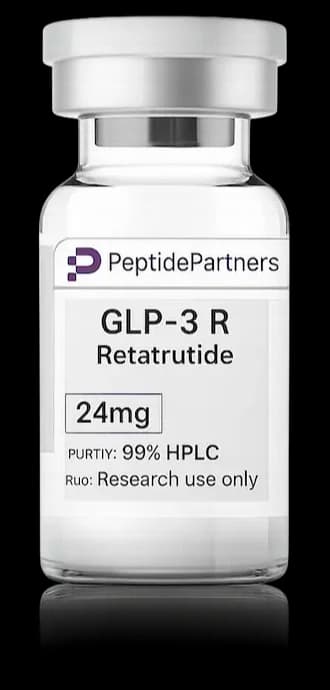
Disclosure: supply links may earn PepPal a commission at no cost to you.
Buyer-observed reference. Verify exact pack counts and current pricing on the product page before ordering.
Bacteriostatic water
Listed on Peptide Partners between $28 and $100 across 20, 50, and 100 mL bottles. Most reconstitution plans use a few mL per vial.
U-100 insulin syringes
Usually sold in 100-count boxes through general retailers. Plan one syringe per draw and round up for losses.
Alcohol swabs
Usually sold in 100-count or 200-count boxes. Plan two swabs per session for the vial stopper and the injection site.
For exact reconstitution math, vial concentration, and unit-conversion help, use the PepPal reconstitution calculator instead of this shopping checklist.
You want an FDA-approved product, a prescription, and a medical relationship. Cost is higher per mg but the path includes oversight.
You want hands-on monitoring, lab work, and a compounded prescription with follow-ups. Highest price per month, highest service depth.
You are doing buyer-side research on the research-use peptide market. Lowest per-mg cost. No prescription, no oversight, research use only.
Pricing moves quickly in this category. Wegovy and Zepbound cash-pay pricing changed multiple times across late 2025 and early 2026, telehealth platforms restructured their compounded GLP-1 programs after the Hims and Novo settlement, and Peptide Partners catalog stock has changed across some compounds in the last several weeks. Treat every number on this page as a snapshot, not a promise.
It depends on the sourcing path. Peptide-therapy clinics usually land between $200 and $1,500 per month. Branded GLP-1 telehealth and direct-to-consumer pricing usually lands between $149 and $499 per month for starter doses. Research-use peptide vials from a supplier like Peptide Partners are priced per vial, not per month, with per-mg pricing dramatically lower than branded paths.
Clinic pricing is a service bundle, not a compound cost. The total invoice usually includes the consult, lab work, prescriber time, a 503A or 503B compounding pharmacy, follow-ups, and clinic overhead. The actual peptide is a small fraction of the bill.
Peptide Partners lists Retatrutide research-use vials at roughly $273 to $1,680 across the 48, 120, 240, and 480 mg brackets, with per-mg pricing as low as about $3.50. There is no FDA-approved branded version of retatrutide yet, so there is no apples-to-apples branded comparison.
Peptide Partners lists the Wolverine kit between $240 and $920 depending on bracket size, with per-mg pricing around $4.35 to $5.88. It pairs BPC-157 and TB-500 in one kit, which usually prices lower than buying both compounds separately at matched total mass.
GLOW lists between $225 and $910 across the 140, 350, and 700 mg brackets, with per-mg pricing around $1.30 to $1.60. KLOW lists between $264 and $1,080 across the 160, 400, and 800 mg brackets, with per-mg pricing around $1.35 to $1.65. Both blends price aggressively per mg because GHK-Cu is included by mass.
Peptide Partners lists BPC-157 between $106 and $780 across the 20, 50, 100, and 200 mg brackets, with per-mg pricing of roughly $3.60 to $4.80.
Peptide Partners lists GHK-Cu between $150 and $900 across the 200, 500, 1000, and 2000 mg brackets, with per-mg pricing of roughly $0.45 to $0.75. It is the cheapest peptide per mg on the page.
Peptide Partners lists both buffered and unbuffered NAD+ between $220 and $750 across the 1500, 3750, and 7500 mg brackets, with per-mg pricing of roughly $0.10 to $0.15.
On a per-milligram basis, yes — usually by a wide margin. The trade-off is that research-use vials are sold for research use only and do not include medical evaluation, a prescription, lab work, follow-ups, or pharmacy fulfillment. The two paths are not interchangeable.
As of August 2026, Wegovy injection cash-pay pricing through NovoCare is $349 per month standard, with a $199 per month introductory offer on starter doses for the first two months. The Wegovy oral pill is $149 per month for the starter doses and $299 per month for higher doses. The injection list price at retail without programs is roughly $1,349 per month. Pricing changes — verify on the NovoCare pricing page before ordering.
As of August 2026, LillyDirect cash-pay pricing on Zepbound single-dose vials is $299 per month for the 2.5 mg starter, $399 per month for the 5 mg dose, and $449 per month for the 7.5 mg through 15 mg doses under the Self Pay Journey Program with a 45-day refill rule. The KwikPen list price at retail is roughly $1,086 per month. For the pharmacy-compounded path, see the compounded tirzepatide guide.
PEPPAL applies to most eligible products at checkout, but applicability can vary by product line and promotion. Verify code support on the specific product page before assuming the discount applies. See the Peptide Partners review for a current rundown.
No. This page is buyer-side research about how peptide prices vary by sourcing path. It is not medical advice, a prescription comparison, or a recommendation to use research-use vials in place of a doctor or pharmacy.
Preferred supplier
Peptide PartnersNeed peptides? Start with a verified supplier.
PepPal's recommended source with current discount access and established testing standards.