
ResearchResearch Supplier
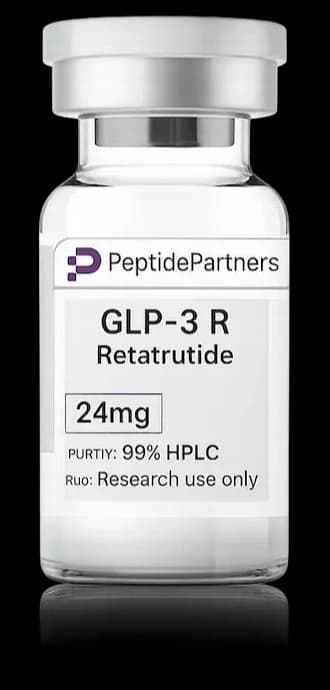
GLP-1 / GIP Guide
Educational · Not medical advice
Compounded tirzepatide is a prescription GLP-1/GIP medication made by a compounding pharmacy for one patient. This guide explains how it works, what it usually costs, how vial dosing is handled, and what changed legally in 2026.
Quick summary
Looking for a prescription provider route?
Beyond Whoosh is one telehealth route to check if you are exploring compounded tirzepatide. Before ordering, confirm your eligibility, the clinician's license, and the pharmacy that would fill the prescription.
Compounded tirzepatide is a prescription medicine made for one patient after a licensed provider writes a prescription. It contains tirzepatide, the same active ingredient found in the brand-name drugs Zepbound and Mounjaro.
Tirzepatide is a dual GIP and GLP-1 receptor agonist. In plain terms, it copies two gut hormones that lower appetite and slow how fast the stomach empties, which is why it is used for weight management and type 2 diabetes.
People often search for the compounded version because it has cost far less than the brand-name pens. The important catch: compounded drugs are not FDA-approved. The FDA does not review them for safety, strength, or purity the way it reviews Zepbound and Mounjaro.
This is an educational guide, not dosing advice. Compounded tirzepatide requires a prescription, and injectable medication should only come through a licensed clinician and pharmacy.
It is the same active ingredient, but it is not the same product. Zepbound (for weight management and obstructive sleep apnea) and Mounjaro (for type 2 diabetes) are both made by Eli Lilly, FDA-approved, and tested for purity, strength, and sterility.
Compounded tirzepatide skips that FDA review. It is usually shipped as a multi-dose vial that you draw into a syringe yourself, instead of a single-dose pen. Some compounded versions have used different salt forms or added ingredients that are not in the Lilly product.
If you receive a multi-dose vial, confirm these basics with your prescriber or pharmacy before using it. This section is not dosing guidance, sterile-handling training, or medical advice.
Disclosure: supply links may earn PepPal a commission at no cost to you.
Compounded tirzepatide can arrive with different concentrations, beyond-use dates, and storage instructions.
Concentration
Confirm the mg/mL concentration with the pharmacy before converting any prescribed dose into syringe units.
Storage
Follow the vial's printed refrigeration and beyond-use instructions instead of assuming brand-pen rules apply.
Disposal
Have a sharps container available before drawing from any prescription multi-dose vial.
Supplies do not make a compounded prescription safer by themselves.
No dosing shortcut
Use pharmacy instructions and clinician guidance for the prescribed dose; do not infer a dose from a syringe size.
No supplier endorsement
For prescription compounded tirzepatide, verify the clinician, prescription, and pharmacy directly.
If the vial label, prescription directions, and pharmacy instructions do not match, stop and ask the pharmacy or prescriber before using it.
The schedule below mirrors the FDA-approved label schedule for brand-name tirzepatide (Zepbound/Mounjaro). It is context, not a dosing recommendation. Your prescriber sets your actual dose, especially with compounded vials.
Prescribers usually talk about tirzepatide with a "start low, go slow" schedule. The brand label starts at 2.5 mg once a week. That first step is a tolerance dose, not a treatment dose; its job is to help your stomach adjust before the dose increases.
After 4 weeks, the dose typically moves to 5 mg once weekly. From there it can go up by 2.5 mg no faster than every 4 weeks, up to a maximum of 15 mg once weekly. The main maintenance doses studied are 5 mg, 10 mg, and 15 mg.
FDA-labeled tirzepatide titration schedule (brand-name reference)
Weeks
1–4
Dose (once weekly)
What the label says
Weeks
5–8
Dose (once weekly)
What the label says
Weeks
9–12
Dose (once weekly)
What the label says
Weeks
13–16
Dose (once weekly)
What the label says
Weeks
17–20
Dose (once weekly)
What the label says
Weeks
21+
Dose (once weekly)
What the label says
Increases should be no faster than every 4 weeks. Many people stay at a lower effective dose. This mirrors the Zepbound/Mounjaro FDA label and is not a dosing recommendation.
Brand pens are pre-measured, so you never think in "units." Compounded tirzepatide is different: it comes in a vial, and you draw the dose into a U-100 insulin syringe, where the marks are in units. That is why people ask how many units equal their dose.
Units are not fixed. The number of units depends on two things: how strong the vial is (its concentration in mg/mL) and how much you were prescribed (your dose in mg). The same 5 mg dose can be a different number of units in two different vials.
The conversion depends on vial concentration: dose ÷ concentration gives milliliters, then milliliters × 100 gives U-100 syringe units. Getting this wrong is a real risk with multi-dose vials, so always confirm your vial's concentration with your pharmacy.
Use the PepPal calculator to turn your prescribed dose and vial concentration into milliliters and U-100 syringe units. It handles the conversion; it does not choose a dose for you.
Compounded tirzepatide is almost always self-pay — insurance and manufacturer savings cards do not apply. In 2026 most telehealth prices land in the low-to-mid hundreds per month, while brand-name retail runs about five to eight times higher without a program.
Tirzepatide monthly cost paths (2026, self-pay unless noted)
Path
Compounded via telehealth (503A)
Typical monthly cost
Notes
Path
LillyDirect self-pay Zepbound vials
Typical monthly cost
Notes
Path
Retail brand (Zepbound / Mounjaro)
Typical monthly cost
Notes
Path
Lilly savings card
Typical monthly cost
Notes
Prices change often — confirm current pricing directly with the provider or pharmacy. A compounded price far below the ingredient cost (roughly under $90/month) is treated as a red flag, not a deal.
The cheapest listing is not automatically the safest route. With compounded tirzepatide, first verify that the prescription and pharmacy path are legitimate.
What to compare beyond price
Factor
Provider legitimacy
What to check
Factor
Pharmacy transparency
What to check
Factor
Documentation
What to check
Factor
Included visits & support
What to check
Factor
Dose pricing
What to check
Factor
Shipping & cold chain
What to check
Compounded tirzepatide is not FDA-approved. Verify each item before ordering rather than choosing on price alone.
Compounded tirzepatide is only obtained legitimately through a licensed provider who writes a prescription that a state-licensed 503A pharmacy fills for you as an individual. Some telehealth platforms handle the visit and the pharmacy in one place.
Because of the 2026 rules below, the provider should document a real patient-specific reason. It should not feel like a no-questions checkout for an off-the-shelf compounded product. Use these checks before you order:
There should be a licensed US provider and a valid prescription, not an instant no-questions checkout.
Ask for the compounding pharmacy's name and confirm its 503A license with the state board of pharmacy.
A legitimate pharmacy can usually provide a Certificate of Analysis for the batch.
In 2026, compounding must be for a documented patient-specific need, not cost savings alone.
Prices far below ingredient cost (roughly under $90/month) are a warning sign, not a bargain.
The product should arrive cold with clear storage instructions.
If you check Beyond Whoosh or any similar service, verify who writes the prescription, which pharmacy fills it, and what documentation you can review before paying.
View Beyond WhooshShort answer: mostly no, with a narrow exception. Compounded tirzepatide is not "banned" by name, but the legal shield that made it widely available is gone.
Compounding copies of an FDA-approved drug is only allowed during a shortage. The FDA declared the tirzepatide shortage resolved in October 2024. Enforcement discretion then ended for state-licensed (503A) pharmacies on February 18, 2025 and for larger outsourcing (503B) facilities on March 19, 2025. A court upheld the FDA in May 2025 (the case is on appeal).
It went further in 2026. On April 30, 2026, the FDA proposed leaving semaglutide, tirzepatide, and liraglutide off the 503B bulks list entirely, saying there is no clinical need for large-scale compounding. A public comment period ran through June 29, 2026. The FDA also sent warning letters to telehealth companies in early 2026.
A 503A pharmacy can still compound tirzepatide for one patient with a valid prescription and a documented clinical reason — for example, a verified allergy to an inactive ingredient in the brand product. Wanting a lower price does not qualify. Brand Zepbound and Mounjaro remain fully FDA-approved and available.
Safety depends less on the molecule and more on who made the vial, how it was tested, and how it was handled. Tirzepatide itself has strong clinical trial data behind the brand versions, but a compounded product is not FDA-reviewed.
The FDA has pointed to real problems with compounded GLP-1s: dosing errors from patients measuring their own doses out of multi-dose vials (some serious enough to require hospital care), counterfeit or mislabeled products sold online, and products that arrived warm or were stored incorrectly. As of early 2025 the FDA had logged more than 320 adverse-event reports tied to compounded tirzepatide.
Side effects come from the tirzepatide itself, so they mirror what is reported for Zepbound and Mounjaro. The most common ones are stomach-related and tend to be worst right after a dose increase.
With a compounded multi-dose vial, a drawing or measuring mistake can also cause an accidental overdose, which usually shows up as severe nausea and vomiting. If you have severe belly pain, signs of an allergic reaction, or symptoms that worry you, contact a clinician right away.
For brand-name tirzepatide, Eli Lilly's label allows single-dose pens and vials to sit at room temperature (up to 86°F / 30°C) for up to 21 days, and multi-dose KwikPens for up to 30 days. Once it is out of the fridge, do not put it back, and discard it after that window.
Compounded vials are different. Their room-temperature limit depends on the formula and preservatives, so the 21-day pen rule may not apply. Always follow the storage instructions and beyond-use date printed by your compounding pharmacy.
Brand tirzepatide keeps until its printed expiration date when stored at 36–46°F (2–8°C). Compounded vials carry a shorter beyond-use date set by the pharmacy — often weeks rather than months — because they are made fresh and are not mass-produced.
Compounded tirzepatide vs the brand-name products
Active ingredient
Compounded tirzepatide
Zepbound
Mounjaro
FDA-approved
Compounded tirzepatide
Zepbound
Mounjaro
Quality review
Compounded tirzepatide
Zepbound
Mounjaro
Usual form
Compounded tirzepatide
Zepbound
Mounjaro
2026 legal status
Compounded tirzepatide
Zepbound
Mounjaro
Typical cost/mo
Compounded tirzepatide
Zepbound
Mounjaro
All three contain the same molecule. The differences are oversight, form, cost, and legal footing — not the drug itself.
Zepbound is the FDA-approved brand for weight management and obstructive sleep apnea, sold in pre-measured pens and vials with verified strength and purity. Compounded tirzepatide uses the same active drug and can cost less, but it does not get FDA review and has a much narrower legal path in 2026.
Mounjaro is the FDA-approved brand for type 2 diabetes; some clinicians also prescribe it off-label for weight loss. It uses the same tirzepatide molecule as compounded versions, but with FDA oversight, single-dose delivery, and a clear legal status.
Prescribers often use the brand tirzepatide label as a reference point: 2.5 mg once weekly for 4 weeks as a tolerance dose, then 5 mg. Your prescriber sets your actual dose, and compounded products can differ.
It means tirzepatide was prepared for one specific patient after a licensed provider wrote a prescription. It contains the same active drug as Zepbound and Mounjaro but is not FDA-approved.
It is the same active ingredient but not the same product. Zepbound is FDA-approved and tested for purity, strength, and sterility; compounded tirzepatide is not FDA-reviewed and usually comes as a multi-dose vial instead of a pen.
The active drug, tirzepatide, has strong trial data behind the brand versions; for example, about 20.9% average body-weight loss at the 15 mg dose over 72 weeks in SURMOUNT-1. A compounded version still depends on the pharmacy making it correctly, which the FDA does not verify.
In 2026 it can only be compounded in narrow cases: a 503A pharmacy filling a prescription for one patient with a documented clinical reason, such as an allergy to an inactive ingredient in the brand product. Large-scale compounding is no longer allowed because the shortage is over.
Sometimes, but access is limited. Since the shortage ended, broad telehealth-style compounding has largely disappeared. What remains is patient-specific 503A compounding with a real clinical justification. Brand Zepbound and Mounjaro are fully available.
In 2026, compounded tirzepatide through telehealth usually runs about $125 to $449 per month, self-pay, with no insurance or savings-card help. Brand-name retail is roughly $1,000 or more per month without a program.
Yes. It carries a beyond-use date set by the pharmacy, usually shorter than a brand product's expiration date. Follow the date and storage instructions on your specific vial, and discard it if it is cloudy, discolored, or has been frozen.
It is not banned by name, but the broad shortage-era path is gone. The FDA ended shortage-related compounding in 2025 and, on April 30, 2026, proposed keeping tirzepatide off the 503B bulks list permanently. Only narrow patient-specific 503A compounding remains.
Some pharmacies have marketed tirzepatide mixed with vitamin B12 as "personalized." Regulators have flagged this: testing found a chemical reaction impurity between tirzepatide and B12 that is not present in FDA-approved tirzepatide, and its safety is unknown. The FDA has said adding a vitamin does not make a product legal or FDA-approved.
The active drug is well studied, but a compounded product is not FDA-reviewed, so quality depends on the pharmacy. Known risks include dosing errors from multi-dose vials, counterfeit online products, and poor cold-chain shipping. Use only a licensed provider and a verifiable pharmacy, and talk to a clinician.
Preferred supplier
Peptide PartnersNeed peptides? Start with a verified supplier.
PepPal's recommended source with current discount access and established testing standards.
Use the PepPal calculator to turn your prescribed dose and vial concentration into milliliters and U-100 units. Educational only — it does not recommend a dose.
Open the calculator