
FeaturedFeatured Supplier
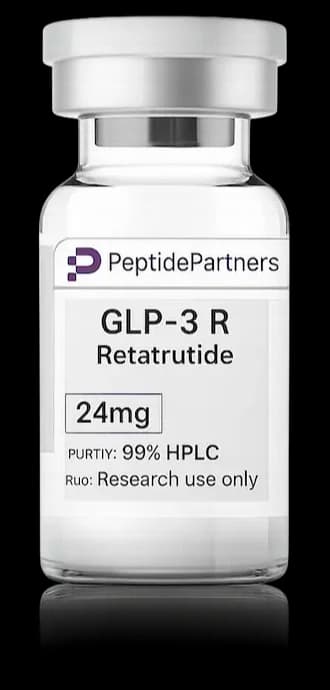
GLP-1 Research
Updated August 2026
Tirzepatide and retatrutide both switch on the GLP-1 and GIP receptors, so taking them together mostly doubles the same pathways. Here's what the research and the FDA label say, and which alternatives make more sense.
Quick summary
There is not a good evidence-based reason to combine tirzepatide and retatrutide, often shortened to 'tirz and reta'. Both compounds switch on the same two receptors, GLP-1 and GIP, so taking them together mostly doubles up on the same signal. Retatrutide adds a third receptor, glucagon, that tirzepatide does not hit, but the heavy overlap on GLP-1 and GIP is the part that matters here.
Tirzepatide is the active ingredient in the FDA-approved drugs Mounjaro and Zepbound. Its official label says it should not be used together with any GLP-1 receptor agonist. Retatrutide is a GLP-1 receptor agonist (plus GIP and glucagon), so that same caution applies to it. On top of that, no clinical trial has ever tested the two compounds together, so there is no safety or benefit data for the combination at all.
If the real issue is that one GLP-1-class compound is not giving enough appetite suppression, the better research question is cagrilintide, not tirzepatide plus retatrutide. Cagrilintide works through amylin, a different fullness pathway, and Novo Nordisk has already tested that basic concept with CagriSema: semaglutide plus cagrilintide. For protocol-level context, see cagrilintide + tirzepatide and cagrilintide + retatrutide.
This page is educational and is not medical advice. Retatrutide is investigational and is not FDA-approved as of August 2026. Talk to a qualified clinician before starting, stopping, or combining any medication.
Use this as a research-use checklist for comparing supplier pages, batch documentation, lab context, and sterile handling supplies. It is not dosing guidance, medical advice, or a reason to combine two overlapping GLP-1-class compounds.
PEPPAL applies to eligible Peptide Partners checkout links when supported by the supplier.
Why choose Peptide Partners?
Disclosure: supply links may earn PepPal a commission at no cost to you.
Keep the compound choice, supplier documents, lab plan, and handling supplies separate so each part is easier to check.
Product match
Confirm whether you are researching tirzepatide or retatrutide. This page explains why combining both is not supported.
Alternative pathway
If you are comparing cagrilintide, treat it as a separate amylin-pathway research question rather than a reason to stack tirzepatide and retatrutide.
Batch documentation
Match the COA or testing record to the exact product and lot where the supplier makes that available.
Monitoring context
Plan baseline and follow-up labs before interpreting GLP-1 research outcomes or side-effect patterns.
Sterile handling
Plan bacteriostatic water, sterile syringes, alcohol swabs, cold storage, and sharps disposal before handling any lyophilized vial.
For dose math, reconstitution volumes, and protocol-level instructions, use the matching protocol page instead of this shopping checklist.
The overlap is simple: both drugs push GLP-1 and GIP signaling. That is why they can feel like the same kind of drug, even though retatrutide adds one more receptor.
Tirzepatide is a dual agonist: it turns on the GIP and GLP-1 receptors. Retatrutide is a triple agonist: it turns on GIP, GLP-1, and a third receptor called glucagon. So the two share two of their three targets.
Which receptors each compound turns on
Receptor
GLP-1
What it mainly does
Tirzepatide
Retatrutide
Receptor
GIP
What it mainly does
Tirzepatide
Retatrutide
Receptor
Glucagon
What it mainly does
Tirzepatide
Retatrutide
Tirzepatide is a dual GIP/GLP-1 agonist. Retatrutide is a triple GIP/GLP-1/glucagon agonist. The two overlap on GLP-1 and GIP.
Because retatrutide already covers GLP-1 and GIP on its own, adding tirzepatide does not unlock a new pathway. It just hits the same two receptors twice.
A lot of people searching for this are really asking whether retatrutide and tirzepatide are the same thing. They are not. They are two different molecules from different programs, at very different stages of approval. The table below lines them up side by side.
Tirzepatide vs retatrutide at a glance
Drug class
Tirzepatide
Retatrutide
Brand names
Tirzepatide
Retatrutide
FDA status (August 2026)
Tirzepatide
Retatrutide
Top trial weight loss
Tirzepatide
Retatrutide
Dosing frequency
Tirzepatide
Retatrutide
Most common side effects
Tirzepatide
Retatrutide
Weight-loss figures come from separate trials and different patient groups, so they are not a true head-to-head comparison.
In trials, retatrutide has produced larger average weight loss than tirzepatide, mostly thanks to that extra glucagon action. But retatrutide is still investigational, while tirzepatide is approved and widely studied. For a fuller breakdown, see the PepPal guide semaglutide vs tirzepatide vs retatrutide.
Stacking is supposed to add something. With tirzepatide plus retatrutide, there is very little to add, because the two drugs are doing the same main jobs. Here is what the combination really means in practice:
This is the same logic the protocol research community uses. Most people do not combine two incretin agonists — they pick one, or they switch from one to the other.
If the goal is to build on a GLP-1-class drug, the smarter move is to add a compound that works through a different receptor system — one the first drug does not touch. The clearest example is amylin.
Cagrilintide is a long-acting amylin analog. It works through amylin, not GLP-1, GIP, or glucagon, which is why it is a more logical add-on than another overlapping incretin drug. This is the idea behind Novo Nordisk's CagriSema (cagrilintide plus semaglutide): in the Phase 3 REDEFINE-1 trial, adding cagrilintide to semaglutide raised average weight loss from about 14.9% to about 22.7% at 68 weeks. That is real combination evidence, something the tirzepatide-plus-retatrutide pairing does not have.
Pairs tirzepatide (GLP-1/GIP) with cagrilintide, an amylin analog that adds fullness through a separate pathway tirzepatide does not reach.
Pairs retatrutide (GLP-1/GIP/glucagon) with cagrilintide for amylin coverage retatrutide does not hit on its own — four pathways instead of doubling two.
Those two pages live on Peptide Dosing Protocols and cover the protocol-level details, including reconstitution math and titration. This PepPal page does not give dosing. Both compounds are research-use only, and the cagrilintide combinations have no completed human trial of their own. CagriSema is the closest clinical evidence we have for that kind of pairing.
Many people weighing reta and tirz together are actually trying to decide which one to use, or whether to move from tirzepatide to retatrutide. That is a switch, not a stack — you stop one before moving to the other, rather than running both at once.
Switching has its own timing and overlap considerations. The PepPal guide on how to switch from tirzepatide to retatrutide walks through that, and peptide stacking 101 explains when combining compounds makes sense and when it does not.
As of August 2026, tirzepatide is FDA-approved as Mounjaro (type 2 diabetes, 2022), Zepbound (chronic weight management, 2023), and for moderate-to-severe obstructive sleep apnea (2024). Retatrutide is still investigational: its first pivotal Phase 3 obesity readout (TRIUMPH-1) was confirmed on May 21, 2026, and an FDA filing is expected in late 2026 or 2027. Retatrutide sold online today is research-use-only material, not an approved medicine.
Beyond the redundancy, combining two drugs that slow digestion and reduce appetite can make side effects harder to manage. Nausea, vomiting, and constipation can pile up. Retatrutide also carries a tingling-and-numbness (dysesthesia) signal at higher doses in trials, and rapid weight loss raises gallstone risk no matter which drug drives it. If you are sourcing research-grade material, verify it against an independent third-party COA, and check the PepPal supplier directory for testing context. None of this is medical advice. Talk to a qualified clinician before acting on any of it.
It is not supported. Both drugs activate the GLP-1 and GIP receptors, so taking them together mostly doubles the same pathways instead of adding a new one. The FDA-approved tirzepatide label advises against using it with any GLP-1 receptor agonist, and no trial has tested the combination.
Because the overlap makes it redundant. Retatrutide already covers GLP-1, GIP, and glucagon on its own, so adding tirzepatide repeats the GLP-1 and GIP signal without unlocking anything new. The likely result is more gastrointestinal side effects with no studied extra benefit.
Tirzepatide is a dual GIP/GLP-1 agonist sold as Mounjaro and Zepbound and is FDA-approved. Retatrutide is a triple GIP/GLP-1/glucagon agonist that is still investigational. Retatrutide has produced larger average weight loss in trials, mostly from its added glucagon action. See the full comparison.
No. They are different molecules from different drug programs. They share two receptor targets (GLP-1 and GIP), which is why they feel similar, but retatrutide adds a third (glucagon) and is at a much earlier stage of approval.
A better stack would add a different pathway instead of repeating the same one. Cagrilintide, an amylin analog, is the clearest example because it does not work through GLP-1, GIP, or glucagon. See the cagrilintide + tirzepatide and cagrilintide + retatrutide protocols on Peptide Dosing Protocols.
Switching is different from stacking — you stop one before moving to the other, rather than running both at once. Switching has its own timing considerations; see how to switch from tirzepatide to retatrutide.
Not as of August 2026. Retatrutide is in Phase 3 trials, with its first pivotal obesity readout confirmed in May 2026 and an FDA filing expected in late 2026 or 2027. Material sold online is research-use-only, not an approved medicine.
No. This page is educational, not medical advice or a treatment plan. Retatrutide is investigational, the tirzepatide-plus-retatrutide combination has never been tested in a trial, and you should talk to a qualified clinician before starting, stopping, or combining anything.
Preferred supplier
Peptide PartnersNeed peptides? Start with a verified supplier.
PepPal's recommended source with current discount access and established testing standards.
See how semaglutide, tirzepatide, and retatrutide stack up on mechanism, trial data, and status.
Read the comparison