
ReviewedPreferred Fallback
Peptide Supplies
BAC Water Guide
Bacteriostatic water is the sterile liquid researchers use to mix freeze-dried peptides. Here is what it actually is, how it differs from sterile water and saline, and how to get a tested, documented version.
Quick summary
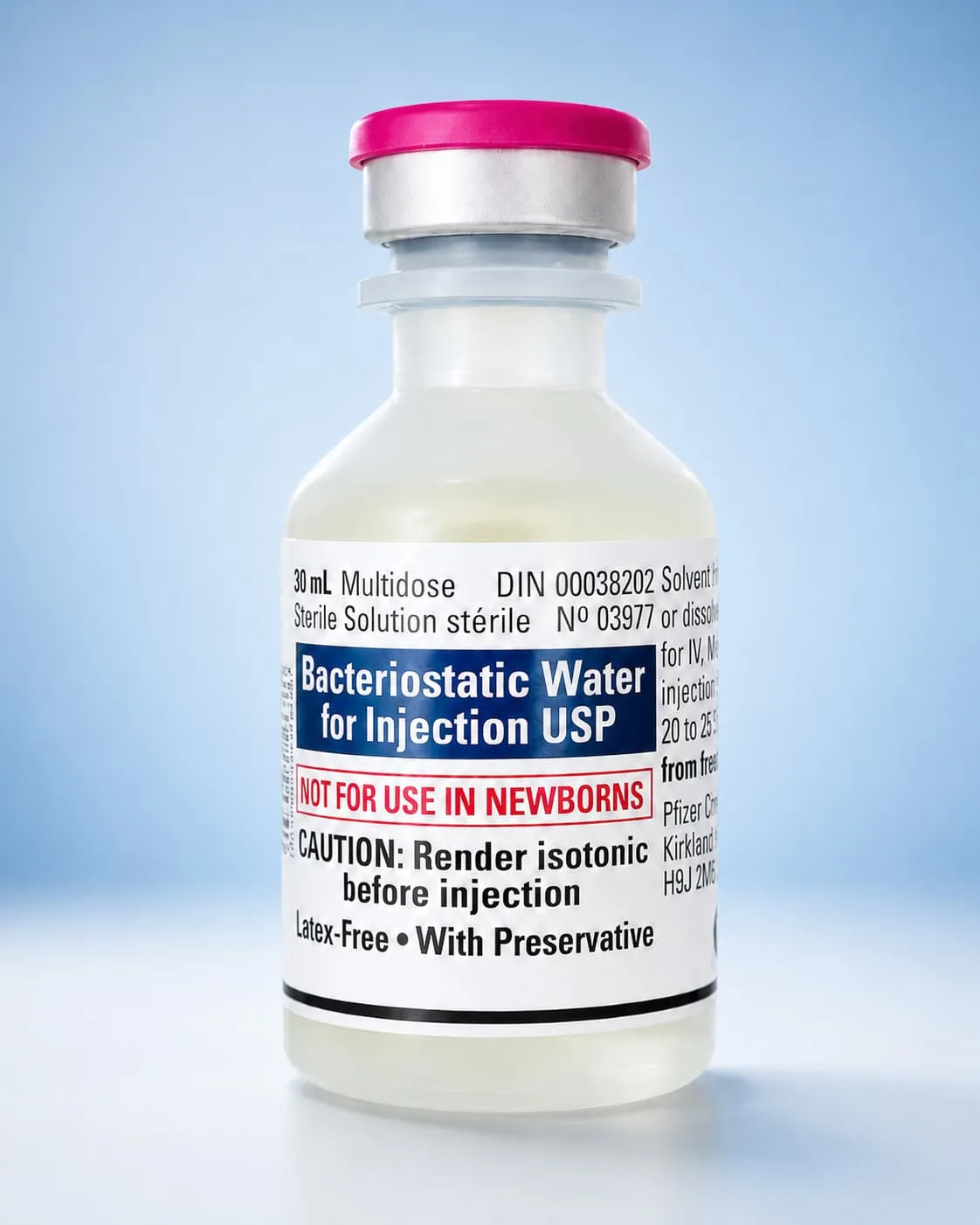
Bacteriostatic water (often shortened to BAC water) is sterile water with a tiny amount of benzyl alcohol mixed in. That benzyl alcohol is a preservative. It keeps bacteria from multiplying inside the vial, which is why you can go back to the same vial many times over a few weeks.
In peptide research, BAC water is the liquid used to turn a freeze-dried powder back into a usable solution. This guide explains what it is, how it is different from other waters, and how to get a version that has been tested and documented.
This page is educational. It does not tell you what to inject, what dose to use, or how to treat anything. Bacteriostatic water in the peptide market is sold for research use only. Talk to a qualified clinician before using any peptide.
Bacteriostatic Water for Injection, USP is sterile, non-pyrogenic water with 0.9% (9 mg/mL) benzyl alcohol added as a preservative. Some versions use 1.1% benzyl alcohol. "Non-pyrogenic" just means it is made to be free of the leftovers that cause fevers. That is the whole recipe: purified water plus a small amount of preservative.
The word bacteriostatic is the key. "Static" means it stops bacteria from growing and spreading. It does not kill every germ on contact. That is different from bactericidal, which means germ-killing. For a vial you puncture over and over, stopping growth is exactly what you want.
One common myth: plain bacteriostatic water is not salt water. It does not contain sodium chloride. Saline (salt water) is a separate product, and "bacteriostatic saline" is a different item again. If a label says bacteriostatic water but the ingredients read like saline, that is a mismatch worth a second look.
Use this as a simple shopping checklist. It does not replace reconstitution math or sterile handling guidance. For syringe-unit math, use the calculator linked at the bottom.
SAVE10 applies to eligible Peptira checkout links when supported by the supplier. Confirm the discount appears before completing checkout.
Why choose Orbitrex Peptides?
Disclosure: supply links may earn PepPal a commission at no cost to you.
Check the product page instead of relying on the card alone.
Vial size
Peptira lists a 10 mL option that can cover several standard research-vial setups depending on the reconstitution volume.
Documentation
Match the COA and lot number to the exact product when the supplier makes that available.
Storage
Store per the label and discard about 28 days after the first puncture when refrigerated.
For dose and vial math, use the peptide calculator instead of this checklist.
Freeze-dried peptides come as a dry powder to protect them during shipping and storage. To use one, you add a measured amount of liquid so the powder dissolves. That step is called reconstitution.
Most peptide vials get used more than once, so the liquid inside has to stay clean for days or weeks. That is where the benzyl alcohol earns its place. It holds back bacterial growth each time the stopper is punctured, so the solution does not spoil after the first draw.
Under the USP label, a multi-dose vial is generally treated as good for about 28 days after the first puncture when kept refrigerated. Plain sterile water has no preservative, so it is meant for a single use and can grow bacteria once opened. That is the main reason BAC water is the default choice.
These liquids look almost identical in the vial, but they are not interchangeable. Here is how they line up.
Common reconstitution liquids compared
Liquid
Bacteriostatic water
What is in it
Reuse after opening
Typical research fit
Liquid
Sterile water
What is in it
Reuse after opening
Typical research fit
Liquid
Saline (0.9% NaCl)
What is in it
Reuse after opening
Typical research fit
Liquid
Distilled/tap water
What is in it
Reuse after opening
Typical research fit
Salt in saline can shift the balance of the solution and, for some peptide sequences, encourage clumping. Bacteriostatic water avoids that variable, which is one reason it is the standard.
There are three common ways people get BAC water, and they are not equal. The main thing that separates a good source from a risky one is documentation, not price.
Bacteriostatic water has also landed on the FDA drug shortage list more than once over the years. When supply gets tight, more questionable listings appear, which makes checking documentation even more important.
Peptira sells a 10 mL BAC water product and provides a View Test Results link from the product page. Confirm the current product details and match any available documentation to the item before ordering. This is an affiliate link, so PepPal may earn a commission at no extra cost to you. Use SAVE10 where eligible.
View Peptira BAC waterPepPal does not sell peptides or bacteriostatic water, and an affiliate link is not a quality guarantee. Featuring Peptira here reflects the product-specific listing and its test-results access. Read the full Peptira review or browse the supplier directory to compare options.
A Certificate of Analysis (COA) is a lab document that describes what is actually in a product. For BAC water, a useful COA and product page should let you confirm a few simple things.
The document should clearly say bacteriostatic water, not just "water" or a generic name, and match the exact item you are buying.
Look for benzyl alcohol at 0.9% (9 mg/mL) or 1.1%. That number is the whole point of the product.
Good sources reference sterility and, ideally, endotoxin testing. Sterile and non-pyrogenic are the two words to look for.
A specific lot number ties the paperwork to the vial in your hand. No lot number means no real traceability.
See who tested it and when. A recent, named third-party lab is stronger than an undated, unnamed one.
Extremely low pricing on this category often signals a corner was cut somewhere. A documented, tested vial for a few dollars more is usually the better call for research work.
Handling matters as much as sourcing. Even good bacteriostatic water can be compromised by sloppy technique, so a few habits keep the vial usable.
Once you have tested BAC water, the next steps are storing peptides correctly and getting your mixing math right. See how to store peptides and shelf life, the guide to why your peptide isn't working, and the peptide injection supplies checklist. For exact syringe units, use the reconstitution calculator.
Bacteriostatic water is sterile water with 0.9% benzyl alcohol added as a preservative. The benzyl alcohol stops bacteria from growing, so a multi-use vial stays usable for repeated draws. In peptide research it is the standard liquid used to mix freeze-dried powders.
No. Sterile water has no preservative and is meant for a single use, so it can grow bacteria once opened. Bacteriostatic water adds benzyl alcohol, which lets you use the same vial for about 28 days when refrigerated.
For a one-time mix it may work, but sterile water is not built for repeated draws because it has no preservative. Most peptide vials get used more than once, which is why bacteriostatic water is the usual choice.
No. Plain bacteriostatic water is just water plus benzyl alcohol. Saline (salt water) and bacteriostatic saline are separate products. If a label says bacteriostatic water but lists salt as the main ingredient, treat it as a mismatch.
Benzyl alcohol is the preservative. It holds back bacterial growth each time the vial is punctured, which keeps the solution clean across multiple draws. It stops growth rather than killing every germ, which is what bacteriostatic means.
Common sources are peptide vendors that sell it alongside research compounds, pharmacies for the USP product, and general marketplaces. Vendor and marketplace quality vary widely, so look for product-specific documentation. PepPal's featured option is Peptira's 10 mL BAC water listing, which provides a View Test Results link on the product page. Confirm current details before ordering.
Under the USP label, a multi-dose vial is generally treated as good for about 28 days after the first puncture when refrigerated. Discard it sooner if it looks cloudy or has floating particles.
Check that the COA and product page name bacteriostatic water specifically, list benzyl alcohol at 0.9% or 1.1%, reference sterility testing, and include a lot number, lab name, and test date. A specific lot number tied to the vial is the sign of real traceability.
The pharmaceutical product, Bacteriostatic Water for Injection, USP, is an FDA-approved drug diluent, though it is technically a prescription item and is not for use in newborns. Bacteriostatic water sold in the peptide market is labeled for research use only and is not approved for human use.
It depends on the vial size and the concentration you want. This guide does not give a dose. Use the PepPal reconstitution calculator to work out the exact liquid volume and syringe units for your setup.
No. This is educational research context. It does not diagnose, treat, or recommend a dose, and bacteriostatic water in this market is sold for research use only. Talk to a qualified clinician before using any peptide.
Preferred supplier
Peptide PartnersNeed peptides? Start with a verified supplier.
PepPal's recommended source with current discount access and established testing standards.