
Featured Dosing Tracker
PepPal Pro
Save your calculations and follow your peptide cycle by day, week, or month.
- Peptide calendar
- Cycle tracking
- Saved calculations
NAD+ Calculator
Reconstitution + Syringe Units
Enter a NAD+ vial amount, BAC-water volume, selected amount, and syringe size. The calculator returns concentration, draw volume, and U-100 syringe units. It performs math only and does not choose an amount or provide medical advice.
Quick summary
Calculator mode
Vial Amount Is Not the Amount per Draw
A 500 mg or 1,000 mg label is the total amount in the vial. One draw depends on the final concentration and the amount entered into the calculator.
Step 1
Choose syringe size.
Step 2
Enter the total amount shown on the vial label.
Step 3
Enter the amount you want to calculate. PepPal does not select or recommend an amount.
Step 4
The water amount changes the concentration and draw volume. It does not change the total amount in the vial.
NAD+ shopping
Reveal or copy the available code, then use it at checkout.
Featured Dosing Tracker
Save your calculations and follow your peptide cycle by day, week, or month.
A 500 mg or 1,000 mg label describes the total amount in the vial. The amount in one draw depends on the final concentration and the amount entered into the calculator.
This calculator performs concentration and unit conversions only. It does not select or recommend an amount, schedule, route, or concentration. Confirm every entered value before using a result.
A 500 mg vial contains 500 mg total. The BAC-water amount determines the final concentration and the number of milliliters or U-100 syringe units needed for an entered amount.
500 mg NAD+ concentration and draw reference
BAC water
2 mL
Concentration
Mg per unit
25 mg draw
50 mg draw
75 mg draw
100 mg draw
BAC water
3 mL
Concentration
Mg per unit
25 mg draw
50 mg draw
75 mg draw
100 mg draw
BAC water
4 mL
Concentration
Mg per unit
25 mg draw
50 mg draw
75 mg draw
100 mg draw
BAC water
5 mL
Concentration
Mg per unit
25 mg draw
50 mg draw
75 mg draw
100 mg draw
BAC water
10 mL
Concentration
Mg per unit
25 mg draw
50 mg draw
75 mg draw
100 mg draw
Each draw cell shows milliliters and U-100 syringe units. A capacity note appears when a draw is larger than a 100-unit syringe.
There is no single BAC-water amount that applies to every 500 mg vial setup. The water volume controls the concentration, which then controls the draw volume. Use the calculator to compare different water amounts without treating one setup as a recommendation.
A 1,000 mg vial can be mixed at more than one concentration. A smaller water volume creates a more concentrated mixture, while a larger water volume creates a less concentrated mixture.
1,000 mg NAD+ concentration and draw reference
BAC water
2 mL
Concentration
Mg per unit
25 mg draw
50 mg draw
75 mg draw
100 mg draw
BAC water
3 mL
Concentration
Mg per unit
25 mg draw
50 mg draw
75 mg draw
100 mg draw
BAC water
4 mL
Concentration
Mg per unit
25 mg draw
50 mg draw
75 mg draw
100 mg draw
BAC water
5 mL
Concentration
Mg per unit
25 mg draw
50 mg draw
75 mg draw
100 mg draw
BAC water
10 mL
Concentration
Mg per unit
25 mg draw
50 mg draw
75 mg draw
100 mg draw
Each draw cell shows milliliters and U-100 syringe units. A capacity note appears when a draw is larger than a 100-unit syringe.
A 1,000 mg vial may be calculated with different water volumes. Adding less water creates a higher concentration, while adding more water creates a lower concentration. Confirm the vial label and final liquid volume before using the result.
This short list stays limited to items tied to NAD+ access, vial reconstitution, and U-100 syringe math.
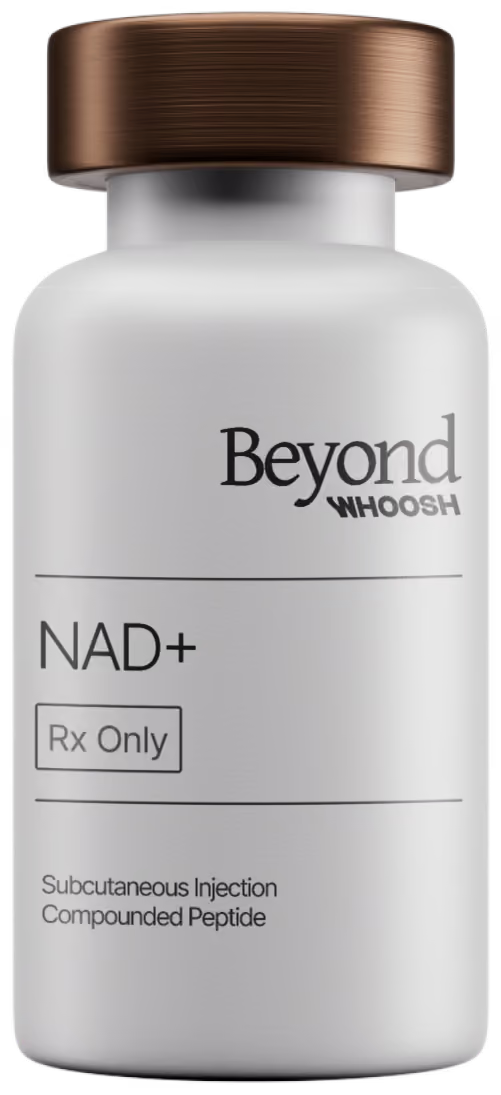
The calculator first divides the total vial amount by the liquid volume to find the concentration. It then divides the entered amount by that concentration to find the draw volume.
Concentration = vial amount ÷ liquid volume
Draw volume = selected amount ÷ concentration
U-100 units = draw volume × 100
A U-100 syringe has 100 units per 1 mL. That means 10 units equals 0.1 mL, 50 units equals 0.5 mL, and 100 units equals 1 mL.
The same entered amount can produce different draw volumes when the concentration changes. These two tables show the math at 100 mg/mL and 50 mg/mL. They do not recommend either concentration or any amount.
Draws at 100 mg/mL
Selected amount
25 mg
Draw volume
U-100 units
Selected amount
50 mg
Draw volume
U-100 units
Selected amount
75 mg
Draw volume
U-100 units
Selected amount
100 mg
Draw volume
U-100 units
Draws at 50 mg/mL
Selected amount
25 mg
Draw volume
U-100 units
Selected amount
50 mg
Draw volume
U-100 units
Selected amount
75 mg
Draw volume
U-100 units
Selected amount
100 mg
Draw volume
U-100 units
A draw above 100 units is larger than a 1 mL U-100 syringe.
Choose 100 mg, 500 mg, 1,000 mg, or 1,500 mg, or enter the amount printed on your vial.
Choose 2 mL, 3 mL, 5 mL, or 10 mL, or enter the final liquid volume for your setup.
Choose 25 mg, 50 mg, 75 mg, or 100 mg, or enter another amount. PepPal does not select the amount for you.
Pick the actual U-100 syringe capacity so the result can show the percentage used and warn when the draw is too large.
Check the concentration, milliliters, syringe units, complete draws, remaining amount, and capacity warning against the values you entered.
For dosage ranges, injection frequency, route comparisons, cycle planning, and research evidence, view the NAD+ injection dosage chart and protocol.
PepPal owns vial math, concentration, milliliters, and syringe units. The full protocol covers dosage, frequency, routes, cycle planning, evidence, and side effects.
There is no single required amount. The BAC-water volume determines the final concentration and the draw volume for the amount entered into the calculator.
A 1,000 mg vial may be calculated with different water volumes. Confirm the final liquid volume before converting an amount into milliliters or U-100 syringe units.
The number of units depends on the final concentration. Enter the vial amount and BAC-water volume before converting 25 mg into U-100 syringe units.
A 50 mg amount cannot be converted into syringe units without knowing the concentration. The same 50 mg amount may require different draw volumes in different vial setups.
The number of units depends on the total vial amount and final liquid volume. Use the calculator to find the concentration before converting 100 mg into units.
Divide 500 mg by the selected amount. For example, a 500 mg vial contains ten complete 50 mg amounts before allowing for normal preparation loss.
The entered concentration may require more liquid than the selected syringe can hold. Confirm the vial amount, water volume, selected amount, and syringe size.
No. The calculator performs concentration and syringe-unit math only. It does not select or recommend an amount, schedule, route, or concentration.
No. NAD+ is a coenzyme. It is often grouped with peptide calculators because injectable NAD+ uses similar vial, liquid-volume, and syringe-unit calculations.
Preferred supplier
Peptide PartnersNeed peptides? Start with a verified supplier.
PepPal's recommended source with current discount access and established testing standards.